On Totalitarianism–It Is Right

It Is Right

It is right. It is right that Pretty should work and that I should not. She is younger after all, and I have my aching feet, my fatigue, and the days I can barely get out of bed.

“Pretty!” I shout from my sunk-in cushion on the living room couch. “Pretty! I am hungry! Where is my supper, o sister?” It is right that she should wait on me, her elder. I call and cry but no one comes. Now I am both hungry and angry. Why is Pretty being so slow? How can she be so mean as to make me wait to eat?
 I get up and walk to the kitchen. No one is there. Pretty is not in her bedroom either, but I find her in the bathroom, wiping at her face.

“Are you sick, Pretty?”

“Yes.”

“Where is my supper?” I moan. “My stomach hurts and I feel weak and dizzy! I will surely faint if I don’t eat something!” Pretty looks at me steadily.

“You will have to make do.” She says. “I need to rest.” My first thought is to stamp my foot and demand that she cook the supper, but I in all my long years have learned better ways.

“Yes, Pretty. Of course you should rest. I will––I w-will fix myself a peanut b-butter and jelly sandwich!”

Once in the kitchen, I know what to do. I bumble and stumble around, spoiling and breaking dishes that she will have to clean up later. Her abandonment does not come without a price. I always make sure of that. “Pretty, oh, Pretty! I can’t find the bread! Where is it? Where is it!”

“Near the microwave on the counter.” She croaks from her room.

“But which counter? There are too many! I––I don’t see it, P-pretty! I can’t do this!” I weep and throw our parents’ wedding platter to the floor where it smashes satisfactorily. She will come. It takes exactly two minutes.

Calmly, my younger sister walks into the kitchen. She would first like a glass of water, but I insist on the sandwich. She points to the bread bin. I grant her this small concession and take the bread out of the container, rip the bag apart and spill all but two slices on the floor. Pretty does not pick them up.

“Where is the peanut butter?” Pretty is about to say something, but thinks better of it. She goes to the cupboard, pulls out the jar, and hands it to me. Then, Pretty quietly picks up the bread slices from the floor and tidies up the kitchen. I look at her shrewdly. “I have no knife. Am I to use my finger to spread the butter, little sister?”

Pretty pulls open a drawer and takes out a butter knife. Very nearly knocking me over, she edges me aside so that she herself can spread a thick layer of peanut butter on the bread. “Anything else I can do for you, dear sister?” She asks.

“Where is the jelly?” I watch while she crosses to the fridge, stopping for a moment as a wave of nausea overcomes her. “What’s taking so long?” She looks everywhere: no jelly in the fridge, no jelly in the cupboards. “I have to have jelly!” I yell. “I’m hungry!”

On the way to the store I keep the bread and peanut butter in my purse and munch on it while Pretty is not looking. Her driving is terrible and I yell at her that isn’t my heart weak enough without adding to the trauma? In the store, Pretty looks even worse. Her skin is an appalling shade and she weaves back and forth as she walks. I yell at her to come and hold me up, but really it is I who hold her up. A twinge of fear pulls at me.

“Perhaps, Pretty, the jelly is not so very important.”

“No, no,” She says. “You must have what you want, older sister, or you say you will suffer. Don’t you want the jelly?”

I feel as if I am losing my footing.

“Y-yes, but, perhaps…let us rest on this bench.”

My sister puts a hand to her throat. I sit her down and she slouches against a row of tomato soup cans.

A strange sentence works its way out of my mouth: “Maybe…maybe I could go retrieve the jelly…while you wait here.” Pretty is perfectly in agreement with that suggestion, and I notice upon returning that the color has come back into her cheeks. I do not mistake the feverish gleam in her eyes. With fear now clawing at my throat, I help her to her feet.

“What a good and helpful sister you are,” She murmurs.

“I think, Pretty,” I say as I help her into the passenger car seat, “that as you are unwell, it is only right that I watch over you this night.”

Modified from a story I wrote in 2010.  ––Pixie Beldona
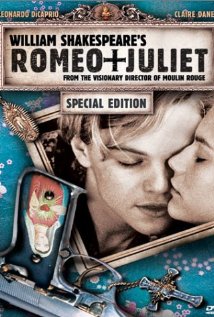
Romeo + Juliet stands the test of time.

After reading a letdown of a book purporting to be in relation to Shakespeare’s “Romeo and Juliet,” I felt I had to re-watch Romeo + Juliet, directed by Baz Luhrman to cleanse my mind of poor attempts at romance, setting, and most importantly, emotion. Say what you want about Baz (Somehow calling him “Mr. Luhrman” just seems wrong), but he, like “the Bard” understands entertainment. His movies might not be to everyone’s taste, but they are certainly not boring and have no problem in embracing witty, if sometimes bawdy, humor.

 At the time it was released, Romeo + Juliet was a revelation. No one had attempted and succeeded at translating a Shakespearean play, and especially the actual wording, into something that an average modern audience member could understand. Many attempts have been made to bring other Shakespearean plays up to date, but most were laughable at best and boring at worst. Even the ones I liked, such as O starring Mekhi Phifer and Josh Hartnett, weren’t inspiring enough that I would ever want to watch them again. A Midsummer Night’s Dream starring Kevin Kline is a nice gem of a film, but it’s not terribly “modern” in its approach to the story. I have seen stage plays far better. Romeo + Juliet is a rare film in that it is something that people, especially young adults at the time, wanted––and still want––to watch.

 After re-watching Romeo + Juliet this week, I find that it is just as good today as it was in 1996. Baz’s Moulin Rouge and Australia are cringeworthy in comparison––and I like both of those movies! The remarkable thing is, the language works in the frenetic pseudo-Los Angeles/Latin American setting. It isn’t so odd that the characters refer to their guns as their “swords” and why people run entirely by emotion speak poetically and epically. A gang fight isn’t just a fight, it’s the honor of each family running simultaneously back to “let there be light” and forward into the moon turning to blood and stars falling from the sky. The language absolutely works.

 Baz’s genius is his theatricality, something he shares with Shakespeare. Even if one cannot fully grasp the often difficult Elizabethan wording, one can still grasp the gist of the plot, due to the bold visuals and unsubtle acting.  Much like Bollywood movies, this style appeals to the masses, helping them to appreciate classical works even if they have little to no education.

 What I like best:

  •  Romeo and Juliet look their age.
  • Their relationship is romantic, but in a rash, youthful way.
  • Though they have stars in their eyes, both R and J sense clearly that they may be the demise of each other. They are deep thinkers, though their focus is inward on self, not outward towards the world around them.
  • Mercutio rocks! He was always my favorite character, but he’s extremely attractive in this version (played by Harold Perrineau, LOST) and admirable in his care for Romeo’s honor. He’s the classic class clown who appears to care only about having fun, but in reality cares deeply about his friends and about honor.
  • Romeo and his buddies seem like believable young men. They constantly tease each other, get into fights, make fun of their elders, and cause trouble, repent for two seconds at a time, and begin all over again.
  • Father Laurence. Pete Postlethwaite (The Last of the Mohicans, The Usual Suspects) was perfect for this role. I can’t imagine anyone else playing Father Laurence in this particular version. He was believable in both the Hawaiian shirt and the priestly attire, and especially, as friend and confidante to both Romeo and Juliet. Postlethwaite had a wise yet youthful quality about him.
  • The nurse. Miriam Margolyes is one of those talents that excels in smaller secondary roles. She has been in numerous products including multiple Shakespeare and Dickens adaptations, as well as more modern adaptations, such as the Harry Potter films. Her portrayal of the nurse is both comical and sympathetic. She takes what her employers dish out to her with the stride of a person totally comfortable with who they are.
  • The ending, the ending, the ending!! So perfectly done that even though one is 100% certain that title characters are going to die, the last scenes still put the audience on the edge of their seats wondering if the two lovers will actually ride off into the sunset. It makes the tragic end more exhilarating rather than sorrowful and one can’t help agreeing with the police captain (Vondie Curtis-Hall) that “all are punished,” and punished appropriately. The consequences of such a lifestyle as these characters lead can only be an early death, or the early death of their loved ones.

Onto another great Shakespeare adaptation, and possibly my favorite: Much Ado About Nothing (1993) directed by and starring Kenneth Branagh.

On Totalitarianism–A Society of Health

A Society of Health

“Aaachoooiee!!” Alyssa Taylor sneezed mightily into a tissue from the box on her desk.

“Bless you.” Raymond Bins, her coworker said as he tapped away on a computer spreadsheet. “Coming down with something?”

“I think it’s allergies. Ever since we moved here––”

“Who sneezed?” Ariana Blight stepped ferociously around the office partition. She looked a bit like a crow with her tiny, birdlike frame, black sweater and pants. Her dull gray hair was pulled tightly back into a bun that rested heavily on top of her little, wobbling head.

Alyssa raised her hand. “Guilty,” She smiled sheepishly. “Sorry, I know my sneezes are so loud. My daughter always says I sound like a firecracker.” She drew back into her chair as the older woman stepped up to her, the woman’s beady eyes bright with anticipation.

“Do you have a cold?”

“It’s…just allergies.” Alyssa exchanged a glance with Raymond who had stopped typing. “This building is so full of dust…” Ariana continued to inspect her, bending low enough to look up her nostrils. “Is everything all right, Ariana?”

“You have mucus,” She pointed to the left nostril. “There. It appears yellow, not clear. Blow into this.” The small woman brought forth a crisp handkerchief from the bowels of her sweater. Laughing a little, Alyssa obliged. Raymond rolled his eyes and made crazy signs that the old woman couldn’t see. It had never been clear to them what exactly Ariana’s job at the company was, but she always seemed to know everything about everyone. Ariana fearlessly opened the handkerchief and proceeded to inspect the leavings. “As I thought. Yellow, going on green. You, Ms. Alyssa Taylor, have the beginnings of a very bad cold, an infection.”

Alyssa shrugged. “You know, I did feel a bit off yesterday, but I thought it was the weather. And my allergies get so bad this time of year…” She trailed off when she saw the glinting triumph in the older woman’s eyes. “Is there a problem?”

Ariana Blight pulled a small flip-top notebook out of a sweater pocket. She proceeded to read: “United States Code, Title Forty-Two, Chapter Two, Section Eight Thousand Four Hundred and Nineteen: All persons shall take precautions to prevent the spreading of the common cold. Subsection D, Four: Any person expectorating or sneezing in a public place shall be examined for infection. If infection is found, said persons are duty-bound to report to the nearest Health Center and receive treatment. Upon refusal to do so within one hour of infection report, said person may be subjected to a fine of One Hundred Dollars or up to Thirty days in the local quarantine cell. Subsection D, Twenty: Any and all persons failing to comply with this Chapter shall be labeled as a Spreader of Disease and a criminal under this Title Forty-Two.”

“What?” Alyssa blinked up at her. “I don’t…I’ve never heard…”

“They didn’t publish it, you see,” Ariana whispered softly, leaning over her. “Only passed it, our wonderful…New Congress. Now, let’s come along down to the office Health Center, shall we?” Alyssa sat there blankly. “Ah, and Raymond…” The crow-like woman filled out a yellow slip from her pad of paper, ripped it off, and handed it to him. “The citation number, should you wish to pursue legal action in the near future. Being around her nine hours out of the day, you are the likeliest to suffer from her…negligence.” Raymond took the paper and paled at its contents. “Of course, should you also come down with said infection and fail to address it immediately, you will be issued a citation as well.”

A Society of Health is a one-page short story I originally wrote in 2010.

On Totalitarianism:  The desire of one human or humans to have power over another human or group of humans has provided a wealth of storytelling throughout history.  As modern society continues to bow to the grand sham of collectivism and the tyranny it inevitably leads to, it has become imperative to me to fictionally explore just how dangerous it can be to allow fallible human beings nearly unlimited power over oneself and life, even if said people declare themselves to be operating in one’s best interest.  These stories reflect my thoughts on the matter, but are by no means the final word on the subject.  

––Pixie Beldona

The Limbo of War: Heidegger’s Glasses

Summer is the best time of year for rifling through the local library for great, but as yet, personally undiscovered reads.  Heidegger’s Glasses by Thaisa Frank has just the sort of cover to grab my attention–rumpled envelope with the Third Reich eagles, faded letter peeking out behind and a shadowed women venturing out across a no man’s land expanse of meadow.

Having never been in a war, I don’t know what they’re like, but my impression from reading about World War Two is that is was a lot of violence and a lot of waiting.  People were in limbo and waiting for their lives to start again.  Heidegger’s Glasses catalogs wonderfully this “falling out of the world” that happens when ordinary things are turned upside down.  In this case is it the Nazi regime that is ludicrously obsessed with making things what they are not, an old mine shaft transforms into a street of dreams and letters written to the dead.  The writers or “Scribes” barely escaped the gas chambers and wear the fur coats of those who didn’t.  These people live lives of waiting for something to happen, for Goebbels to come and shoot them all, or for a miracle to end the war.  Only Elie, the leader of this group, seems to understand the urgency at stake as she tries to save one person after another.

Heidegger’s Glasses is simultaneously heartwrenching and uplifting.  It has the same odd sense of limbo I got while reading another masterpiece about World War Two, Empire of the Sun by J.G. Ballard (this is my all time favorite novel).  The characters are stuck in a pretend world that is a quarter what they left behind, a quarter of what’s ahead and the rest a strange dreamland where glasses aren’t glasses but are something on which the entire future of the Nazi regime hangs.  Parts of the story seem like something out of Indiana Jones (he always liked fighting Nazis) with a street underground, along with a house and a painted on sky, a man who lives in a “shoebox” and mulls over his crystal balls, a woman who is never quite herself, and letter after letter written to the dead.  The philosopher Heidegger, once he appears, is infuriating, a character who shows best just by being himself, that philosophy and other “theoretical” university pursuits have little or no value in a real world where real people who are dying need real answers and real fighters, not someone who will theorize them into their graves.

My favorite aspect of the novel is that it shows what a thorough sham the Third Reich became.  They were beyond ridiculous in trying to justify their actions and to pretend that they were the least bit civilized.  A cell is not a cell, no it’s a waiting room you have to reside in forever.  It’s perfectly acceptable to have seances while Russia is beating down our door.  There is a certain stupidness about evil that will never allow it to fully triumph.  Mostly its stupidness in not knowing that good is where it’s at.  Heidegger’s Glasses is a pleasantly paced read that will get you thinking of the merits of philosophy, power, and humanity in general.  It shows that sometimes even good people have to fight fire with fire in order to win.  It shows just how human we all are, and how helpless we can be when faced with a great political mechanism we cannot control.

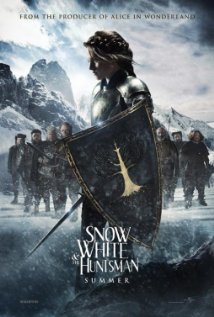
The Universal Battle: Snow White and the Huntsman, a review

Snow White and the Huntsman from first-time director Rupert Sanders is brilliant.  It’s not perfect by any means, but it’s a rarity in Hollywood these days to have a big budget movie that doesn’t feel like a product.  There were no cutesy pop culture references, no trite one-liners with a long pause for the laugh.  SWatH is an old yet refreshing story about the universal battle between good and evil.  And for a first effort?  Awesome.  Think what Sanders’ fifth or even tenth film will be like.

First things first:  The dislikes:  I didn’t really care for the dwarves.  They did have some catchy funny lines, but I couldn’t really understand what they were saying and blind dwarf playing by Bob Hoskins irked me beyond belief.  The shots of him looking almost directly at the camera took me out of the film every single time.  Also, I was really bothered that they hadn’t hired actual dwarves or little people for the film.

Likes, likes and likes:  The cinematography was breathtaking, and I couldn’t help but smile at all of the references to other fantasy films like The Lord of the Rings.  The forest could’ve easily been haunted by the spider Shelob, or Gollom or both.  Not surprisingly, Charlize Theron outshone the rest of the cast when it came to the acting, but villains usually have the most personality in these sorts of tales.  Kristen Stewart did a great job as well, especially with her voice.  I don’t know if the accent she used was pitch perfect British, but it sounded natural, which frankly is more important.  Chris Hemsworth’s huntsman brought a wonderful gravitas to the production.  The actor is twenty-something, but has such a maturity and presence about him that instantly brings integrity to the screen.  As the “prince”, Sam Claflin didn’t have much screen time to shine, but he had one or two scenes done really well.  The story itself was good, if unfocused at times.  I liked the idea of rediscovering a world that maybe you once knew (the enchanted forest), but had long forgotten in dealing with the darkness and brutality of life.

Themes:  We tend to pull out from films and stories something of what we believe or how we see the world.  I’m no different, and as a Christian immediately latched onto the theme of good vs. evil in Snow White and the Huntsman.  Snow White whispering The Lord’s Prayer and the beginning seemed at first like a throwaway reference to her “goodness” (i.e., she believes in God or is religious, so she is good)  But they expanded on that idea of her goodness by showing the empathy she feels for other people and creatures, signaling that if her goodness comes her faith, it’s a deep faith, something that is part and parcel of herself.  Her personality is quiet, calm and sure.  She doesn’t panic or babble and her presence is a sanctuary for those around her.  This is how I’ve always thought of Jesus Christ, as a sanctuary, and so that’s the symbolism that stuck for me.  The stag or hart of the forest that they show about halfway through, is also something that has been used as a symbol or reference to Jesus.  So, the stag giving its blessing to Snow, could be like Jesus blessing the Church.

In contrast, the queen Ravenna is rough and loud and has no empathy, not even, I think, for herself.  She’s merely a wretched creature, much like other iconic villains such as “The Eye” Sauron from LOTR and the serpent-like Voldemort from the HP series.  Her life is utterly dysfunctional and she takes absolutely no joy in the world.  Her power is oppressive, but not really interesting.  This is a person who has no imagination, much like the ultimate prince of darkness, Satan.  And for some reason, these super powerful bad guys can’t rule on their own, they always have these lackeys hanging about.  Ravenna has a brother who does her bidding.  He’s as chained to evil as she is and distinctly lacks purpose.

The ultimate love story:  Snow White and the Huntsman is an epic love story––it’s just probably not the love story we usually think of.  The love story in the film isn’t really between Snow White and the huntsman, but is between Snow White and her kingdom.  Magnifying that in a Christian theme:  The love story is God and His love for this world.  Snow White can symbolize God, the savior Jesus, or, most-fittingly, the believers in Christ, or the Church.  The queen then, would be the Devil, Satan, the very powerful, but not powerful enough, ruler of this world.

If that is the case, if the love story is actually between Snow White and her kingdom, then it makes perfect sense that the chemistry if any between her and the Huntsman is so subtle.  It makes sense that he kisses her dead lips not because of romantic love, but because he had started to hope in something good and pure again and it was taken from him.  The Huntsman is searching for spiritual truth.  He threw his lot in first with the queen, hoping she could bring back his dead wife.  Yes, Satan promises this as well, through witchcraft, spells or other means, but he, like Ravenna, truly has no power in the giving or bringing back of life.  All they bring is death always and forever.

At the end, much like Satan, the queen declares that she will give this world “the queen it deserves,” all this while standing in the midst of flames in case we should fail to see the reference.  The world is awful and burdened with sin, it does deserve a a terrible tyrannical ruler.  It deserves that, but what the world actually has is a living God who is both love and justice.  The Church (Snow White) has true faith in God’s love and justice.  She empathizes with the creatures of the world and even with the queen, but for there to be any justice, she must slay the queen, and that’s exactly what she does with her new believers’ help (the Huntsman and the Prince).  From her sorrowful expression, it is clear that Snow White, much like God, is not happy to have to slay the wicked, though again, it is necessary if there’s to be any justice at all.  If the world is to ever be free of his reign, the Devil, along with his minions and believers, must be condemned to hell, apart from a loving God that he will never understand.  In the end, the believers in God, love and justice, can say to the Devil or the evil queen “you can’t have my heart, my heart belongs to someone far greater than you.”

Romance:  There is a romance between Snow and the Huntsman, but it is very, very subtle and a touch I absolutely loved.  Not every romance is all wittiness, winking and wooing.  I think when the Huntsman kissed Snow White, it was a last-ditch effort at having hope.  When she rose from the dead that’s when he began to truly love her.  I think the moment Snow realized that she loved him was when he made a flirty comment about her chain mail.  She didn’t know what to say, I think, because she realized at that moment that true love was dawning on both of them.  The ending was perfect:  They didn’t need to kiss, they just exchanged a look that seemed to be her declaring her love for the Huntsman, and him accepting that love and pledging loyalty to her.  Okay, I’m probably reading too much into it, but I thought it was a beautiful moment and a thought-provoking movie.  It is one I definitely want to see again.

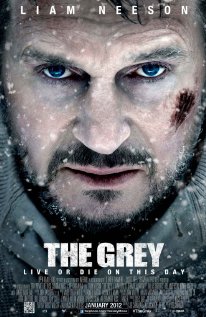
The Grey: Intense (spoilers)

(Spoilers Ahead)

The Grey in one word: Intense.

 A group of oil drillers heading home to Anchorage, AK, is stranded in the snowy wilderness when their plane crashes in the middle of nowhere. Only a few men survive and they quickly realize that the real threat is not freezing to death, but a pack of wolves who are intent on killing every last man.

I have to admit that it was refreshing for animals to be the antagonists in this. It’s easy to forget living in cities and keeping pets that animals can often be a grave threat to humans––especially when we have no guns. The wolves were absolutely terrifying and I almost had a heart attack the very next morning when my neighbor’s huge black bear of a dog came bounding up to greet me when I stepped out my front door. He’s harmless, though, and so cuddly and lovable. But I digress.

Terrifying wolves and lots of up close and visceral images of them devouring their human prey. Men who do hard work for a living and like to drink, fight and swear. The Grey definitely earned its R rating. Just the intensity in the shots alone got to me. Okay, I was sitting pretty far up front, so that may have had something to do with it, but they would shoot someone walking from behind and place the camera pretty much on their shoulder. And with the snowy environment, the look was very crisp and “in the moment.” I think I held my hands up to my face the entire time. And I was cold! It was fitting to watch this film in the middle of Minnesota winter, especially considering that one of our mascots is the Timberwolves.

Now on to the actors: Liam Neeson. Gotta love him. He’s lately become the actor who plays guys who get things done. He has this Alpha male screen presence about him and presents a strength both emotionally and physically that few other actors today can match. In The Grey, Neeson plays Ottway, a man whose job it was to shoot the wolves near and around company grounds. He’s also grieving the death of his wife and a bit angry at God for taking her away from him.

All of the men in this film are damaged and rough around the edges. They’ve made stupid mistakes and have paid dearly for them. It’s not really said so much as shown in their haunted expressions and the sarcastic front they put up in facing their fear. The other actors aren’t well-known (except for Dermot Mulroney (My Best Friend’s Wedding) who is unrecognizable behind a thick pair of glasses), but for a frequent movie watcher like myself it was fun to see “that guy from Becoming Jane and Across the Universe!” (Joe Anderson) and “that guy from 3:10 to Yuma!” (Dallas Roberts). Frank Grillo was a standout as Diaz, a guy who at first has trouble admitting he’s afraid and then has a rather poetic if sad end in front a gorgeous mountain vista.

The Grey is a survival movie with themes revolving around faith, emotional layers, how men deal with life, etc. It was interesting to me that they really didn’t immediately put their full effort into defeating the wolves, and I wondered how different they would have behaved had there been women present. The last man standing really only gets his fight in gear at the bitter end when it’s pretty much all over and he’s literally in the wolves’ den. He wants to die from grief but can’t quite let himself do it, at least not without a fight.

Speaking of that, the movie’s tag line is: “Live or die on this day.” It’s something we are all faced with every morning we wake up: Are we going to roll over and let death take us, or do we still have one more good fight in us? Like his character we often get angry with God whether we say we believe in Him or not. And sometimes we shout at the sky and ask for a sign and get no better response than our God-given ability to fight for a few more minutes of life.