Archives

The Great Doctor (Faith) 신의 — review

Poster-the-great-doctor-aka-faith-32029441-680-1000If you have not experienced the awesomeness of K-drama, or Korean TV dramas, I highly recommend giving them a view.  The set up is a bit different than American TV shows, the episodes are an hour or more long, and there’s usually only one “season” or anywhere from 16-30 episodes in each drama.  Given that the stories have a definite end point instead of yearly “will they or won’t they” renewals and extra seasons, the writing, acting and storytelling are stellar and don’t suffer from consecutive seasons that become more mediocre after each year.

The Great Doctor or Faith is a historical drama and romance set in the 1300s during a time when Korea or Goryeo is under the heavy thumb of the neighboring Chinese Yuan dynasty.  The young king is returning with a new queen to his homeland after years of living as a hostage in China.  The king and queen are being transported by a small group of royal guards called Woodalchi.  They are led by weary warrior Choi Young who has been serving for royals for many years.  They are attacked during the journey and the new queen is wounded.  Only a powerful surgeon can heal her, and one of the king’s advisors suggests going to a place he knows of with a magic gateway to heaven where a famous ancient doctor is said to have gone.

The gateway still exists and Choi Young is sent on a quest to heaven to find the great doctor.  “Heaven” is actually modern day Seoul as the “gate” turns out to be a wormhole bending time and space.  In a happy coincidence, Choi Young enters the future in direct vicinity of a plastic surgeons convention and kidnaps a surgeon named Yoo Eun-Soo after giving her a practical test to gauge her surgical abilities.  The show could have easily just run with the fish-out-of-water theme that it plays up in the first few episodes, but the writers smartly kept that to a minimum and focused more on the drama surrounding the king and queen and how the two protagonists deal with that and begin falling for each other.

From the first episode to the last, the production of The Great Doctor is a stellar, movie-quality experience.  The story drags a little at the end, but it’s mostly character driven with plenty of action.  If you don’t like the characters at the beginning, they will feel like old friends by the 24th episode.  There aren’t many special effects, but what is shown doesn’t look too corny.  The magic in the world is left partly unexplained, but the character and action more than make up for that.

Much of the series reminded me of the book series Outlander in which a WW2 nurse gets sent back to ancient Scotland and falls for a younger warrior.  Except this version is far more charming and romantic and doesn’t rely on sadism as a way of furthering the plot.

At first I thought Yoo Eun-Soo played by Kim Hee-Seon was annoying and acted a bit childishly for her age, but Kim won me over especially in the second half of the series as her character begins to bloom under the love of Choi Young.  Young is played by the popular and easy on the eyes Li Min-Ho who came to fame from the comedy series Boys Over Flowers (if you love high school shows and comedies do not pass Go, do not collect $200, but go directly the Kdrama app where you can watch the series for free).  His character is my favorite simply because I enjoy exploring the plight of the “faithful servant.”  He’s killed hundreds, possibly thousands of soldiers and others all at the request of the kings that he serves and his soul (Seoul, ha, ha!  Okay, I’ll stop being so punny) hurts because of it.  He’s damaged in a way that I cannot comprehend, but that I’m sure many of those who are soldiers and good at it can.

Like most shows and films The Great Doctor wasn’t easily made.  It suffered from production delays and the lack of a lead actor after the first and second choices for Choi Young fell through.  Li Min-Ho stepped up to the plate and did a decent job.  He’s a bit younger than the age the role calls for, but Li is believable as the captain of the royal warriors because he commands wonderful screen presence…and he’s tall. 🙂  Okay, all the warriors are tall (at least to me, I’m 5’3″– okay 5’2 and 1/2″), but Li was a good choice as he’s an expert at sporting a sort of bored “I’m cool” expression well-suited to a warrior who has probably seen every atrocity under the sun.  Also, the King Gongmin played impressively by Ryu Deok-Hwan is tiny!  At least, he appears that way in this production.  Ryu does a great job portraying someone who simultaneously has a lot of power and no power and who struggles with it constantly.  The king’s personal struggles with power over his own life mirror that of his best warrior, Choi Young, and their relationship is in a way more interesting than that between Young and the “great doctor from heaven.”  Also, the king and queen’s relationship is sweet.

I love romances, and the love story in this is wonderful with lots of funny moments and many touching, endearing ones.  By the end you just want to shout out the Jerry McGuire line: “You complete me!”  Yoo Eun-Soo fills the ache in Choi Young’s heart and vice versa.

One more shout out, and that’s to the soundtrack people.  The main theme is especially addicting and reminded me somewhat of the Pirates of the Caribbean music.

How Twisted Should End

Despite its somewhat mediocre presentation at times, I thoroughly enjoyed the first season (or half season?) of the ABC Family show Twisted.  The availability on netflix helped me tune into a show, that given time could have been awesome.  I say could have been, because if the show gets renewed and if the show sticks with the same terrible plot lines it will die a quick and painful death if it’s life hasn’t been already cut off at season (er, half season?) two?  (Side note: Although I applaud shortening the number of episodes in a season to, theoretically, improve story quality and get rid of filler scenes/episodes, one has to actually have quality story to, you know, tell).

I just finished season two of Twisted on netflix and found myself wanting to pull my hair out.  What were the writers thinking?  What were the producers and heads of ABC Family thinking?  They don’t want their show to succeed?  Why make a show in the first place?  Let me explain.

Twisted began with an intriguing premise: Three junior high friends had their world turned upside down when one of the trio, Danny Desai, was convicted  for murdering his aunt with a jumprope.  Five years later, Danny is out of juvie and returns home where he and the two girls he was once besties with have to struggle with the feelings and the horror they still all have.  And no one’s quite sure if they can trust Danny, who claims to be a good guy despite the murder charge.

The show started out pretty good following all three leads and took a surprising romantic twist in that for once it wasn’t the awkward, socially inept soon-to-be-butterfly tomboyish girl that was chosen, but the popular, elegant and very feminine girl.  Thus began, sadly, Jo Masterson vs. Lacey Porter.  Now, I enjoy a good love triangle, but this “team” stuff that began with Twilight is seriously getting in the way of storytelling.  Lacey Porter is a great character; Danny Desai is a great character.  Them Together, they could have been incredible.

Insert Jo.  On the whole I like Jo, but by the second half of the first season everything was about Jo.  She and Lacey hadn’t seen or spoken to Danny in five years, yet Danny (and Lacey) are supposed to apologize to her for loving each other?  This is beside the point.  The show began with three leads.  Yes, there are hints that Jo’s family may eventually be show to be at the center of whatever conspiracy is actually going on, but actual evidence of that has yet to be seen.  If any of the trio gets more screen time, it should by all rights be Danny.  And then Lacey, because frankly actress Kylie Bunbury has better acting chops than the other two leads and all of the other characters combined.  Her emotions are believable.  Lacey comes across as a real person whereas Jo, much as I like her, seems only to be a plot device of a person most of the time.  Rico (Ashton Moio) also comes across as a very real person with genuine emotions.  Danny’s my favorite, though, but only because he has the potential to either be an ultimate hero or an ultimate villain.

And then we have season two.  Season two where for no apparent reason, Danny has seemed to turn off all of his emotions concerning Lacey.  True, he has always cared for Jo, but honestly in season one they seemed to be like a brother and sister.  If Jo’s feelings got confused, well, she’s young and socially awkward.  But now Jo is the love of Danny’s life…apparently.  And Lacey is…a lesbian?  Oh, so Danny doesn’t look like the bad guy, right?  So it’s Lacey’s choice that they’re not together.  Uh, huh.  Rico, too, has quickly overcome his feelings for bff Jo and moved on to someone else.  Soapy, dumb plot lines, but they wouldn’t matter if THE main plot of the story (is Danny or someone he’s close to a sociopath/psychopath/killer?) was at all thrilling.

If audiences are entertained, they’re willing to overlook a few flaws.  With Twisted the main plot line is a flaw in itself.  It appears to be going nowhere.  The writers have hinted at conspiracy, introduced a cousin to Danny, and brought in a manipulative father-daughter duo all for naught.  There have been zero answers, zero payoffs, and if their goal is to make Danny’s mom, Karen (Denise Richards), and Jo’s mom, Tess (Kimberly Quinn), look like the socios, they are doing a good job of it.

I know the goal of TV shows is to get renewed and renewed for more and more seasons, but prolonging a story simply for that purpose wastes so much, talented actors, writers, and so on.  Being in the business of storytelling, shouldn’t their first goal be to tell a great story?

Here is, with my puny imagination, how Twisted should be put out of its misery:

  • Danny Desai ends up being the sociopath everyone thought he was (though not necessarily a killer).
  • Jo turns into Nancy Drew and solves the case, realizing Danny and his mother have been pulling everyone’s strings the whole time.
  • Rico saves Lacey from a horrible death, the two of them realize their love for each other, and ride off into the sunset as the only two characters caring enough to warrant a happy ending.
  • Chief Masterson sits back in his chair and chuckles at a photo of Danny, except the caption on the photo does not read Danny Desai.
  • The last shot is of Karen Desai being released from prison.  Along with the items returned to her upon release is an FBI badge with her picture on it.
  • After the credits, and for no apparent reason or explanation, Danny’s aunt is shown to be alive and well and sunning herself on a yacht in the middle of the ocean.

Ok, ok, it’s hard to write an amazing, compelling story, and I give all TV writers a salute for trying, I just wish the first goal of each show was to have, well, not just a good show, but an amazing, epic, heart-stopping show.  One that people just can’t put down, so to speak.  None of the three leads actually has to have a romance in order to remain leads.  They could just relate to each other as friends.  Karen and Vikram Desai are really the only believable parents to be involved in a conspiracy.  It is painful to watch the floundering efforts at making Jo’s mom relevant to the main plot.  She could just be a mom who is there for her husband and daughter and still be a great character.  Rico wants to be a lead, he really, really does, and as a studying nerd he could contribute oh so much as a fourth in the “scooby gang.”  Plus he and Danny get along well and he actually brings out Danny’s good qualities far more than either Jo or Lacey do.

Sigh.  What could have been.  What could still be if only someone took control of the story.  But, sadly, showbiz doesn’t really run on story.  It runs on far more fickle things.

Sales Tips from The Paradise — Part Two

Part Two of Two

One of the best things about business, in my opinion, is that good business tips also make good life tips.  In one form or another we are often trying to make an impression on those around us, trying to “sell” some idea of us to them.  Well this can be cast in a negative light, it is simply the way the world works, especially in a day and age with so much competition.

Here are more sales tips from the BBC show, The Paradise starring Emun Elliot and Joanna Vanderham:

You can never know too much about your product.

Denise, the shopgirl in The Paradise has a lot against her, mostly jealousy from her rivals who are also after Mr. Moray’s attentions, romantic or otherwise.  Nevertheless, knowing (or at least sounding knowledgeable) about the dresses she sells helps her get out of a sticky situation in which a rival shopgirl has her try on a dress for a lady.  The dress given to try on is purposely too small on Denise, so the lady says she won’t buy it.  In a fine moment of triumph, Denise delivers a sensual speech stating that it doesn’t matter how the dress looks on the shopgirl, but how it will look on the lady.  She describes the dress as the perfect item to wear if you wish to attract a suitor, and the lady falls for it all with Mr. Moray (the boss) looking on.

You can never know too much about your product, whether you sell buttons or gourmet dinners.  Customers are impressed by knowledge and confidence.  The same can be said for, yes, romance.  Confidence impresses.  Also, you never know who will be watching.  Employers are duly impressed as well when it’s clear their employees have taken the time to know the product.  Those employees are usually hard workers and marked for success.

The brightest and best will always be resented.

Speaking of success, if one wants to be one, it’s best to note from the beginning that if one is good at one’s job, or especially blessed with good looks or talent, one is bound to experience resentment from others from time to time.  As a society we continually fall prey to the idea that the rich and successful are to be resented merely because they are rich and successful.  We don’t seem to care about all of the hard work and sacrifice that came beforehand to get the person to that state.  Thus, to be a success, note that the resentment exists, and move on.

In the series, The Paradise, both Mr. Moray and Denise have people set against them due to their successes.  But the shops dying out because of the glittering mammoth department store aren’t even trying.  They seem to expect that customers will come to them “just because.”  Instead of finding ways to work with The Paradise, or new and interesting ways to appeal to a niche audience, these shops are decaying.  The shopkeepers make almost no attempt to even improve the look of their stores.  It is only when Denise takes the time to help them, that they even try.  It is sad that so many of us in this world think we are owed something, for that attitude will continually bring us heartache.  The truth is if we are to gain anything in this world, we must bring something to the table.  (Love is something apart from business, in that we can’t ever truly earn another’s love, though we might gain their attention).

It is interesting to see that even though at this point in the series Denise is actively encouraging the shops to take custom from The Paradise, Mr. Moray isn’t alarmed, but impressed by her ingenuity.  So we can say as well that the brightest and best don’t spend time resenting the other brightest and best.  They learn from them and consider them (in the age old words of Captain Hook) “worthy opponents.”

Find a way.

“If at first you don’t succeed…”  A good idea is a good idea.  A good product is a good product.  Sometimes barriers, whether of funds, pride, or spite get in the way.  Denise is a shining star of a shop girl, and as such, her supervisor, Miss Audrey, is alarmed that Denise may take over her own position.  Instead of bettering herself, Miss Audrey’s solution is to snuff out the burning light of creativity in the girl.  She insists that Denise stop having ideas altogether on how to improve sales, or if she has any, that she bring them solely to Miss Audrey and not to Mr. Moray who is so encouraging of her.

Denise respects Miss Audrey and doesn’t wish to make her feel threatened, nevertheless, she finds a way to go through an alternate third party to get her good ideas where they need to go, to the boss who understands their worth.  The best businesspeople find a way and they try to do it without crushing others in the process.

Cheer up.

Sam, a plucky Paradise salesman played by Stephen Wight, gives this an an answer to anything that ails a person.  Denise’s uncle,  Edmund Lovett (Peter Wight), is gloomy because his business is dying out thanks to the booming department store across the street.  Cheering up in and of itself doesn’t really solve a problem, but it definitely improves one’s outlook, and outlook is key.  Pessimists and people sunk in depression and gloom are rarely the movers and shakers of the world.  To have ideas is to have optimism, or cheer.  How can one win either in business or in love by throwing pity parties?  People are not owed business or love, but must seek it out.

It is disheartening, that especially when it comes to love, those most desperate to have it are scorned for that same desperation.  But, people are most attracted to those who are rays of sunshine and who show cheer and confidence.  Somehow, for those of us who are down in the dumps, we must fight that depression and put on a brave face.  Put on makeup and curl your hair if that helps.  Cheer up even if there’s not much cheer to be had.  Highlight your strengths as much as you can, putting your best food forward.  It’s not fair, but people respond best to the prancing peacock, the blondes who appear as if they are having all the fun, and those who bring excitement into a room.

Success is not guaranteed, but at least you now have cheer.  And cheer brings so many possibilities with it.  It sees the best in people and the best in every situation.  It can even look beyond the peacocks and blondes and see the quieter attractiveness of “nice” girls and guys who only want a little encouragement to shine and to wow you.  Cheer finds a way where gloom can scarcely conceive of one good idea.

True love isn’t fickle.

This is more of a life tip than a sales tip, but it can be applied to business as surely as romance.  If you love to do something, you’re not going to do it half-heartedly.  If you truly love someone, you’re not going to love them while keeping an eye out for someone better.

Confidence is the supreme importance in a lover (and in a businessman).  Mr. Moray and his on and off relationship with Katherine Glendenning is one of the most infuriating story lines in the show.  Both are fickle and neither show confidence that the other is what they want.  Moray exudes confidence in his business, but can only pretend at love, until, that is, he finds someone he actually does love.

The best romantic advice I ever learned was that if you aren’t sure that the object of your affection likes you, cares for you, or loves you, they probably don’t.  That isn’t to say that you can’t win them by impressing them with your love and confidence, but if you are “loving from afar” it is likely destined to be only a one-sided love.

This is not always the case.  Some love stories take their time, just as some businesses need time to grow, but the truth is: If you have to ask if they love you, the answer is in the question.  If you have to trick or cajole someone into committing to you, their heart isn’t in it.  If a person can’t decide that it’s you they want, they likely don’t want you.  But, cheer up, the world is full of billions of people, billions of possibilities for love, just as it’s filled with billions of different customers.  What repels one person attracts another.  The right person will love you in confidence and joy.  They will be eager to commit because true love wipes away all fear.  True love is willing to take the risk.  In the words of William Shakespeare:

SONNET 116

Let me not to the marriage of true minds
Admit impediments. Love is not love
Which alters when it alteration finds,
Or bends with the remover to remove:
O no; it is an ever-fixed mark,
That looks on tempests, and is never shaken;
It is the star to every wandering bark,
Whose worth’s unknown, although his height be taken.
Love’s not Time’s fool, though rosy lips and cheeks
Within his bending sickle’s compass come;
Love alters not with his brief hours and weeks,
But bears it out even to the edge of doom.
If this be error and upon me proved,
I never writ, nor no man ever loved.

Sales Tips from The Paradise — Part One

(PART ONE OF TWO)

The_Paradise_(TV_series)_titles

My latest obsession on Netflix has been a BBC series inspired by Èmile Zola’s book, The Ladies Paradise.  The TV series is a little more charming than the book, but both delve into the good and evil of buying and selling, particularly when it comes to department stores.  The BBC series is set somewhere in the Victorian Era at a time when sales and department stores are a novelty.  It is easy to see, however, that the frenzy of shopping we all experience stepping into a Tesco or Walmart is not too far in the future.

What I enjoy most about the series are the ideas of both the owner of The Paradise (Mr. Moray, a ladies’ man played by Emun Elliot) and his newest shop girl, Denise (Joanna Vanderham) have for selling and moving stock.  Denise pours out idea after idea, and Moray is willing to put every one into action, giving her full reign, and calling her his “little champion.”  A match made on Wall Street if there ever was one.  Love and business come together seamlessly in this fine production.


Here are some selling tips from Season One of The Paradise:

Successful businessmen take risks.

Mr. Moray is intent on conquering the city with his department store, and he is willing to risk everything to do so.  His advisor, Dudley (Matthew McNulty), is more hesitant, more practical, saying they shouldn’t put the store itself in jeopardy.  Mr. Moray says that their city is “littered with men who stood still,” men who shrank from the possibility of greatness because they didn’t want to take a risk.  “Men who slow down, men who take their time, they come second.  I won’t do that,” Moray says when Dudley cautions him against taking gamble with a large one-day sale at The Paradise.  Moray’s willingness to risk everything is why he’s such a successful businessman and ladies’ man.  Ever wonder why the “nice” guy or girl doesn’t get the person of their interest?  Faint heart never won fair lady (or gentlemen).

The customers won’t come to you.

Advertisement.  A sale.  A special, a contest, a promotion.  Customers must be enticed to buy, to want things they really don’t need — one of the “sins” of big business.  In the series and book, a woman’s desire for buying is connected with her lust for love and to be admired.  In love and in business, it is the brightly colored prancing peacock who gets all the attention.  Successful selling requires some flash, and a willingness to show the best of what one has.  Even the plainest of girls can be transformed with stylish clothes, well-cut hair, and a bit of makeup.

At a later point in the season, Denise tells her uncle that if he can’t sell dresses, he should sell neckties.  People are more willing to part with a small amount of money than a large sum, much like a woman may be willing to try conversation over coffee before embarking on a nerve-wracking first date with a dinner and a show.

Bend, don’t break.

Without customers, business cannot be conducted.  Thus the saying, “the customer is always right.”  Anyone working in retail knows that isn’t true.  Nevertheless, doing well in business often means taking small and sometimes large losses to keep customers happy, to keep them coming back.  At The Paradise, Mr. Moray must “bend” to those with money who are considered his betters.  In order to court their investment, he must submit to some of their demands, to compromise.  Part of the success of Kohls department store chain has been their policy that a customer can return almost anything at almost any time.  Yes, unscrupulous customers often taken advantage of this, yet it is a policy that keeps them and others coming back time after time, as do the various discounts and sales.

Investors require proof.

Cold feet in love and cold feet in business.  Reluctance in both can often be remedied with proof, proof that things can turn out for the best, proof that the risk is worth it.  In the series, Mr. Moray courts Katherine Glendenning (Elaine Cassidy) for love, and her father for his money.  Mr. Glendenning (Patrick Malahide) is hesitant both to invest in The Paradise, and to give Katherine’s hand to Moray in marriage.  “Haste is the enemy of love,” he tells his headstrong daughter, all while Moray looks upon both with calculating eyes.  Moray, we quickly find, is fine with waiting in love, but not in business.  Thus, he puts all his efforts into wowing Glendenning the banker with a huge sale at the store, a risk that turns out to be a success.  He also gives Katherine the teasing hope that more time will ease his reluctance to marry.

Loyalty goes both ways.

As a businessman (or a lover), if you expect loyalty from your employees, you should give them your loyalty in return.  A great boss is distinguished by his or her willingness to give their employees the benefit of the doubt when conflicts arise.  When a shop boy is accused of an indiscretion, Moray takes the time to find out the full story before condemning him.  He understands that a well-run business relies not only upon customer loyalty, but also upon the morale of the employees.

A great boss will also know the strengths of their employees and put them to good use, much like Moray continually seeks out new ideas from the veritable light bulb, Denise, and spends time flattering the middle aged Miss Audrey (Sarah Lancashire) who runs the women’s clothing department.  Miss Audrey is herself a born flatterer, a born saleswoman.

Business is Business.

At the end of the day, business is business, and only has a fleeting comparison with real love, but the dance of both, the game of both, can be very similar.  Both involve desire.  What makes Mr. Moray a great businessman makes him a terrifying suitor, a threat to all women.  As a businessman alone, he would make a terrible husband, much like a successful courtesan would make a terrible wife.

The strength of the series, however, is that it shows if one truly cares for and about people, one can be successful both in business and in love.  Customers (and ladies) can be won with time and care.  Moray isn’t a ruthless businessman with no scruples, because he knows he would put himself out of business.  Likewise, he is willing to court Katherine Glendenning, but won’t commit to her until he is ready for marriage.  Denise is a good saleswoman because she genuinely believes in the products and the future of The Paradise, and sees that both can be a benefit to the customers.

The series portrays the dangers of business and falling prey to consumerism, but it also shows the positive side, something we see far too little of in a day and age where the biased ruling of an elite government is held up as the only way the common man can have a chance.  In business, we are not victims needing to be saved by our “betters,” but equals in our striving for success.  A good sale is satisfactory on both ends, where both parties get what they desire in an amiable way that hinges not on their social strata so much as their being able to deliver as promised.  One ingenuity against another.

(To be continued in Part Two)

Misunderstanding Edgar Allen Poe

I don’t read a lot of Poe, but his tales are deliciously thrilling and often tragic tales of the consequences of doing evil.

I’m watching The Following on Netflix.  It’s a show about a cult of murders who have chosen Poe as their icon.  Poor E.A.P.  The vast number of mostly brainwashed murderers in this series think they are awesome for what they are doing.  Nothing could be farther from the truth: Just about any person on this planet has the ability to murder someone else, to hurt someone else.  It’s not a unique or even special gift, no matter how elaborately done.  The rarer gift is that of mercy, of edifying people (I need to remind myself of this more often than I do).

The murderers in The Following can’t hold a candle to Poe.  Poe was a genius of a writer, the essential inventor of the Sherlock Holmes stories we all still love today.  His stories were most thrilling because of one element: Horror.  Horror, not simply murder.  Poe considered himself a genius (rightly), these murderers consider themselves genius, I get it.  They don’t seem to get, however, that the horror of stories like the “Tell-Tale Heart” are entirely due to guilt and the killer’s own fear of death.  These people are sadly misunderstanding Poe.

That’s not to say The Following isn’t an interesting, thought-provoking series.  It’s just a shame that Poe’s great body of work is so often reduced today to nothing more than the worship of death and killing.  I for one, don’t think that’s what Poe was really about.  Was he plagued with problems?  Sure.  What being walking this planet isn’t?

What do you think?  What’s your perspective on Poe?

Skipping a generation: Mrs. Palfrey at the Claremont

Poster-mrspalfrey-wThe latest little gem of a film Netflix has introduced me to is Mrs. Palfrey at the Claremont.  The film, based on a story by Elizabeth Taylor, requires a little bit of patience at the beginning, but it has universal themes of sudden, newfound friendship, and the sadness and loneliness one can feel when it comes to family.

The message of the movie  is to cherish what you have, and this is spoken to both the elder generation and the young.  When you find true love or a true friend, hold on to them.  Don’t be afraid to jump both feet in because “For All We Know” (a song sung in the film) “we may never meet again” ––at least in this world.

Mrs. Palfrey at The Claremont follows the story of Sarah Palfrey (played by a spot on Joan Plowright), a widowed elderly grandmother who decides to spend her last days at a residence hotel called The Claremont.  Her fellow tenants are of a similar age and nearly all quirky and most a bit lonely like herself.  Mrs. Palfrey’s grandson’s blatant ignorance of her makes grandchildren inwardly cringe and you will likely find yourself thinking, “how long has it been since I talked to grandpa/ma?”

Through a chance accident, Mrs. Palfrey meets a young writer (Rupert Friend) who makes a living as a busker, or someone who plays guitar for money on the street.  At first Ludovic (Ludo) seems to be the very opposite of this little old lady.  He wears raggedly clothes, neither rents nor owns his own apartment, and has no great love in his life.  But he is kind to Mrs. Palfrey and through mutual loneliness they find kindred spirits in each other.  They become adopted grandmother and grandson.  Through Ludo, Mrs. Palfrey is able to remember and say good-bye to her late husband; through Sarah, Ludo finds love and joy.  They understand each other as friends while their families are disappointed or don’t have time for them.

The best part of the film, in my opinion, is the idea of a great connection of a first and third generation.  I have known so many of my own friends and classmates who have been raised or been closer to their grandparents than their parents.  That the very young can connect so well with the very old at times illuminates how similar the beginning and end of life is.  At the beginning and end the important things are very clear: Enjoy love, enjoy family, enjoy life and God’s blessings.  Just be for the sake of being!

It’s the middle of life that’s the hardest.  We have the burden of “being productive,” “contributing,” “doing something with our lives,” and so on an so forth.  And how interesting is it that Ludo who really isn’t doing a whole lot in is life accepts Mrs. Palfrey’s statement of this fact over similar criticisms launched at him by his mother and a previous girlfriend.  Old age understands youth and has a tactfulness that younger people lack.  Through talking so fondly of her late husband Arthur, Mrs. Palfrey begins a change in Ludo, a yearning for something more, a desire for a great love of his own.  The adopted grandmother also takes the time to soothe Ludo’s mother’s worries, telling her that though he isn’t a worldly success, he is kind, good, qualities far more important than material success.

Another theme of the film is this idea of a “brief encounter” (indeed the 1945 film of the same name is brought up several times) and how people often connect with strangers suddenly and relate to these encounters far better than they do with people they have known for years.  It is fun, thinking back on my own life, how many friendships have been started by just such chance encounters.  I love when sitting with an old friend how we can’t quite remember how we met and how we can’t quite think of a time when we didn’t know each other.

Last, but not least, Mrs. Palfrey at the Claremont has an unmistakable sensuality to it.  The beginning shows Ludo at his typewriter as he writes and smokes and there is a close shot of his mouth as he reads the first sentence in Sarah Palfrey’s tale.  Ludo and Mrs. Palfrey hug and lean on each other often, a familiarity that easily allows Ludo to pretend to be her grandson, and leaving us with the sense that if they were the same age, well, the late Arthur might have been given a run for his money.  The Claremont itself is still a finely furnished hotel, but dull and aged, much like it’s occupants all who were probably very striking in looks when younger, but have now faded with age.  Ludo is shabby out of poverty (a bit of his own doing), but despite that is a breath of fresh air in looks and energy, recalling the beauty and vitality of youth to the occupants of the Claremont.  It is so true that the elderly are often invigorated being around youth and/or small children.  They remember what they used to be and the great hope and promise of life when one is at the beginning.

In addition, Ludo is a fantastic cook, his dish contrasting severely with the bland food served carelessly at the hotel. A quick series of cuts highlights what a gourmet cook he is.  This is nearly passed over and is wholly superseded by the highlight of the film, his performance of “For All We Know,” but it should not be overlooked.  As a cook alone, Ludo is highly underrated by both himself and society.  Another theme this brings out is that sometimes we underestimate even ourselves, throwing our efforts into something we think we have talent in (in this case writing), and ignoring the even greater talent we have for things like cooking or music.  How often have we known someone who is the best, most patient teacher in the world, but does not desire to be one for a living?  How often have we known friends who rank their own sufficient, albeit mediocre artistic talents far above their very real unique talents with business or family?

From the film, I think that Ludo is a sufficient writer, but I doubt that it’s his overarching talent.  He is a dreamer and thinker more than a writer, and his friendship with Mrs. Palfrey shows that he has far more talent interacting with people rather than the written word.  That’s not to say he doesn’t have talent as a writer; but it is heavily implied that he likes the idea of a being “a writer,” as so many young people do (myself included!), but is possibly more suited to being a cook, a musician, a poet, or even a nurse.

At the end, the film leaves us with the knowledge that good friends are hard to find, and sadly we often cannot find such friendship among the members of our own family.  It stresses the importance of cherishing and being around the ones who do really love you and surrounding yourself with those people, especially at the end of one’s life.  This is truly a gem of a film.  It is rare in this day and age to find a story that dwells on real themes in such a sweet, poetic manner.

Boys Over Flowers (kkotboda namja)

If you have Netflix and enjoy watching dramatic High School-themed stories, check out the Korean show Boys over Flowers.  It’s a 2009 show based on a Japanese manga (I think there is also a couple of Japanese adaptations, but I haven’t seen them).  The show is about a girl whose family owns a dry cleaning business standing up to super rich bullies that belong to an exclusive group called F4.

 The bullying is actually so awful, I found myself wondering where all of the adults are at this elitist snobby school.  No one seems to really care that kids are being bullied so bad that they contemplate suicide.  But the extreme bullying does make the fact that Geum Jan Di (played hilariously by Hye-Sun Koo stands up against it all the more powerful.  She soon has the richest, most powerful guy in the school so confused by this that he actually thinks she has a crush on him.  It never enters his head that someone might have compassion for the regular people that he pushes around as if they were serfs in his personal kingdom.

Throughout the show, the boys in the F4 grow on the audience and on Geum Jan Di and it’s a pleasure to see them begin to use their wealth and power for good instead of evil.  The wealthy Goo Joon Pyo (Min-ho Lee) could probably be Batman if he really wanted to:  He has the money, power, and fighting skills, and being the leader of F4, and the one completely dumbfounded by Geum Jan Di, he also has the most dramatic character growth of all of the Boys in the series.  I am halfway through the season and am looking forward to the last few episodes.  🙂

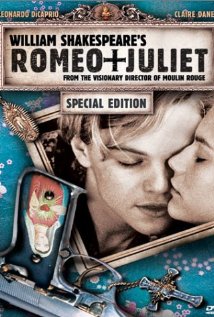
Romeo + Juliet stands the test of time.

After reading a letdown of a book purporting to be in relation to Shakespeare’s “Romeo and Juliet,” I felt I had to re-watch Romeo + Juliet, directed by Baz Luhrman to cleanse my mind of poor attempts at romance, setting, and most importantly, emotion. Say what you want about Baz (Somehow calling him “Mr. Luhrman” just seems wrong), but he, like “the Bard” understands entertainment. His movies might not be to everyone’s taste, but they are certainly not boring and have no problem in embracing witty, if sometimes bawdy, humor.

 At the time it was released, Romeo + Juliet was a revelation. No one had attempted and succeeded at translating a Shakespearean play, and especially the actual wording, into something that an average modern audience member could understand. Many attempts have been made to bring other Shakespearean plays up to date, but most were laughable at best and boring at worst. Even the ones I liked, such as O starring Mekhi Phifer and Josh Hartnett, weren’t inspiring enough that I would ever want to watch them again. A Midsummer Night’s Dream starring Kevin Kline is a nice gem of a film, but it’s not terribly “modern” in its approach to the story. I have seen stage plays far better. Romeo + Juliet is a rare film in that it is something that people, especially young adults at the time, wanted––and still want––to watch.

 After re-watching Romeo + Juliet this week, I find that it is just as good today as it was in 1996. Baz’s Moulin Rouge and Australia are cringeworthy in comparison––and I like both of those movies! The remarkable thing is, the language works in the frenetic pseudo-Los Angeles/Latin American setting. It isn’t so odd that the characters refer to their guns as their “swords” and why people run entirely by emotion speak poetically and epically. A gang fight isn’t just a fight, it’s the honor of each family running simultaneously back to “let there be light” and forward into the moon turning to blood and stars falling from the sky. The language absolutely works.

 Baz’s genius is his theatricality, something he shares with Shakespeare. Even if one cannot fully grasp the often difficult Elizabethan wording, one can still grasp the gist of the plot, due to the bold visuals and unsubtle acting.  Much like Bollywood movies, this style appeals to the masses, helping them to appreciate classical works even if they have little to no education.

 What I like best:

  •  Romeo and Juliet look their age.
  • Their relationship is romantic, but in a rash, youthful way.
  • Though they have stars in their eyes, both R and J sense clearly that they may be the demise of each other. They are deep thinkers, though their focus is inward on self, not outward towards the world around them.
  • Mercutio rocks! He was always my favorite character, but he’s extremely attractive in this version (played by Harold Perrineau, LOST) and admirable in his care for Romeo’s honor. He’s the classic class clown who appears to care only about having fun, but in reality cares deeply about his friends and about honor.
  • Romeo and his buddies seem like believable young men. They constantly tease each other, get into fights, make fun of their elders, and cause trouble, repent for two seconds at a time, and begin all over again.
  • Father Laurence. Pete Postlethwaite (The Last of the Mohicans, The Usual Suspects) was perfect for this role. I can’t imagine anyone else playing Father Laurence in this particular version. He was believable in both the Hawaiian shirt and the priestly attire, and especially, as friend and confidante to both Romeo and Juliet. Postlethwaite had a wise yet youthful quality about him.
  • The nurse. Miriam Margolyes is one of those talents that excels in smaller secondary roles. She has been in numerous products including multiple Shakespeare and Dickens adaptations, as well as more modern adaptations, such as the Harry Potter films. Her portrayal of the nurse is both comical and sympathetic. She takes what her employers dish out to her with the stride of a person totally comfortable with who they are.
  • The ending, the ending, the ending!! So perfectly done that even though one is 100% certain that title characters are going to die, the last scenes still put the audience on the edge of their seats wondering if the two lovers will actually ride off into the sunset. It makes the tragic end more exhilarating rather than sorrowful and one can’t help agreeing with the police captain (Vondie Curtis-Hall) that “all are punished,” and punished appropriately. The consequences of such a lifestyle as these characters lead can only be an early death, or the early death of their loved ones.

Onto another great Shakespeare adaptation, and possibly my favorite: Much Ado About Nothing (1993) directed by and starring Kenneth Branagh.

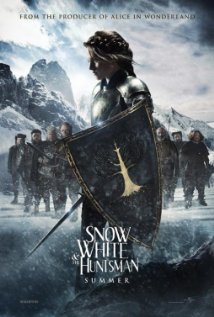
The Universal Battle: Snow White and the Huntsman, a review

Snow White and the Huntsman from first-time director Rupert Sanders is brilliant.  It’s not perfect by any means, but it’s a rarity in Hollywood these days to have a big budget movie that doesn’t feel like a product.  There were no cutesy pop culture references, no trite one-liners with a long pause for the laugh.  SWatH is an old yet refreshing story about the universal battle between good and evil.  And for a first effort?  Awesome.  Think what Sanders’ fifth or even tenth film will be like.

First things first:  The dislikes:  I didn’t really care for the dwarves.  They did have some catchy funny lines, but I couldn’t really understand what they were saying and blind dwarf playing by Bob Hoskins irked me beyond belief.  The shots of him looking almost directly at the camera took me out of the film every single time.  Also, I was really bothered that they hadn’t hired actual dwarves or little people for the film.

Likes, likes and likes:  The cinematography was breathtaking, and I couldn’t help but smile at all of the references to other fantasy films like The Lord of the Rings.  The forest could’ve easily been haunted by the spider Shelob, or Gollom or both.  Not surprisingly, Charlize Theron outshone the rest of the cast when it came to the acting, but villains usually have the most personality in these sorts of tales.  Kristen Stewart did a great job as well, especially with her voice.  I don’t know if the accent she used was pitch perfect British, but it sounded natural, which frankly is more important.  Chris Hemsworth’s huntsman brought a wonderful gravitas to the production.  The actor is twenty-something, but has such a maturity and presence about him that instantly brings integrity to the screen.  As the “prince”, Sam Claflin didn’t have much screen time to shine, but he had one or two scenes done really well.  The story itself was good, if unfocused at times.  I liked the idea of rediscovering a world that maybe you once knew (the enchanted forest), but had long forgotten in dealing with the darkness and brutality of life.

Themes:  We tend to pull out from films and stories something of what we believe or how we see the world.  I’m no different, and as a Christian immediately latched onto the theme of good vs. evil in Snow White and the Huntsman.  Snow White whispering The Lord’s Prayer and the beginning seemed at first like a throwaway reference to her “goodness” (i.e., she believes in God or is religious, so she is good)  But they expanded on that idea of her goodness by showing the empathy she feels for other people and creatures, signaling that if her goodness comes her faith, it’s a deep faith, something that is part and parcel of herself.  Her personality is quiet, calm and sure.  She doesn’t panic or babble and her presence is a sanctuary for those around her.  This is how I’ve always thought of Jesus Christ, as a sanctuary, and so that’s the symbolism that stuck for me.  The stag or hart of the forest that they show about halfway through, is also something that has been used as a symbol or reference to Jesus.  So, the stag giving its blessing to Snow, could be like Jesus blessing the Church.

In contrast, the queen Ravenna is rough and loud and has no empathy, not even, I think, for herself.  She’s merely a wretched creature, much like other iconic villains such as “The Eye” Sauron from LOTR and the serpent-like Voldemort from the HP series.  Her life is utterly dysfunctional and she takes absolutely no joy in the world.  Her power is oppressive, but not really interesting.  This is a person who has no imagination, much like the ultimate prince of darkness, Satan.  And for some reason, these super powerful bad guys can’t rule on their own, they always have these lackeys hanging about.  Ravenna has a brother who does her bidding.  He’s as chained to evil as she is and distinctly lacks purpose.

The ultimate love story:  Snow White and the Huntsman is an epic love story––it’s just probably not the love story we usually think of.  The love story in the film isn’t really between Snow White and the huntsman, but is between Snow White and her kingdom.  Magnifying that in a Christian theme:  The love story is God and His love for this world.  Snow White can symbolize God, the savior Jesus, or, most-fittingly, the believers in Christ, or the Church.  The queen then, would be the Devil, Satan, the very powerful, but not powerful enough, ruler of this world.

If that is the case, if the love story is actually between Snow White and her kingdom, then it makes perfect sense that the chemistry if any between her and the Huntsman is so subtle.  It makes sense that he kisses her dead lips not because of romantic love, but because he had started to hope in something good and pure again and it was taken from him.  The Huntsman is searching for spiritual truth.  He threw his lot in first with the queen, hoping she could bring back his dead wife.  Yes, Satan promises this as well, through witchcraft, spells or other means, but he, like Ravenna, truly has no power in the giving or bringing back of life.  All they bring is death always and forever.

At the end, much like Satan, the queen declares that she will give this world “the queen it deserves,” all this while standing in the midst of flames in case we should fail to see the reference.  The world is awful and burdened with sin, it does deserve a a terrible tyrannical ruler.  It deserves that, but what the world actually has is a living God who is both love and justice.  The Church (Snow White) has true faith in God’s love and justice.  She empathizes with the creatures of the world and even with the queen, but for there to be any justice, she must slay the queen, and that’s exactly what she does with her new believers’ help (the Huntsman and the Prince).  From her sorrowful expression, it is clear that Snow White, much like God, is not happy to have to slay the wicked, though again, it is necessary if there’s to be any justice at all.  If the world is to ever be free of his reign, the Devil, along with his minions and believers, must be condemned to hell, apart from a loving God that he will never understand.  In the end, the believers in God, love and justice, can say to the Devil or the evil queen “you can’t have my heart, my heart belongs to someone far greater than you.”

Romance:  There is a romance between Snow and the Huntsman, but it is very, very subtle and a touch I absolutely loved.  Not every romance is all wittiness, winking and wooing.  I think when the Huntsman kissed Snow White, it was a last-ditch effort at having hope.  When she rose from the dead that’s when he began to truly love her.  I think the moment Snow realized that she loved him was when he made a flirty comment about her chain mail.  She didn’t know what to say, I think, because she realized at that moment that true love was dawning on both of them.  The ending was perfect:  They didn’t need to kiss, they just exchanged a look that seemed to be her declaring her love for the Huntsman, and him accepting that love and pledging loyalty to her.  Okay, I’m probably reading too much into it, but I thought it was a beautiful moment and a thought-provoking movie.  It is one I definitely want to see again.

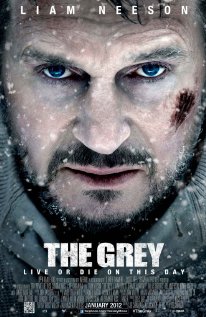
The Grey: Intense (spoilers)

(Spoilers Ahead)

The Grey in one word: Intense.

 A group of oil drillers heading home to Anchorage, AK, is stranded in the snowy wilderness when their plane crashes in the middle of nowhere. Only a few men survive and they quickly realize that the real threat is not freezing to death, but a pack of wolves who are intent on killing every last man.

I have to admit that it was refreshing for animals to be the antagonists in this. It’s easy to forget living in cities and keeping pets that animals can often be a grave threat to humans––especially when we have no guns. The wolves were absolutely terrifying and I almost had a heart attack the very next morning when my neighbor’s huge black bear of a dog came bounding up to greet me when I stepped out my front door. He’s harmless, though, and so cuddly and lovable. But I digress.

Terrifying wolves and lots of up close and visceral images of them devouring their human prey. Men who do hard work for a living and like to drink, fight and swear. The Grey definitely earned its R rating. Just the intensity in the shots alone got to me. Okay, I was sitting pretty far up front, so that may have had something to do with it, but they would shoot someone walking from behind and place the camera pretty much on their shoulder. And with the snowy environment, the look was very crisp and “in the moment.” I think I held my hands up to my face the entire time. And I was cold! It was fitting to watch this film in the middle of Minnesota winter, especially considering that one of our mascots is the Timberwolves.

Now on to the actors: Liam Neeson. Gotta love him. He’s lately become the actor who plays guys who get things done. He has this Alpha male screen presence about him and presents a strength both emotionally and physically that few other actors today can match. In The Grey, Neeson plays Ottway, a man whose job it was to shoot the wolves near and around company grounds. He’s also grieving the death of his wife and a bit angry at God for taking her away from him.

All of the men in this film are damaged and rough around the edges. They’ve made stupid mistakes and have paid dearly for them. It’s not really said so much as shown in their haunted expressions and the sarcastic front they put up in facing their fear. The other actors aren’t well-known (except for Dermot Mulroney (My Best Friend’s Wedding) who is unrecognizable behind a thick pair of glasses), but for a frequent movie watcher like myself it was fun to see “that guy from Becoming Jane and Across the Universe!” (Joe Anderson) and “that guy from 3:10 to Yuma!” (Dallas Roberts). Frank Grillo was a standout as Diaz, a guy who at first has trouble admitting he’s afraid and then has a rather poetic if sad end in front a gorgeous mountain vista.

The Grey is a survival movie with themes revolving around faith, emotional layers, how men deal with life, etc. It was interesting to me that they really didn’t immediately put their full effort into defeating the wolves, and I wondered how different they would have behaved had there been women present. The last man standing really only gets his fight in gear at the bitter end when it’s pretty much all over and he’s literally in the wolves’ den. He wants to die from grief but can’t quite let himself do it, at least not without a fight.

Speaking of that, the movie’s tag line is: “Live or die on this day.” It’s something we are all faced with every morning we wake up: Are we going to roll over and let death take us, or do we still have one more good fight in us? Like his character we often get angry with God whether we say we believe in Him or not. And sometimes we shout at the sky and ask for a sign and get no better response than our God-given ability to fight for a few more minutes of life.