Archives

Dissolving Illusions: Disease, Vaccines, and the Forgotten History – Review

Not too long ago I wrote a post about vaccines, that I had started reading and researching about them and that the criticisms regarding vaccines were hitting home with me. Since then, I’ve been following the “anti-vaxx” movement and reading some of the articles, books, etc., that detail that side of the argument. I’ve also looked some into the “pro” side, as well, however, I don’t find that side quite as interesting, just because it is the default view everyone seems to have. It is the view that I used to have and I didn’t really care about the evidence that vaccines were safe and effective. I, like most people, just believed what I was told.

If you look into the anti-vaccine movement, the first thing you realize is that these people  were at some point pro-vaccine until something happened. Some they knew or they themselves, had a reaction that made them question just how safe vaccines are. Or they got the flu shot or another shot and got really sick with similar symptoms shortly after, prompting them to question how effective vaccines are. The second thing you realize is that legitimate or not, right or wrong or not, the anti-vaccine movement has an enormous amount of studies, examples, historical accounts, personal testimonies, and other such literature to back up their reasoning. At some point being pro-vaccine, I realized it was foolish of me to keep that stance when it wasn’t resting on any true knowledge I had and also foolish to think the other side had no validity when I had never fully researched or looked into their arguments. We fall into the same traps with many aspects of our lives, but vaccines are especially interesting.  For most on the pro-side the idea of even questioning vaccines seems ludicrous. As a Christian, I realized it is not the questioning that is ludicrous, but holding up vaccines, scientists, doctors, drug companies, government, and the like as equal to God. No, scratch that, we’ve placed them even higher, asserting that vaccines are so safe and effective, they must not even be questioned.

God himself welcomes us questioning and wrestling with Him. If it’s okay with God to test His scriptures and see if they are true, why not mortal man-made vaccines?  I tell you, I don’t think even Joseph Goebbels, Nazi propagandist, has anything on the pro-vaccine spell cast on the world. People will come up with the most bizarre rationalizations in order to never put any vaccine in a list of possible (only a possible cause!) causes of a negative health issue. Some of those rationalizations may include: it’s all genetics, the human race is simply deteriorating, the non-vaccinated are spreading more diseases. Let’s just take that last one. Think about it. You are not vaccinated for smallpox. Does that mean you have smallpox? Is this really a reasonable position to hold, or are we avoiding really looking at vaccines and how they work? Vaccines certainly are not responsible for every health malady in the world, but it’s truly odd they are rarely considered a cause, especially when a person just had a shot and then has a major health issue like a seizure or brain swelling. Actually, we do worse than not questioning, we are told these reactions to vaccines are “normal.” With more chronic health maladies, we easily jump to medications and drugs as possible causes, but never vaccines, even though they should be considered if we’re doing a thorough investigation. Even if you still end up agreeing vaccines are great, I think it’s a good practice to look into them to make sure you have the facts, and that includes taking a long, hard look at the massive evidence the anti-vaccine side has that vaccines are actually quite a problem.

If you’re looking for fact-based arguments, Dr. Suzanne Humphries is a good place to start. She’s a nephrologist who also used to be pro-vaccine until her patients mentioned they had kidney problems after getting the flu shot. Instead of blowing them off, she took their complaints seriously and was surprised by the hostility she received from her coworkers merely for considering vaccines a factor in this. The hostility was especially surprising to her, as she knew had she been questioning a medication they would all have said of course they should stop the medication, do more research, tests, etc. In essence, medications were allowed to be a cause of kidney issues, but not vaccines. Vaccines were safe and effective and had eradicated both smallpox and polio, never mind that the complaint was with the flu shot. So Humphries started to look into the history of the smallpox and polio vaccines, and she found that what we had all been told was far different than what actually happened.

Of all the people on the side of the anti-vaccine movement, I find Dr. Humphries to be the most persuasive. She has a practical air about her and has made it her life’s work to research health and vaccines. If you don’t like reading, she has hours and hours of her talks and speeches on vaccines, Vitamin C, and general health issues on Youtube.

Dissolving Illusions, by both Dr. Humphries and Roman Bystrianyk, another vaccine researcher, is a fairly quick read. It first lays out why they wrote the book and how they fell into researching vaccines. It then launches into the historical account of just how dirty everything used to be, especially in the 1800s and early 1900s. This is the basis for their case that it was public cleanliness in the environment, water, food, and health practices (the doctors washing their hands) that actually caused the massive impact to the disease death toll.  The graphs are certainly hard to argue with, a ski slope of falling death rates, and close to the bottom, only when fear of death of the disease was near non-existent, did vaccines enter into the picture. I would say for most of us, that fact was likely not mentioned at all in school.

They then go through vaccine after vaccine, starting with smallpox and show, with historical examples, just how unsafe and ineffective they actually are. One fascinating thing I learned was that the smallpox vaccine caused several hand, foot, and mouth outbreaks in both animals and people. What I learned with polio is that they changed the way polio was diagnosed after the vaccine was put into public use, thus falsely making it look like the vaccine lowered the polio rate. We still have polio, it’s just categorized as Guillain Barré syndrome and other diseases. I learned that physical therapy contributed largely to the restored health for those who did have immobile limbs. There was also some disturbing connections made theorizing that tonsillectomies and other medical procedures were the actual cause of the “outbreaks” in school children every year.  With measles I learned that good nutrition and sunlight are the best ways to fight it off, especially Vitamin A (it depletes your levels severely, causing blindness in some), Vitamin D and Vitamin C.

Dissolving Illusions makes a strong case that vaccines may be more harmful than helpful. It makes a strong case that cleanliness, good health, and nutrition are our best defenses against malady, better than any manmade medication. That is the positive.

The negative, is how much the book highlights the lies of both government entities and the medical professionals that invented, still invent, and to this day promote vaccines that they knew from day one were neither safe nor effective, especially compared with other, more natural options. It shows the reader their own ignorance. How many people puffing up their chests and declaring all vaccines should be mandatory know even a tenth of this information? How many people are aware that just like the vaccine lies started on day one, so did the anti-vaccine movement? In England the only thing that stopped forced smallpox vaccinations and jail time, was voting in politicians who believed in freedom of choice.

And the book barely touches on all of the massive reactions, side effects, and lifelong health struggles for the vaccine injured today. And we are arrogant enough to think that the non-vaccinated are spreading disease? What great mountain of evidence do we have for this, exactly? How many people even understand that you are injecting a disease into your body when getting a vaccine and that you are also vulnerable to that disease as well as being capable of passing on that disease while it’s going through your body and building antibodies? In addition, the book also talks about antibodies and lays out a case that this is no true measure of immunity or eradication. It also indicates that medicine and science still have a long way to go in fully understanding our immune systems and how disease affects them.

If the information in Dissolving Illusions is true, then it is truly staggering how much we have been lied to. It’s such a huge, incomprehensible lie, and whether it was made in malice, for profit, or just wishful thinking, the reason seems almost irrelevant. How do you even begin to reteach people the truth when everyone’s been so brainwashed by lies that only at a severe turning point or crisis will they even question vaccines? The good thing is, lies can’t last forever, because, well, they’re lies, and the truth eventually rears its head. Due to so, so many reactions and problems today from vaccines, people are waking up more and more every day. The anti-vaccine movement would be happy if we could simply actually properly study vaccines and make them truly safe and effective. The unsettling conclusion from Dissolving Illusions is that even that desire may be a pipe dream. The big question I have is, are vitamins the answer? Are cleanliness, good nutrition, and sunlight, the collective miracle pill we’ve all been looking for? How strange it would be if we were to find that we’ve been injecting ourselves with poison to ward off disease only to ignore that simply caring for ourselves and our bodies would give us the best health we could ever want or need, at least on this side of heaven?

In doing this reading into vaccines, I’m mostly on the “anti” side now. The last time I had to get a vaccine (the flu shot aside), I didn’t I had much of a choice at the time because I didn’t have a record to prove I already had the shot. I thought it would be no big deal to get an additional shot, and a few weeks later I was very, very sick. My immune system really felt like it had taken a severe blow in a way I’d never felt before, and it took a long time for me to fully recover. Now, I’m not saying it was definitely the vaccine, but it was a possibility often nagging at the back of my mind, so much so that much later I was eager to watch the documentary Vaxxed and find out more about this anti-vaccine movement and what they thought were the problems with vaccines.

My view on health is different today. I’m more careful of what I eat, what I drink, and more aware of how much sleep and sunlight I’m getting. Since vaccines ultimately cause inflammation in the body, I try to destress as much as possible, too, get outside, get walking and do other exercise when I can. The difference is, mindfulness. It takes few brain cells to get injected with the latest vaccine, or to pop the latest drug, but it takes dedication and persistence to truly be invested in one’s health. Parents instinctively know much of this, as they are tasked with nurturing and promoting the good health of their children. For us who are childless, we need to be parents of our own bodies and treat ourselves with care and nurturing, too. Even if vaccines were totally safe and effective, how could a quick injection possibly be the ultimate answer to health in a world where anything worth anything has to be fought and strived for? This question can also be applied to the numerous health remedies of the natural medicine industry, and even Dissolving Illusions‘ touting of Vitamins A, C, and D. We can’t just pop supplements, either, and think they are going to be as effective longterm as getting real sunlight and eating real fruits and vegetables.

I have to say the best thing about this book is finding how much there is to read and study. I also really appreciate the times I live in and the fact that our environment, food, and water are all so clean today. I appreciate the fact that we still have a choice in whether to get vaccines or not and pray they will never be forced on anyone again. As a Christian, I appreciate the fact that many of the loudest voices in this struggle for truth when it comes to vaccines are also Christians. Christianity teaches us that the truth isn’t some mysterious thing only for the authorities, or experts, or those in power. Truth is something that God wants everyone to know, even (and perhaps especially) lowly commoners.
Empress Ki – a half-review

Somehow I’ve made it through about 30 or so episodes of Empress Ki, mostly due to being sick and unable to do anything else. Thankfully, I am better now and enjoying the sunshine flooding Minnesota this week.

Empress Ki, like most of the Korean historical dramas, is decidedly epic in scale. A lot of the time it has me remembering the Lord of the Rings movies and that’s mainly due to the wonderful costumes and sets. The clothing alone makes the series worth watching. Empress Ki is a fast watch, despite so many episodes, because there’s really not much filler. Every episode has something major happen and the plot continually moves forward. The lead actors, Ha Ji-Won (Empress Ki/Seung Nyang), Joo Jin-Mo (Wang Yoo, the Korean king), and Ji Chang Wook (Ta Hwan/Emperor of Yuan), are all outstanding and do a good job with what they are given. I stress, what they are given, to work with.

Now to the story and writing. I’m in favor of keeping the plot moving most of the time and Empress Ki’s writing certainly fulfills that, however, in this case it comes at a cost, namely character and emotional development. Because the characters are constantly besieged by taxing or exciting moment after moment, they never really have time to process what’s happened to them, and neither does the audience. Seung Nyang and Wang Yoo, because they are strong characters, both physically and emotionally, deal with everything stoically–too stoically. We rarely get to see their vulnerabilities or them acting, for lack of a better expression, like humans! In contrast to them the Emperor of Yuan is so weak as to strain credulity. True, he’s much used and abused by the villain Yeon Chul (the subtitles I’m watching label him as El Tamur), and he’s young, but he has no interests or vices or focus in his life except for Seung Nyang and his out-of-control emotions often seem out of place. He would be more interesting, for example, if he actually was a drunk or a womanizer or even an actual basket case. The other leads, too, have no interests except the future direction of Korea and/or revenge. With a shorter series, these flaws would be fine, but at 51 episodes it’s not so excusable that most of the  emotional impact comes from minor characters, especially the eunuchs. Hopefully this gets addressed in the last 20 episodes, but it’s making me question whether I want to continue watching.

The love triangle is also irritating me, because the scenes depicting it are scarce and short. This wouldn’t be so bad if it was made up for by, say, amazing actions scenes, but, sadly it’s not. The Yuan Emperor has the most scenes dealing with romance, mostly his unrequited love for Seung Nyang. She is stoic, shows him no tenderness, has next-to-no feminine attributes and wiles that I’m often scratching my head at how he’s so infatuated. Because the plot calls for it, I guess. Also, the epic love for all time between Seung Nyang and Wang Yoo is scarcely represented adequately as such. She gets a ton more screen time with the man for whom she feels nothing. On top of that, both men seem incapable of having their own lives apart from Seung Nyang. She is amazing as their buddy and helping them get out of scrapes, but again, it’s baffling that she has cast such a spell over them in a (supposedly) romantic way, and she ironically seemed more feminine when everyone still thought she was a man.  I don’t think in writing strong female characters we need to balance it by making the male characters weaker, but it’s often done, though not quite believable.

All that aside, there are a lot of great scenes in Empress Ki, and many solid emotional scenes. We relish Seung Nyang triumphing over both villain Yeon Chul and his daughter, the Yuan Empress (played perfectly by Baek Jin-Hee of Missing Nine – Baek is a power house actress and her character’s story is a pathetic one.) We feel for Seung Nyang at certain losses and admire her smarts and resourcefulness. We feel the heartbreak of Wang Yoo and the Emperor, even if it’s not explained well.

I’ve decided to try and finish Empress Ki and I hope that it ends as well or better than it started, because the first fifteen to twenty episodes were pretty good. Middles are always hard to write and I do admire the writers for keeping the series jam packed with happenings, and for the production team and director having such attention to detail in the clothing, sets, and camerawork. I’ll have a full review up once I finish the series.


On Being an Invalid

Illness is a stumbling block. Cold, flu, measles, whatever it is, it throws a healthy person off their feet. Some illness is so mild that the people land immediately back on their feet, but sometimes it takes a person a few tumbles and wobbles before, shakily and uncertainly, they rise to the health they previously held. The ones who never recover are either permanent invalids or dead.

After being sick this week and unable to do much else but sit and stare and maybe watch some YouTube, I recalled to mind the strange desire I had as a child to be Colin from The Secret Garden. What would life be like, I wondered, if you weren’t required to do anything but lie about all day? Well, there’s my laziness for you! I didn’t see Colin’s loneliness, poor health from simply not moving much, and what he’d suffered from actual disease. Would I have been as happy as he was to find that he wasn’t crippled after all? Would illness have been so romantic to me had it been a permanent state for myself?  Probably not.

I turn 40 in about a week and have definitely had my share of illness over the years. I began life too early, so early, in fact, that my mother had to be air-lifted to the Twin Cities way back in 1978. Back then being 2+ months premature was a dire state, today, babies are born and thrive even months earlier than that. When I popped out of momma, I was blue and had a heart murmur.  Today, I’m still rather wheezy, but my heart has no murmur and I’m generally healthy except for loads of allergies likely due to being stored in an incubator for the first few months of my life. The biggest thing health wise, I lack, is energy. Is this a troubled spirit thing or a troubled body thing? I don’t know, I just know I seem to get tired a lot, no matter how much I sleep, or how much coffee I drink. As an adult, there’s no way I would happily dream about being confined to my bed for the rest of my days and I am so sorry for the people that have that as their life and I hope they are able to find joy hiding somewhere in their circumstances.

Sometimes illness and disease are parts of characters for stories. What would Moulin Rouge be without Satine’s tuberculosis? It’s both part of her character and part of the plot. What would Unbreakable be without Samuel L. Jackson’s “glass man” to Bruce Willis’s secret superhero? I’d like to write a detective series where the detective was continually dying of something. It wouldn’t be a long series, but the urgency in solving the mysteries would be somewhat unique. Actually, it’s probably already been done somewhere, so if you know of a series like this, add a comment, as I’d like to read it.

So I’m on the mend, tumbling back to my feet, and I think it’s going to be a really great spring. That warm weather energy is hovering and waiting until just the right moment, and then everything will be humming with life, including my writing. Oh, the stories I have to tell! No, not ready to be a permanent invalid, not even close. And thank God for health. Sometimes, in this world, it’s all we really have to keep us going.

Stories this coming month

As I’m really trying to push myself on revising and correcting Trolls for Dust Season 2, this upcoming month, I may not have many stories to review. There are a few that I do want to, however. With movies or dramas I usually get on a kick of watching all projects by a certain actor or director or writer. Right now I’m in the middle of a Ji Chang Wook kick and found a place to watch Empress Ki. It’s a long series, over 50 episodes, so I probably won’t finish it in March, but wow, epic, awesome story so far and also starring one of my favorite actresses Ha Ji Won.

In doing more vaccine-related reading, I wolfed down Dr. Suzanne Humphries’ book Rising from the Dead and am almost halfway through Dissolving Illusions. These are not easy books to read, especially if, like me, you’ve thought your whole life (without really having actual knowledge of the issue) that vaccines are always safe and effective. These books call into question much of our modern medical practices and have historical evidence and testimony to back it up. Think the pro-vax/anti-vax emotionally charged debate started only with supposed frauds like Andrew Wakefield? Wrong. It’s been the same debate since day one of the small pox vaccine, only back then those who refused vaccine or questioned them were jailed, fined, and basically had no freedom on the issue. Any strides they made in the direction of choice in the matter had to be fought for. And the pro-vax side was just as arrogant and mean-spirited as they are today. And also as unquestioning of their own side as they are today. What’s most amusing today is that a lot of the claims that it was a vaccine that brought the rates for such-and-such a disease down are really a matter of correlation, which today we are told by proud pro-vaxxers does not ever equal causation. Dr. Humphries’ books indicate that to conclude better living conditions, cleanliness and overall public hygiene contributed the most to the decline in diseases, is also valid. Many vaccines, for example, were introduced well after many of these diseases were on a downturn due to public sanitation. The evidence that it was vaccines isn’t actually as strong as promoted. That doesn’t necessarily mean the vaccines didn’t and don’t work in some cases, but their benefits may have been largely overstated. This book is truly about dissolving illusions, and as a result is really hard to read. If you have any interest into why anti-vaxxers are certain they are onto the truth, this book is a good place to start in understanding why they think that way.

For March, I also have kindly been loaned the next couple of books in Jennifer Nielsen’s The False Prince series and am curious to see where it goes.

And lastly, I am re-reading my own Trolls for Dust series, both books one and two with the hope to get this much-delayed book two out for everyone to read in print. I also have another short series I am working on, and if it works out, may be able to publish that before the end of the year. But, who knows? I’m always hopeful about these things at the beginning and then other things clamor for my attention.

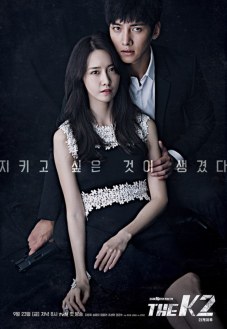
The K2: Kdrama review

The K2The K2 lost me as a viewer the first time around. I watched the first episode with the sound off, as I sometimes do, and focused on the amazing visuals, which were as good as any feature film. It was the story and writing that gave me pause and I was not surprised to find that the same writer also wrote Yong-Pal, another drama that lost me half-way through.

This isn’t to say The K2 isn’t worth watching. It is an incredible action-packed drama, but like Yong-Pal, it would have been better served either by half-hour episodes or ten or even less hour-long episodes. Jang Hyeok Rin is an awesome writer, but these kinds of stories don’t exactly fit into the time frames usually allotted for Korean dramas. These stories are better suited to what in America we would call a “miniseries.” Jang essentially writes morality play fairy tales set in the modern world. Morality plays and fairy tales are are older, simpler stories that get at common truths. This means that the characters are archetypes – i.e., the princess locked in the tower, the lone warrior, the evil step-mother/witch – and plot devices, not the complicated character confections (say that five times fast) with a high degree of moral confusion that we’ve become so accustomed to today. This also means that the stories, being necessarily more simplistic, will not stretch as well without either adding a lot of superfluous material or slowing the plot down to an unsustainable degree. Cutting episodes or the time length of episodes would instantly solve this problem, but it would take a very confident, savvy production company to decide to do that.

What The K2 has going for it is a great story at its heart, awesome visuals (you could watch the whole thing without either sound or translation and not be lost much at all), solid writing, commendable acting, and music that will both irritate and haunt. The soundtrack choices were fairly brave, being operatic and even church music, not even in Korean, but in, I think, Latin and German. As a viewer you really only get the full impact if you watch it on a site like viki.com that takes the time to translate at least some of the lyrics. The songs are the “chorus” of Greek theatre, an essential part of the story and part and parcel of the morality play angle.

Episode one is exhaustingly full of action, and although the action is fairly steady through the first few episodes, there’s no way a production would be able to sustain that level through the entire thing. The biggest drawback to episode one, though, isn’t the action, but that they risk losing viewers by ending the same way they began, with Anna, our “princess captive,” running away from–whatever horrors a woman in white runs from. As a viewer, one wonders just how many times we are going to have to watch this girl run away, epic as it is. By the end of the hour, we also don’t really know what the plot is. We have a vague idea of who the characters are, but little else. This problem is fixed as the plot is more developed in the following episodes, but it’s the reason why I didn’t continue watching and also why I gave it a second chance, as it didn’t seem like all that production effort could possibly be put into a crummy story.

Crummy story The K2, is not, though I found – like with Yong-Pal, my interest waning in the last few episodes that had to stretch the story in order to finish it in the time allotted. For both dramas, it’s a shame because the first halves of each were awesome. Ok, enough harping on the time issue, let’s get to some meat and bones.

If we’re really honest, the characters in fairy tales, at least the prince and princess, typically don’t have a lot of personality. They are there to be rescued or to rescue or to serve some purpose of the plot. It is the villains that tend to be more–though not always–interesting. The K2 doesn’t vary from this and I think that’s a credit to it. They cast a stellar actress, Song Yoon A, to play the baddy step-mom, and it was her character that kept me watching throughout. Cho Seung Ha, who plays serial adulterer and politician Jang Se Joon, was no slouch either, and it was the pair of them that seemed the drivers of the plot.

The two main characters, Anna, the “princess in the tower” and, Kim Je-Ha, the “lone wolf” were more people that things happened to than made things happen. When they did make things happen, it wasn’t so much character-driven as plot-driven. That aside, because the characters were archetypes, and simple yet well-written, Ji Chang Wook and Yoona really showed off some talent in playing them. Playing a damaged, yet sweet girl and a mercenary with little-to-no past and making either interesting can be a challenge. Add on top of that, that I at least have found both actors to be rather stone-faced and wooden at times and I’m not sure if that’s merely my perception or if they just don’t have a good grasp of how to make an engaging face onscreen even if one’s character isn’t showing strong emotion at the time. That probably sounds more like an insult than intended, but I thought they did well will the simple characters and better than I have seen them do with more complex characters and plots. I wish all actors could be more like Seo In Guk (Shopping King Louie) who somehow manages to actually be a completely different character every time he’s onscreen, but I realize that ability is extremely rare and that most actors simply play whatever type of person their character is. All of the acting in The K2 is top notch, if necessarily simple, and suits the tenor and mechanics of the plot.

Speaking of the the plot, Choi Yoo Jin, the step-mother is the main character. What we are seeing onscreen is possibly what her life would have been like if she’d married a good man of action who loves her instead of a fearful and manipulative adulterer who doesn’t. Several times she mentions how innocent she once was, and how (at least in her head) she would have been a good person had only her husband loved her. Since we really don’t know what young girl Yoo Jin was like, we don’t have much to go by, but it becomes clear early on that the successes the couple has had politically are almost entirely due to Yoo Jin’s brains and tenacity, not her husband’s, and that she feels upon meeting the “wolf” that had she been with someone like him, those skills would have been put to far better use. Is this just wishful thinking on her part? As her character is quite skillful at manipulation, I’m not sure, neither, I think is Ji Chang Wook’s “wolf” who would certainly save her from herself were it possible. The moral in this play is pretty straightforward, loving someone means actually loving them and only pretending to love creates monsters out of people, anxiety, distrust, the list could go on and on. At the end of the series we really don’t know who either the wolf or Anna really are, and that’s alright, because who they are isn’t the point, the fact that they really love each other and other people is the point. They don’t pretend to love, they actually love, and they earn their  happy ending due to it. Such a simple thing, but humans fail at this simple thing every single day.

A couple of more things to add, “Cloud 9” was an intriguing idea, but completely mishandled as was the location and threat at the end, both of which hampered the story and the pacing in a negative way. It was likely one of those choices made in which the ere simply isn’t time to go back and correct it, and that’s a shame, but happens a lot in television. That all said, I really liked The K2, and would watch it again. The atmosphere, the action, and the music all stayed with me long after watching the last episode.

The Thief: Book Review

There’s a lot of buzz circulating about the Queen’s Thief series by Megan Whalen Turner. Although I enjoyed the first book, The Thief, it very much seemed a simple opening act to a far larger, grander story, so I am looking forward to reading the next book in the series. Many YA fantasy series tend to take off from Greek and Roman culture and mythology, so I can’t say this series is very unique in that aspect, but the narration is done well to the point that once one finishes the story, one wants to go back and analyze it from the beginning. As a whole, the world of the series is well defined, which helps aid the slow pace of the story. The pacing is probably the most troubling aspect. Nothing “happens” for long periods of time, but, again, in going back, one would realize a lot happened, or, at least, a lot of information was given. The problem is that many readers may give up far before the ending, but as the series as a whole is getting a lot of good buzz and recommendations, I think that was a risk the author was willing to take.

This book reminds me of a similar tale regarding the narration called The False Prince by  Jennifer A. Nielsen. That book also has some trouble with keeping the energy up, but is well plotted.

Spoilers:

Both series involve unreliable narrators and both use that element well. It’s annoying when such narration is used, but there’s no “twist in the tale,” as they say (see my review of Here Lies Daniel Tate). Both stories are also smaller openings in a much wider story. Starting out simple and building is a great way to build an audience at the same time. I tend to like jump starting the deeper plot aspects right away, but there is nothing so satisfying as a slow burn of a tale and The Thief is that.

2018: Beyond the big lies

All week I’ve been thinking the best way to sum up 2017, and for myself it would be this: the past year has all been about big lies revealed. 2018 will be for so many of us about living beyond the lies, living in a very different world.

Currently, I am reading Dinesh D’Souza’s The Big Lie: Exposing the Nazi Roots of the American Left, so I’ve been thinking about the other big lies out there as well and just how much they’ve shaped my way of thinking, society’s way of thinking, etc. The biggest recent lie, of course, has been that President Trump is a buffoon, doesn’t know what he’s doing, his followers are racist, etc. And now we stand on the precipice of a DOJ investigation knocking out Trump’s adversaries one by one, due to their own stupidity. Anyone who at this point think’s he’s dumb just refuses to see the truth staring them in the face. Trump’s accomplishing his goals on a careful timeline and using Twitter and trollish statements to continually distract the dishonest media. He is bringing tax cuts, jobs, and more prosperity for all Americans, and poo-pooing the lie that putting citizens of a country first is somehow immoral as the Progressive Left would have us believe. He is likely the smartest president we’ve ever had, having both intellect and street smarts. Will we ever get tired of winning? I don’t think I will, but who knows?

Second lie: The media is remotely intelligent and honest. Sure, sure, they are. Just like Pulitzer and Hearst were, right? Any kid who watched Newsies in the 90’s was given a great lesson on crony capitalism and the corruption that happens when the media has too much power. What keeps the media in check is citizen journalism. Just like the Newsies, using the power of the press–uh, internet–we are recording and writing our own stories, hearing firsthand accounts of events in real time and analyzing coverage on our own. Trump’s dismissal and bypassing of the mainstream media and press has to be the single greatest move for the average person. The wizards behind the curtain aren’t much to look at and have nothing but sound bytes and talking points. It was hilarious to watch the media’s desperate efforts to get Hillary Clinton elected–and they don’t even like her! How smart is Trump? Smart enough to know that being interviewed on Alex Jones’s Infowars was a plus and not a minus! More and more people are waking up to the dishonesty of the media every day and it is awesome.

Third lie: The Republican party is for America. Okay, we voters gave them the benefit of the doubt for awhile during the campaign. Trump was a purple cow opponent and they really didn’t know how to handle it. What was shocking to a lot of us conservatives and Republicans, though, was that we heard Trump speaking the truth, and the party did not agree with him and even went along with the mainstream media’s lies about him. These were people who should have had his back, who themselves had been lied about just because of the political party to which they belonged. 2017 revealed more lies: Republicans in Congress had no interest in getting rid of either oppressive taxation or Obamacare. They were not interested in bringing back jobs for American citizens and would not even break a sweat speaking up in our defense. That they grudgingly passed some of the legislation late 2017 only shows that they aren’t too dimwitted to see the writing on the wall. Trump and his allies are cleverer, more informed, more influential, and have more at stake than the Deep State ever will. Would anyone doubt at this point that should Trump fail, he and his family would be drawn and quartered by his enemies for whom the word “mercy” is scarcely a word in their vocabulary?

Fourth Lie: Vaccines are good for you. You saw that right, after actually, finally taking the time to look into this whole vaccine issue for myself, I think that the assertion that any vaccine is generally good for a person is an outright lie. Could I regale you with tales of CDC, big pharma corruption? Could I tell you that there is evidence that sanitation and nutrition had more to do with falling disease rates than any vaccine? Could I list story after story that I’ve heard, read, and witnessed for myself about vaccine injury? Would any of these things really convince you? This is a lie so, so big, that it really takes individuals doing their own research, reading the studies, reading the articles and stories. Most will not be convinced if they don’t do the research for themselves. We are all “doubting Thomases” when it comes to the modern healthcare. We have to press our fingers into wounds to believe they are there. This is also the scariest lie, because it calls the entire health industry into question. More and more people are waking up to the fact that at least some vaccines, like the flu shot, aren’t really worth getting for various reasons. Over time, those people will start to question other vaccines and the whole line of dominoes will fall one by one, changing the landscape of modern healthcare, some of us hope, forever.

These are only some of the big lies I’ve learned about lately, but I’m sure there are more, so, so many more. I had to say goodby to a friend this year because of the lies she told, and it was hard to swallow that she’d been lying to me for years upon years and I just sort of overlooked it. Now that I see the lies, I can’t go back. I can’t trust her ever again, I can’t trust the media, and though I follow it, I am skeptical of the new media, too. Profit, not necessarily truth, is king in media. It’s just the way it is and the way it always will be. Our society is now taking up new lies, that people can be whatever, gender, race, or animal they choose to be. What the ramifications of these delusions will be, I don’t know, but though they may at first seem more laughable and harmless than the other lies, they are not. Whatever ground we have won revealing the other, political lies, we cannot sleep, we cannot lose to these even more damaging lies. Our children’s futures are at stake.

2018 will hopefully be–should be–about law and order, of lie-tellers and deceivers being brought to justice. Hillary Clinton and many other deserve to be in jail. We are actually doing them a wrong to not hold them to account for what they have done our country. I hope with Trump’s executive order regarding trafficking, that he and his allies will be able to finally hold them accountable. For we the people, we need to continue to live in the light of truth. For many of us Trump supports, even though he won, our worlds have been shattered. We’ve lost friends and family members who think we are evil for supporting him and we’re not sure we want to belong to a political party anymore. Some Trump supporters have even been physically attacked while they at the same time get called fascists and Nazi’s. Ever wonder how that all started? I highly recommend D’Souza’s book. Though he wasn’t born in America, D’Souza is American at heart, something most legal immigrants have in common. More importantly, he cares about researching the facts, something we should all take the time to do. Truth is where Good is, it’s where God is, it’s where all the blessings of life reside. We remember to clean our homes, yet often forget to clean our minds of the trash, dirt, and garbage that accumulates.

How do we live in 2018 after so many lies have been shattered? No fear. We now have the opportunity to go forward in the truth. It won’t be easy, but it will be a lot more rewarding than living under the tyranny of lies. God is perfect love because he is and has perfect truth. How can we love our fellow man and our families well if we do not at least try to live in the truth? Are we doing anyone any favors by pretending someone’s entire self-worth should rest in their skin color, genitalia, and sex preferences? By pretending that certain lifestyles do not carry dire risks and consequences? By teaching them that the world should and will conform to each individual’s whims rather than the other way around? Should we really be afraid to share these truths? If the truth isn’t worth experiencing or suffering a bit of uncomfortableness, well, then what is? Can we protect our loved ones by telling them they have imaginary super powers or can we protect them by advising them to live diligently and show them practical ways to defend themselves? Can we find ourselves, now that we are winning, to speak the truth in love? Can we bring the sunlight that people so desperately need? For Christians, can we hope to share the truth of the Gospel if we can’t even talk about the truth of sin? Let 2018 be the year. No fear. Let us live in the truth.

My 5 favorite Kdrama actors

I’ve been watching Korean dramas for a few years now and have found I have a few favorites. The trouble with watching shows or movies of a different culture and/or language is that acting standards and line delivery are different. For many viewers from Western countries who are used to watching Hollywood, UK, or European films, the acting of other countries can come across as very over-the-top and fake, and often the comedy falls flat or is head-scratching. I have no doubt this works both ways. It takes a lot of viewing time to really see how good actors are, due to cultural and/or language barriers and many people don’t have patience for that. Having spent an embarrassing amount of my own life watching Hollywood, UK, and other movies and shows, jumping to Kdramas was no big deal time wise. The positive view of this is that I have come to appreciate South Korean culture, food, and language, as well as having viewed some of the best shows of all time (Signal, for example).

Here is a list of five drama actors I’ve come to appreciate. Yes, they are easy on the eyes, but are also extremely talented and stand apart from many of their fellow actors.

#1 Seo In Guk

SeoInGuk

We have music talent shows to thank for a lot of our amazing stars and singers today, and one of those is Seo In Guk, who won Superstar K in 2009. He has a classic rags-to-riches story and is multitalented on every level. Due to hard work and thoughtfulness, this guy could succeed in anything he puts his mind and effort into. Not only is he a great singer and performer, but is a brilliant actor who plays his character, not himself, and is able to turn this talent on and off at will. This is rare, as a lot of actors have to continually play the character even when not filming to keep up the, uh, charade. He’s also very open about how he creates each character, also unusual as many actors prefer keeping the acting trade shrouded in mystery. He was due for military duty this past year, but because of a health issue, could not enlist. As a recent fan of Seo In Guk, I look forward to seeing where his career will go from here. Best dramas of his that I’ve seen so far: Reply 1997, High School King of Savvy, Squad 38, Hello Monster (aka I Remember You), and Shopping King Louie.

#2 Jung Kyung Ho

Jung Kyung Ho

Jung Kyung Ho (also Jung Kyoung Ho) is one of those actors who should be showered with awards. He’s on point in every scene and chameleon-like in his ability to handle different dramas. Jung has very emotive eyes and uses them to full advantage. He, too, simply becomes his character and has a magnetic presence onscreen, and his career so far has been a pretty even mix between movies and dramas. Like Seo In Guk, Jung Kyung Ho is a bit under the radar and underestimated in his abilities–at least internationally. Jung is definitely equal to any of Hollywood’s A-list actors, and would probably put some of them to shame. His one flaw may be that he tends to work with writers and directors that flounder a bit, but can’t always be helped. Best dramas I’ve seen him in so far: Heartless City, Missing 9, Falling in Love with Soon Jung, and One More Happy Ending.

#3 Sung Joon

Sung Joon

A tall drink of water, Sung Joon is much younger than he appears. I was surprised to find he’s only 27. Maybe it’s his height or his deep voice, but he has no problem playing characters much older than himself and is often paired with older women. His choices of projects are riskier than most, and sometimes I think he gives the writers of some scripts a bit too much faith, but it’s refreshing to see someone so fearless. Sung Joon started out as a model, but has turned into a great actor, especially when it comes to romantic scenes. If he’s not putting his entire heart and soul into kissing his onscreen women, he’s very good a faking it. If I were a fellow male actor, I’d be a little hesitant to work with him as he has such an overwhelming screen presence, it’s almost distracting. Lee Min Ki had to work very hard in Shut Up Flower Boy Band to make his character come across as the actual leader of their band, so strong was Sung Joon’s presence. Best dramas I’ve seen him in so far: Ms. Perfect, Shut Up Flower Boy Band, Madame Antoine, and In Need of Romance 3).

#4 Lee Seung Gi

Lee Seung Gi

Lee Seung Gi is one of those actors that slowly earns audience appreciation. He is no stranger to TV, having been on several dramas and variety shows and he also is successful in nearly everything he does. Lee Seung Gi comes across as not only likable onscreen, but offscreen as well, joking with interviewers and the audience. He’s comfortable in his own skin and it shows. He often plays characters that seem very dumb at first, but then prove themselves later on. Although he has a good voice, I think he is more talented at acting than singing. So far his career has mostly been playing vain young men forced to grow up, and I hope now that he’s done with his military service he will choose a wider variety of characters to play. It would be great to see him take on the role of the bad guy, for example. He, for one, picks his projects well. Best dramas I’ve seen him in so far: You are All Surrounded, Gu Family Book, King 2 Hearts, and My Girlfriend is a Nine-Tailed Fox.

#5 Lee Min Ho

Lee Min Ho

Due to the commercial success of Boys Over Flowers and The Heirs, one would hard pressed to find an international Kdrama fan who hasn’t heard of Lee Min Ho and his Brad Pitt good looks. Although I enjoy his dramas, he has slipped from being my #1 to watch, as his performances are hit or miss for me. When he is good, he is so good, and when he’s not I wonder if his own fame is overshadowing him. Lee Min Ho shot to fame in 2009 by playing Gu Jun Pyo, a vain, spoiled rich boy,  in Boys over Flowers, and hasn’t looked back since. Not the first to play the character, Lee made Gu Jun Pyo his own and the Korean BOF wouldn’t be nearly as funny without him. Lee also is very gifted in doing action scenes, having a natural athleticism that makes the most bizarre choreography (attacking a cook with a spoon, for example) look natural. He is also a very talented model, and would be #1 on this list if it were for modeling. Sadly, Lee’s most recent dramas The Heirs and The Legend of the Blue Sea were definite misses for me. He was paired with other famous actresses with whom he had no onscreen chemistry, and it showed. He also did not have a firm grasp on who his characters were and acted rather blandly due to that. Since all parties in these two projects have been great and successful with other productions, I have to wonder if there wasn’t too much pressure for profit involved. Both projects were very financially successful and had all star casts, directors and writers, but lacked heart and truly good storytelling. After finishing his military service, I hope Lee will choose projects and characters that he can really play well instead of focusing on the financial success. It’s hard to be so famous that you can’t take a real risk, and the projects he’s performed best in were not foregone successes. Best dramas I’ve seen him in so far: Boys Over Flowers, City Hunter, Personal Taste, and Faith.


Here Lies Daniel Tate: Book Review (spoilers)

Here Lies Daniel Tate by Cristin Terrill has a great plot: Missing kid turns up years later, but can’t remember much about his past. Bit by bit, he tries to understand his family and what happened at the time of his disappearance. My first thought was The Face on the Milk Carton for a new generation!

No. But it’s much worse than that. The real plot is something else. Con man fakes being a missing kid now in his teens in order to get out of trouble. The main character in the story is a liar. Usually, a story involving an unreliable narrator leaves you questioning everything you just saw or read. If this was what the author was going for in this particular tale, for me it fell flat. The first few chapters promised a roller coaster ride that never really manifested. I read about halfway through in one sitting…and then forgot entirely about the story for days before realizing, “oh, yeah, I never finished reading that.”

So what went wrong? First, I just want to say that All Our Yesterdays, also by Terrill is fantastic. That story had me transfixed. With Here Lies Daniel Tate, it seemed like a great idea that wasn’t executed well. The characters were always viewed from a distance by our narrator, and because of that an emotional link is missing between the characters and the readers. The swearing annoyed me, but most swearing in books and movies does. I can understand trying to be realistic, but for me, it just got in the way of the story.

All that aside, after page 100 or so, Here Lies Daniel Tate gets really boring. Nothing happens. Okay, he goes to school, that’s what happens. And for writers, this is death, your story dies if your readers lose interest. Finishing the book was torture, it was no fun to read the rest and I didn’t understand why a vital component was left out: Keep your audience on their toes. Always make things happen faster or before the audience thinks they should. This rule applies especially to modern audiences, many of whom, like me, have a short attention span. I think a good editor would have spotted this problem. A good editor would have also spotted that unreliable narrator set up at the beginning, never delivered the twist calling the whole story into question. An author that does twists extremely well is Ian McEwan of Atonement fame. For a case study in unreliable narrators, please read that book or even just see the film. Another wonderful unreliable narrator book is The Lifeboat by Charlotte Rogan, and I reviewed that a February or two ago. I’m not saying every unreliable narrator has to end the tale with, “whelp, I lied…or did I?” but it’s just so, so much fun when they do.

Here Lies Daniel Tate had potential that was never realized, and I sort of wish we could dump it in the time machine from All Our Yesterdays to rewrite itself and try again.

SJWsADD: book review

SJW. ADD. First of all, let’s just appreciate how well these acronyms go together. Is there a group that pays less attention to what’s happening in the real world around them? Is there a group less inclined to pay attention to details, facts, or truth?

Vox Day’s first book in this series, SJWs Always Lie, is an excellent opening primer to the thought processes of Social Justice Warriors and the tactics that accompany them. Every day it becomes more obvious that we are in a culture war. Blood has even been spilled in its name (yes Antifa, I’m looking at you), and the more power that is ceded to SJWs and their ilk in the public sphere, the more likely America is to see an actual Civil War II. One of the central points in winning a war is to know your enemy. If you know how they think, you are likely to know how they will respond in any given situation. Fighting in this culture war is not for the faint of heart. The battle is largely psychological, the attacks indirect, and the victim mentality in the enemy, strong. Anyone not dedicated to the unvarnished truth may hold out for awhile, but will ultimately be trampled. Kindness, compassion, sense of fair play–it will all be used against you, because SJWs are con artists with the very worst intentions, who parade them around as if they were the best.

I found SJWs Always Double Down to be an easier read than the first book. Maybe it’s because now that I’ve been reading Day’s blog, I understand his arguments better (when I began reading him, I kept thinking, “I like this guy, I like what he’s saying, but I don’t understand it!”). The writing and planning is more succinct in this book and the details about the whole Tor fiasco are left towards the end, which I think makes SJWsADD more relatable to the average Joe who understands something is going on but only gets his news from the MSM. In the introduction, Day explains the criticisms he’s gotten about using too many personal examples of battling SJWs, and, agreeing or not with that criticism, he was smart enough to put the most relatable examples first, those from the corporate and tech world. I like to write and inside stuff about how the publishing world works interests me, but even I got a bit lost with the telling of all the Tor drama–and it did come across as pointless drama at times. However, I now get that that is largely the point. SJWs create senseless drama because it helps them gain power. Few people relish conflict and will often give in to false cries and tears just to make them stop. Day and his posse didn’t just oppose the SJWs, they made them cry harder and longer than they wanted to by being even more committed to the drama than the SJWs, not to mention tiring them out. (For other examples of this, see Gamergate and any of President Trump’s scuffles with the media).

This is how the war will be won. It’s not for those who want to be nice (nice used to = stupid, if you keep that in mind, you’ll never be “nice” again.) Being committed to the truth is not “nice” in any respect today. The light of truth brings people’s own shortcomings up before their eyes, and no one likes to be confronted with their shortcomings. Sometimes when reading Day’s blog, I think, “can’t you just rip the bandaid off slowly today?” Nope, nope, nope. He wants to win the war, not waste time for the rest of us to collect our feelings. Our side can’t start to control the arena and the rules of the game if we’re hiding from the truth ourselves.

[i.e.: For a long time I wasn’t totally grasping what Day meant by his assertion that group identity is simply how the world actually works. It wasn’t until he started talking about the Tower of Babel that I really got it. God made the races, tribes, and nations and He made sure they would never build another tower again by scattering them across the face of the earth. Globalism is against God in every way, shape, and form. People are happier and safer living with their own kind, it’s just we don’t want to admit it today, even–maybe especially–among Christians.

Is God really happy when we disregard the welfare of our own neighbors in order to get a virtue boost by bringing over foreigners who don’t have the skills to succeed in this country and clog vital resources for actual citizens? And we don’t even care adequately for those foreign refugees! I live in Minnesota among many of them–and many are not able to work here, due to language and skill barriers, and what they are allotted in welfare in some cases barely covers rent. It all really is just virtue signaling, not actual virtue, and it’s hurting both sides. I’m sure that the powers that be in MN are determined to bring even more people over, not caring an ounce that they are selling their precious, formerly free country down the river. We know, they know, and the refugees all know they have to go back, but no one is making the first move. (On a positive note, this year I’ve seen a tremendous amount of American flags flying in Minnesota, not only outside homes and places of business, but quite a few stuck on pickup trucks, strategically placed to make those criers cry all the more!)]

The stories about a company soon to be converged were spot on. A couple of years ago, I thought I’d have to quit my job, I was so incensed they made us take an computer test to show us how “racist” we were, all the time claiming it was a voluntary test and then sending out passive-aggressive emails claiming our department or department head would get in trouble if we didn’t have 100% participation. I felt like I was in China again, with their “we happily invite you to this five-hour long mandatory meeting! We invite you to sing a song…for the Communist party!” Oh, and the test was rigged of course, trying first to get us to click certain races with certain words, then suddenly switching which side we were to click on so it would confirm their suspicions about our “bias.” Thankfully, I’ve only gotten small whiffs of convergence since then, and we haven’t had the “test” again, but it’s a big company with a lot of women and likely will be converged at some point. Fortunately, other companies who still understand their business purpose are waiting in the wings.


I also found the whole section on the Alpha-Gamma spectrum of, well, mostly males, to be very informative, especially the Gamma stuff. It explains a lot about the reasons behind people’s behaviors and what makes them attractive or not to the opposite sex. It explains a lot of the male SJWs in a sea of female ones.

SJWsADD will give you more ammunition in the fight against the power grab that is “social justice/political correctness.” I can’t wait for what will surely be the third book, SJWs Always Project!