Archives

Austenland: Book vs. Movie

Austenland

If you’re any sort of Jane Austen fan, you likely will have read and/or seen Austenland, the book by Shannon Hale, or the movie starring Keri Russell (Felicity, August Rush).  Are Austen addicts crazy spinster women?  Some, perhaps, and both book and movie are a half-warning against women delving too much into fantasy that they forget the very real men beside them.  The between-the-lines message of the story being that most men don’t care much for romance, daydreaming, or fantasy, and that women have to be more practical in their approach to romantic love.  And then both book and movie turn that idea on its head with a revolutionary thought:  A woman, not only in body, but mind and spirit, can be the answer to a man’s fantasy.  An intriguing thought, and likely a fantasy in itself, but I’ve known many men who are at heart very romantic and prone to daydreaming about the ideal woman, though one would not guess so upon first meeting them.

What is it about the Pride and Prejudice love story that both women and men like so much?  In this day and age, their wordy banter is a novelty to us, a society that leaps into bed with the first person we find attractive.  As much as we may poo-poo the societal physical restrains on romance from back in the day, our love of these kinds of stories show that we sort of miss those restraints, even if it’s just a little bit.  It’s like poetry.  Today, we have free verse, free verse, and only free verse, and although the poetry can be very good, it’s not quite as awesome as mastering the rules of a sonnet.  Rules can be a great way of shaping art, focusing the artist or writer to really hone their work.  Splat painting vs. the Mona Lisa, as one example.  Both can be admired, but only one is truly great art and precisely because it follows certain rules.  Perhaps we, with our very modern ways, secretly feel the same about romance.

Into the fray:  The book vs. the movie.  I enjoyed both, though, the book delved far deeper into this question of fantasy vs. reality.  Taking the movie first, it was cute, full of the appropriate fluff, and had some great performances.  Keri Russell plays a good everywoman, Jennifer Coolidge (Legally Blond) is hilarious as always, and Georgia King (Little Dorrit) was born to play period roles.  And Jane Seymour is still just as stunning as she was on Dr. Quinn.  Does this woman not age? 🙂  The standout character is Bret McKenzie’s (Flight of the Conchords) gardener.  He’s wickedly handsome, funny, charming, and far more appealing than the Mr. Darcy stand in of Mr. Nobley.  That’s not to say that Mr. Nobley played by J.J. Field (Captain America: First Avenger), doesn’t also have his charms, but he’s not given enough screen time to adequately nudge him to the head of the line.  I found myself wishing that, although he’s nothing like a Mr. Darcy, that McKenzie had had the main role (I love funny guys).  But that’s not the point, the point the of whole story is: Don’t give up on Mr. Darcy, he’s real.

Who is a Mr. Darcy, exactly?  Is he merely a hunk in a wet t-shirt?  The movie seems to indicate that for most women that’s all Darcy is, a daydream about a good looking man a la Colin Firth (or Ricky Whittle) in tight pants and a billowy shirt that tends to look best when damp as to outline his manly features.  The 1995 BBC version of Pride & Prejudice was a revelation in its time.  As for me,  when I first read the novel in college, I just didn’t get the appeal, and didn’t even want to finish it.  Neither did my friends.  So we rented this super long miniseries in the hope that we would be sufficiently caught up on all plot points enough to pass the test.  We subsequently ended up falling head over heels for Firth’s standoffish, irritating Mr. Darcy.  Jane Austen was a genius, and the miniseries made that clear, showing her wit and plotting to full effect.

Other standouts in the movie:  The scenery, house, and rooms are gorgeous.  Everything is done with a wink, wink, and we often get to see the male actors of Austenland in their downtime.  The various plots of Austen’s stories are woven well throughout, and the ball at the end is stunning.  This sort of theme park wouldn’t be entirely bad and could be a lot of fun if one went with friends — something similar to a murder mystery weekend at an old Victorian mansion.

To the book: Austenland has so much going for it.  It’s sweet, the main character is appealing, neurotic, and vulnerable, and the story walks the line between reality and fantasy well, yet ends where we all want it to, in the fantasy (or is it the truth?) that there are men out there who like the other parts of romance just as much as they do the physical parts.  That there are men out there who want to be the hero, who want to battle their lady love with witty dialogue, those who sort of wish they could be someone’s Mr Darcy, or at least a Willoughby.  Mr. Nobley is given a bit more time to breathe and to woo Jane, and Martin the gardener is a bit more obvious as to his intentions.

Which brings me to the ending (spoilers, or, er, more spoilers ahead).  I have always liked Mr. Darcy, but I like him for Elizabeth Bennet.  I like him in his place in Pride and Prejudice.  Enter Jane Hayes, or Miss Erstwhile of Austenland.  Should we cheer Jane on for landing her proverbial Mr. Darcy?  Warm fuzzies say yes, but reality…there’s always reality, isn’t there?  Speaking of reality, although many, many woman love Austen’s Mr. Darcy, he’s not necessarily someone they could stand for two minutes in real life.  Mrs. Wattlesbrook’s revelation about Martin the gardener being an actor is kind of a let down. But that’s probably the point.  As a reader or audience member, there are several clues to catch in both the book and film that this guy isn’t exactly on the up and up, yet I found myself cheering Jane on from ridding herself of this Darcy fantasy that no man could measure up to.  It’s a catch 22: Do we wait years on end (getting older, grayer, and more neurotic in the process) to meet that ideal man or woman of our dreams, or do we put those dreams aside and settle for the sweet, kind people beside us who leave the toilet seat up, have morning breath, and fumble when speaking of feelings?  Are there some awesome love stories out there where the guy or girl waits for the person of their dreams and gets them?  Sure, but it’s not common.  True love is the stuff of heaven…and maybe The Princess Bride.  Isn’t it just better to “love the one you’re with?”  In conclusion, I don’t know what to think of the ending.  I’m thrilled by the fantasy of it, but shamed that it is still, a fantasy, a novel, a movie, a dream.  Austenland is a Disneyland, no more, no less.

Miss Buncle’s Book: Delightful

9781402270826_p0_v1_s114x166

Modern books and stories are thrilling, entertaining, well written, and in increasing turns, dull, formulaic, and badly written.  Something, perhaps a childlike delight in stories and the world around us, is lacking.  I see it in myself.  As a fantasy writer, I tend to conceive of fantastic plots, eccentric characters, strange settings, but sadly, I find my stories disconnected, if intentionally, from the real world.  This is, of course, because I have so much room to grow as a writer, but also because I have a fear of writing about real people, perhaps characters even inspired by people I actually know, and the places in which I have lived.  This is not an idle fear.  How many books and how many films begin with the cautionary paragraph: “All events and characters in the following are purely fictional and not meant to represent any real person or circumstances, etc.” (or some form of the same disclaimer).

Enter Miss Buncle’s Book, a supremely delightful read I happened to come across at the bookstore this past week.  Written by D.E. Stevenson and published in 1936, the book concerns an English village of the kind that that likely don’t exist anymore and a world in which Anne of Green Gables (also a delightful series) would be comfortable.  Stevenson plumbs the amusing side of “writing what you know” in this tale of a thirty-something woman who decides to write a book about her village.  The characters are at once larger than life and also very human.  It is a book within a book, a conceit made ample use of in the hilarious reactions the village people have when they recognize themselves in the new bestseller sweeping the country.  Miss Buncle, the authoress of this bestseller, is a very good writer, yet her talents at, well, anything, are completely overlooked by the people she interacts with daily.  She is, in fact, a very sharp observer of human nature, but with a comical lack of foresight to her actions.  Her bestseller about a village being turned upside down by a singular event is itself the singular event that turns Buncle and her village upside down.  Miss Buncle herself becomes braver, better dressed, and poised upon a new life entirely, one of passion, writing, travel, and romance.

Miss Buncle’s Book delights in the ordinary, everyday interactions of people and how people’s behaviors are so often misinterpreted.  It portrays those villagers who instantly see the characters as themselves in the book as being self-centered.  It seems to indicate that those who do not really see themselves in the story as having purer hearts.  Yet the former are in some ways more intelligent than the latter.  It is funny that a loud, bossy gossip should see a village character portrayed exactly as such and think immediately that it must be herself.  Not only that, but also that a lawsuit must happen because of the portrayal.  Yet, the gossip is smart enough to know that she is being made fun of, even if that’s not what the author, Miss Buncle, intended.

Miss Buncle’s Book reminded me so much of the Anne of Green Gables series by L.M. Montgomery, and also Little Women (referenced in the book and also a book within a book) by Louisa May Alcott.  These types of books that take joy in portraying an idyllic, ordinary world are quiet spaces of refuge in shelves and shelves of modern stories full of cynicism, dystopia, and perhaps a bit too much excitement.  It gives a writer like myself pause.  Which is the truth?  Write what you know, or never write what you know?  Miss Buncle’s Book plumbs both ideas by first describing an average village with average people, and then plunging it (somewhat fantastically) into an innocent chaos.

In Search of a Good Mystery

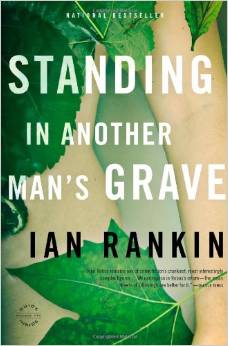
UnknownIf you’re a reader, like me you may keep either a written or mental list of writers, series, or books that you’d someday like to try.  Longtime mystery author Ian Rankin has been on my list for about a year or two, now.  In fact, last year, I tried one of his stories not connected to his Inspector Rebus series and for whatever reason didn’t connect with it.  Rankin’s 18th novel in his Rebus series was available at my local library, and, as the mystery itself sounded intriguing, I decided to give him another shot even though I know almost nothing about the series.

Almost to my surprise, I enjoyed Standing in Another Man’s Grave.  Rankin slips information necessary from previous books in with newer material, and as a result, I felt like I was reading the beginning of a new Rebus series.  There’s something particularly comfortable about older codgerier (okay that’s not a word) detectives.  They have at their stage in life little desire to make themselves look good–their interest is the work.  Rebus is pretty typical of fictional detectives these days.  He’s unorthodox, doesn’t follow the rules, has several vices, and is smarter than almost everyone else in the book.  Rebus is so typical I thought I would be bored by him, exasperated even, but I was not.  Maybe it was the setting.  Having been to Scotland, including Edinburgh and Inverness, I could picture a lot of the places and roadways, and that’s always a bit exciting as a reader.  Maybe it was the fact it was a cold case.  Cold cases can often be more intriguing simply because the mystery of whodunnit has lingered for so many years.  (Incidentally, this is exactly why Zodiac is one of my favorite movies).  Maybe it was just the fact that Rebus is older.  Old detectives are pretty awesome, from Hercule Poirot to the Peculiar Crimes duo of Bryant and May.  And, let’s not forget Miss Marple.

This post is a shoutout to Mr. Rankin for having a storyline and hero engaging enough that even in his eighteenth installment, Rebus delivers and makes me want to read the series from the beginning.

Since so many readers are always in search of a good mystery, I offer a few series that I have enjoyed over the years in addition to this one:

Agatha Christie’s Miss Marple and Hercule Poirot books.  (Short, comfortable reads often full of unexpected adventures)

Christopher Fowler’s Peculiar Crimes series starring John May and Arthur Bryant (A must for history buffs, especially)

Frank Tallis’ Vienna murder mystery series. (For those who like history and psychology.  The descriptions of food and music add a unique aspect as do many of the plots that revolve or hint at the future atrocities of the Third Reich)

Dorothy L. Sayers’ Lord Peter Wimsey mysteries.  (Gaudy Night is the best one, but the series as a whole is outstanding and a good exploration of a upper class detective and his not so easily won lady love, Harriet Vane).

Anna Dean’s Dido Kent mysteries. (Mysteries set in Jane Austen’s world that kindly don’t involve Miss Austen whatsoever).

Elizabeth George’s Inspector Lynley series. (Set in the UK, as with most of these, and also involving an upper class detective.  I enjoy the mysteries, but not so much Lynley’s complicated love life.  His partner, Barbara, is awesome.  She rankles against his poshness to great effect.)

Guilty until Proven Innocent–the Trials of Amanda Knox

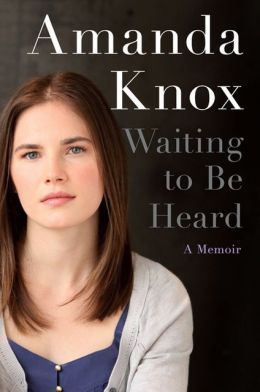
Waiting to Be HeardI can’t pretend to know much about Italian law, however in what I have read regarding the famous Amanda Knox murder trial, their premise in judging those accused of a crime appears to be 180 degrees different from that of American law.  In America, we take the idea of “innocent until proven guilty” to heart, in some cases perhaps too much so.  The idea behind that phrase, however, is that a person should have a fair trial and you really can’t have a fair trial if you are assumed to be guilty.

 Assuming innocence requires the prosecution to come up with hard evidence that a person committed a crime.  Although this can be troubling for a prosecution that is pretty sure someone committed the crime but don’t have evidence to prove it (sometimes there really isn’t much evidence) and requires them to use their “little grey cell” as Hercule Poirot calls them, for the those being charged it is the kindest, most loving way to proceed.  The opposite, which is what Italian law appears to practice, is that of guilty until proven innocent.  This premise puts those being charged at an instant disadvantage, for judge, jury, and prosecution are then unwilling and perhaps unable to see the facts of the case in an objective light.  Any character flaw in the person charged is assumed as an affirmation of guilt, and people can be condemned by hearsay and speculation instead of hard facts.

My belief is that the person bringing a charge should be the one to prove that charge is true.  If the state or police department is charging someone with murder, they have to prove that with evidence, not hearsay, or speculation.  And if they bungle handling the evidence and force confessions out of people that weren’t true, well, shame on them.  Do better police work next time and if the person is guilty they won’t get to walk free.  Covering up poor police/detective work by placing innocent people in jail does nothing for justice, truth, and love for our fellow man.  We have problems with this in America, too.  I think all police departments struggle with wanting to look good over pursuing the truth.  The job isn’t an easy one by any means, especially in a day and age when all too many guilty walk free on technicalities and so on.  However, police work and the law mean nothing, in my opinion, if their primary goals are not the protection of the innocent and the pursuit of the truth.

I’m about halfway through reading Waiting to Be Heard by Amanda Knox.  Her story makes me shudder for every young person blithely going abroad to study or work.  I was one of those young people having taught and lived in the Czech Republic for one year and in China for three.  Like Amanda, I knew exactly zero about the laws of those countries and how their legal processes work.  Nothing really bad happened to me when I was abroad, but it so easily could have.  America in some ways has become a bit of a cesspool.  Our freedom is used for many these days to do drugs and be sexually promiscuous.  Young people grow up thinking, like Amanda Knox, that they are abnormal if they don’t feel comfortable especially with the latter.  We can debate over whether drugs or promiscuity are bad/good, dangerous/healthy and so on, but Americans are for the most part unwilling to hang someone for a crime they didn’t commit no matter how many drugs they do or how promiscuous they are.

In other countries this isn’t so.  In some other countries if you are seen to be of “bad” character, you are guilty even if you didn’t do the actual crime.   And yet we young people skip over to others countries and all too often expect those countries and cultures to bend to our will.  We assume our social and sexual views are superior and should be theirs as well.  In this article I am doing the same, saying that our view of “innocent until proven guilty” is better.  This mere assertion isn’t enough to change the actual way in which other countries’ court systems work.  It is just so heartbreaking that so many of us, no matter how in tune with the world do not take to heart the big differences in how the law is applied around the world.  Having restraint at times, even if we don’t agree with it, can be so very, very important in how others perceive us, and too many use that perception against us if we are accused of something.

Saying this is not to put blame on the victim, but to state that being aware of reality is so very important.  For example, we have the freedom in America to dress any way we like for a job interview, but know that the reality is that dressing too casually or in dirty, wrinkled clothes will cost us the job.  We may profess an “innocent until proven guilty” as far as the law goes, but even in America in practice, people are often immediately judged on their actions or how they dress.  It may not be right, but it is a reality we live in daily.

Continuing on the theme of reality, I am baffled at how bizarre conspiracy theories are allowed in a court of law.  I don’t understand the Italian prosecution in this case, but I certainly admire their imagination.  Conspiracy theories have wormed their way into American courts from time to time, too, and we as a public are easily intrigued and seduced by them.  Many Americans refuse to believe that Amanda is anything but guilty, and many also speculate on the murdered McStay family from California, accusing them of working with drug dealers and so on, all with no hard evidence to prove either as true.

The reality in the Knox case is this: She did not, whether innocent or guilty, have a fair trial.  If you question that reality, I can’t help you,  you’re too far gone already, joining the accusers in Salem, the accusers in the Inquisition, and yes, the accusers of the Jews during World War II.  If you’re simply not sure, I encourage you to read her story and read the information online about her case.  Any thinking person can clearly see she was shafted and railroaded here.

One more thing: I was pretty convinced that Amanda Knox was likely innocent even before hearing the details of her story after reading The Monster of Florence by Douglas Preston and Mario Spezi.  The accusations they encountered from some of the same people involved in Knox’s case are simply too similar.  Devil worshiper cults involved in sex rings and with nary a drop of evidence to prove such a theory? These accusers, like those of Salem, are not in touch with reality, nor concerned with finding the truth.  Whether she did it or not, as a human being, Amanda Knox deserves better.

The Mysterious Affair at Styles, Poirot, and Agatha Christie

Everyone seems to know of Sherlock Holmes, fewer know of Hercule Poirot, though he is just as intelligent and odd as his predecessor.  If both fictional detectives were real and living today, they would be world famous celebrities.  At the beginning, Sir Conan Doyle and Agatha Christie probably didn’t fathom how much society would take to their characters.  The popularity of both are testaments to just how great Doyle and Christie were at telling mystery stories.  It was never about the mystery, really, but about the detectives.

What makes a good mystery, anyway? Some would say if one can guess who did it and/or how then the writer didn’t do their job right.  In some cases, this is true, but one could argue just as strongly that a poor writer is also one who writes a story in which there is no way for the reader to figure out by themselves who did it.  Which view is right?  Neither.  The best mysteries I have read have always been about the detectives.  And if the detectives are insufferable, so’s the story.

Since this musing is about Poirot, I’ll save Holmes for another day.  Hercule Poirot, Agatha Christie’s Belgian detective, a short, dandified and fussy older gentleman with pointy mustaches, is my favorite literary detective.  I like him because he’s a thinking man, because he’s a romantic, because he’s a traveler, and because he’s at turns, funny, kind, and understanding.  He senses the struggles people are going through sometimes even before they do.  In The Mysterious Affair at Styles we are introduced to this Belgian through a younger friend who has admiration for Poirot, but at this point doesn’t really grasp how intelligent the old man is.

Even though I’m an American, reading Agatha Christie mysteries have always felt a little bit like going home.  When I lived in China for a few years, I was elated that the high school where I taught English had a few English copies of her books.  I devoured them and they helped to stave of loneliness and homesickness.  With Christie (and Doyle) the mysteries are comforting.  You know they will be solved even if the murderer doesn’t get his or her due.  The stories are about solving the mystery, but not necessarily about punishing the wrongdoer, as that’s simply not the detective’s job.  With that in mind, the stories have a sense of lightheartedness despite their morbid plots.

Some people may think of Agatha Christie as the stuffy writer of stories that only take place in old mansions full of rich people.  While it is true that many of her stories are in those settings, The Mysterious Affair at Styles included, they are missing the forest of her genius for the trees.  Even with this first Hercule Poirot mystery, she was thinking outside the box.  The murder is straight forward and yet not, so wonderfully not.  In this, her first published novel, she showed right away her affinity for poison as the murder weapon, for intricate plots that at first seem very simple, for paying attention to motivations of the heart, and for small group dynamics.

Christie is also anything but stuffy, in my opinion.  Her stories take place in a variety of locations and with a variety of detectives.  She was a romantic and also had a wild imagination.  And not all of her stories are mysteries, some are simply adventures, some are explorations of the human heart.  One of the most tragic books I ever read is Absent in the Spring which Christie penned under the name Mary Westmacott.  It’s a long exploration in self-delusion, of a woman stranded at a station in Mesopotamia who has a self-realization that could change her entire life, and who ultimately chooses the easier path of keeping things as they are.

The Mysterious Affair and Styles was Christie’s first book, but thankfully not her only one.  She is a reader’s writer, in my opinion.  Her goal is not to stump us, but to get us to think (even while she may be stumping us) and to think like detectives.  Her mysteries are at once simple and complicated, much like life.  The motivations for the murders aren’t always horrible,  sometimes justice is served outright or through oblique channels, and sometimes it’s not.  Good mysteries, and good stories too, are more about the journey than about the ending (though a bad ending is sure to sink any story no matter how well told), and Agatha Christie understood this.  She also for the most part was brief and didn’t waste words, something she has in common with another classic writer, Jane Austen.

Poirot is her best and most endearing character because he has the ability to see straight through to a person’s heart and sympathize with the struggles he sees there, no matter what they are.  He encourages people to take the high road, to live in light, truth, peace and happiness.  Although particular about how he dresses, eats, etc., he isn’t plagued by the personal baggage or drama of more modern detectives.  He is, like Sherlock, his own man, beholden to none and helping others because he feels compelled and called to do so.  His pride and vanity are of those blessed with self-sufficiency and intelligence and almost always explored with a wink and a smile to the reader.

If you have not yet read Agatha Christie, I encourage you to do so.  Her best works are On the Orient Express, The Man in the Brown Suit, and And Then There Were None (formerly Ten Little Indians), though all of her books, especially the Hercule Poirot series and the Miss Marple series are great reads.  Also, I am excited to see on imdb.com that And Then There Were None is getting the miniseries treatment from the BBC in 2015.

The Next Harry Potter–Part 3 of 3

3. The Kingdom series by Cynthia Voigt

photo 2

This is an older series from the 1990s, but it’s a beautiful, fantasy-type world without magic, and has been one of my favorite series since high school.  The themes and story lines in the books are geared towards an older Young Adult audience.  The novels are all loosely connected and set in a fictional “Kingdom” and the countries that surround it.  The world is medieval, with kings, earls, puppeteers, and so on.

The first of the series, Jackaroo, has a “Robin Hood” plot involving a heroic figure who steals from the rich to give to the poor.  Although an engaging story, it’s my least favorite in the series.  My two favorites are On Fortune’s Wheel and The Wings of a Falcon.  The first is a typical romance/adventure where girl meets boy, girl falls for boy who doesn’t at first care for her, etc., but it’s not a love easily won, and therein lies the story’s strength.

The Wings of a Falcon involves the quest of a young man looking for peace.  He starts out as a slave imprisoned on an island and breaks free, taking another boy with him.  The book is full of action, some romance, a tragic yet happy ending, and has an epic scope built for the big screen.  With names like Oriel, Griff, and Beryl, it fits nicely into a fantasy genre, but again, without the use of magic as a trope.

The standout here is Voigt’s writing, which is notable because one doesn’t note it while reading.  One can become completely involved in the story, and that is the point.  No ridiculous metaphors (I have to battle this in my own writing), or effusive descriptions, just good, clean storytelling.  Modern YA is plagued by “purple prose” possibly because so many of us are going the self-publishing route, but professional writer that Voigt is, she has none of those problems.

Why this could be the next Harry Potter: The stories in the series can appeal to both teens and adults.  The “Kingdom” world is adaptable to the screen and invites the possibility of many more stories set in the same world.  The settings evoke the romance of nature, from woods, to mountains, to sea.  The heroes/heroines in the stories are sometimes childish due to their age, but they are “young adults,” with the emphasis falling on “adults.”  The Kingdom world is closer in gravity and themes to The Lord of the Rings and the later Harry Potter books, and is also not a true “series” as the novels take place in some cases generations apart.  Still, the tales offer much “scope for the imagination,” as Anne of Green Gables (I’d love to see this series remade!) would say.

Thanks for reading.  –Pixie Beldona

The Next Harry Potter–Part 2 of 3

2. Monster Blood Tattoo.

photo 1

This series is a big reason why I miss Borders.  If it hadn’t been at Borders I would have missed out on D.M. Cornish’s incredible world, for the new “American” series title and artwork are not nearly as dynamic as the first cover and title that caught my eye.  I fell in love with MBT upon reading the first book, The Foundling, and was sad to see it was months before I saw it on the shelves of my local Barnes and Noble.  One of Borders biggest strengths, in my opinion, was that they had a lot of awesomeness waiting to be discovered on their shelves.

Monster Blood Tattoo is the rightful name of this series, but for some reason it was deemed that Americans are too sensitive or something for this title, so it was changed to the bland The Foundling’s Tale.  For me it will ever and always be Monster Blood Tattoo, and I will hereafter refer to the series as MBT.  Australian author and illustrator D.M. Cornish spent some fifteen plus years creating the world of the Half-Continent.  Think Napoleanic-era empire crossed with monsters and monster hunters.  The result is as epic and as Tolkien’s Middle Earth with the addition of wonderful hand-drawn portraits of the characters.  Add the lengthy, fascinating appendices, and it’s a veritable role-playing game waiting for geekdom.

The Foundling’s Tale as a name isn’t so far off, at least for the first three books (I am hoping there will be more), as it follows an orphan boy with a girl’s name, a kid who wants to be a monster fighter but ends up being a lamplighter on the emperor’s highway.  Much like Harry Potter, Rossamünd has to continually reassess his view of world and the people and/or creatures in it.  At times he’s just plain dumb, but then he’s a kid.  The best character in the series is bonafide monster hunter Europe the “Branden Rose.”  She’s one of those hard shell-soft core people for whom Rossamünd presents a dilemma.  He insists on seeing the, well, “human” side of monsters, whereas Europe has grown up seeing them as threats only.  She’s even had her organs surgically altered so she can fight the monsters with lightening.  Interestingly, in the Half-Continent the majority of the monster hunters are women.

Why this could be The Next Harry Potter:  Despite its rather simplistic plot at times, the series has great depth and great potential.  Cornish has built a vast world meant to be explored in its minutest detail.  The world and story can appeal to a wide audience, both kids and adults, and would easily adapt to the screen.  The biggest challenge would be the terminology, as Cornish uses quite a few made up words much like HP or LOTR, but a talented screen writer would be able to incorporate these no problem. The series also boasts a wealth of interesting characters, both humans and monsters, political and social commentary, and the important theme that people and creatures be judged not merely for what they are, but for what they do and how they act.

Up next time:  The Kingdom

The Next Harry Potter–Part 1 of 3

As anyone who is a fan of books and/or movies knows, the popularity of the Harry Potter series with both kids and adults is something the entertainment industry has long been trying to replicate.  Many books have been hailed as “The Next Harry Potter,” in order to get more readers and then viewers if the book becomes a movie.  Some of these have failed and some have succeeded, and a few like Twilight have become their own phenomenons.

The next Harry Potter, the next Twilight, the next Hunger Games, we’re always looking for the next big thing.  In searching for the “next” and wanting to be first on the bandwagon, we sometimes miss stories that are already there, books that with the right marketing, screenwriter, and stars could make excellent movie franchises.  Here are three that I would like to see on the big screen:

1. The Oz series.

Most people are familiar with the iconic 1939 The Wizard of Oz movie starring Judy Garland.  It is a film that made excellent use of color vs. b&w, and introduced “Somewhere Over the Rainbow,” a near spiritual hymn that is deeply entrenched in our collective psyche to this day.

What many don’t know is that the author of The Wizard of Oz, Frank L. Baum, wrote thirteen other books about the Land of Oz, some including Dorothy, some not.  Over the years, a few of these books have been produced as a cartoon, video, or film, the most recent effort of these was Oz the Great and Powerful directed by Sam Raimi and starring James Franco, Rachel Weisz, Michelle Williams, and Mila Kunis.  While it was refreshing to see a new Oz story told, it sadly involved magic, but had none of that film magic that the 1939 movie captured so wonderfully.

 A big problem with modern fantasy films whether for children or adults is that they evoke no sense of wonder or excitement of either the actual world or of our imaginations.  This is perhaps due to our cynicism today, but also much due to the fact that so many film makers don’t want to tell the stories of these excellent works, but their own stories, only slapping the names and settings of better storytellers on their efforts in order to make a profit.  It isn’t necessary to faithfully detail every book page to every line in a screenplay, but capturing the spirit of the original work should, I think, be a goal.  I saw nothing of Baum’s Oz world in that recent film and thought it was a shame because of all the talent involved in the project.

Oz suffers a similar fate to that of Peter Pan by J.M. Barrie.  In our modern times, we get too caught up in creating our own alternate versions of the story or changing it into a psychological study instead of focusing on telling a good story.  This isn’t to say that alternate versions can’t be great, but, again, they should not be wholly cut off from the main source material.  The source material is in almost all cases weirder, quirkier, and more interesting than the bland retellings of them crafted to “one size fits all.”

It has been some time since I’ve read the original novel, but the 1939 The Wizard of Oz at least captures Oz even if it didn’t follow the book to the letter.  It captured the magic, the danger, and the political intrigue of “the man behind the curtain.”  It is a movie much beloved, but not one, I think, for everyone.  Let me show another example:  Wicked by Gregory Maguire.  I have met people who love the story, and some who won’t touch it.  It is a story for a specific audience, a story that decidedly won’t appeal to everyone, but to those who desire a deeper understanding of what makes a bad person bad, or a villain a villain.  For some, it’s enough to say a character is a villain because, of course evil exists in the world.  For others, though, they want to know why, they want a reason either behind the bad actions or behind the label of “evil.”  It’s why in the aftermath of mass shootings there is so much focus on the background of the shooter.  We think there must be a reason.  Sometimes there is and sometimes there isn’t.  For those of us who believe there is true evil in the world, no amount of reasons makes any difference, evil is evil.  That true evil can’t be corrected by therapy or giving everyone a perfect childhood, well, that’s a hard lesson to learn, and we are a bit loathe to learn that today.  We want to blame the gun or the knife, or the possible abuse and/or neglect of the killer, but is the possession of a weapon or any sort of history of suffering really an excuse for the slaughtering of strangers?  Aren’t we really, in some form, trying to excuse away the evil in our own hearts?  I digress, these all are thoughts best plumbed in an entirely different article.  My point is, stories made up to cater to everyone, whether one year to ninety years, whether living in East or West, North or South, often cater to no one.

Ozbook03cover

 Back on topic:  My favorite book in the Oz series has long been Ozma of Oz.  Ozma is a great character, not always nice, and one who shows another side of Dorothy.  How wonderful it would be for this tale to have a proper big screen treatment.  In fact, all of the books in the series offer plenty of plots, magic, characters, and wonder to compromise an entire franchise of films, if only Hollywood, or someone, would step to it.  This is a fantasy world that has stood the test of time, and like more modern fantasy such as Harry Potter, offers much social commentary and philosophizing in the process.

Up next time:  Part 2: Monster Blood Tattoo

Sales Tips from The Paradise — Part Two

Part Two of Two

One of the best things about business, in my opinion, is that good business tips also make good life tips.  In one form or another we are often trying to make an impression on those around us, trying to “sell” some idea of us to them.  Well this can be cast in a negative light, it is simply the way the world works, especially in a day and age with so much competition.

Here are more sales tips from the BBC show, The Paradise starring Emun Elliot and Joanna Vanderham:

You can never know too much about your product.

Denise, the shopgirl in The Paradise has a lot against her, mostly jealousy from her rivals who are also after Mr. Moray’s attentions, romantic or otherwise.  Nevertheless, knowing (or at least sounding knowledgeable) about the dresses she sells helps her get out of a sticky situation in which a rival shopgirl has her try on a dress for a lady.  The dress given to try on is purposely too small on Denise, so the lady says she won’t buy it.  In a fine moment of triumph, Denise delivers a sensual speech stating that it doesn’t matter how the dress looks on the shopgirl, but how it will look on the lady.  She describes the dress as the perfect item to wear if you wish to attract a suitor, and the lady falls for it all with Mr. Moray (the boss) looking on.

You can never know too much about your product, whether you sell buttons or gourmet dinners.  Customers are impressed by knowledge and confidence.  The same can be said for, yes, romance.  Confidence impresses.  Also, you never know who will be watching.  Employers are duly impressed as well when it’s clear their employees have taken the time to know the product.  Those employees are usually hard workers and marked for success.

The brightest and best will always be resented.

Speaking of success, if one wants to be one, it’s best to note from the beginning that if one is good at one’s job, or especially blessed with good looks or talent, one is bound to experience resentment from others from time to time.  As a society we continually fall prey to the idea that the rich and successful are to be resented merely because they are rich and successful.  We don’t seem to care about all of the hard work and sacrifice that came beforehand to get the person to that state.  Thus, to be a success, note that the resentment exists, and move on.

In the series, The Paradise, both Mr. Moray and Denise have people set against them due to their successes.  But the shops dying out because of the glittering mammoth department store aren’t even trying.  They seem to expect that customers will come to them “just because.”  Instead of finding ways to work with The Paradise, or new and interesting ways to appeal to a niche audience, these shops are decaying.  The shopkeepers make almost no attempt to even improve the look of their stores.  It is only when Denise takes the time to help them, that they even try.  It is sad that so many of us in this world think we are owed something, for that attitude will continually bring us heartache.  The truth is if we are to gain anything in this world, we must bring something to the table.  (Love is something apart from business, in that we can’t ever truly earn another’s love, though we might gain their attention).

It is interesting to see that even though at this point in the series Denise is actively encouraging the shops to take custom from The Paradise, Mr. Moray isn’t alarmed, but impressed by her ingenuity.  So we can say as well that the brightest and best don’t spend time resenting the other brightest and best.  They learn from them and consider them (in the age old words of Captain Hook) “worthy opponents.”

Find a way.

“If at first you don’t succeed…”  A good idea is a good idea.  A good product is a good product.  Sometimes barriers, whether of funds, pride, or spite get in the way.  Denise is a shining star of a shop girl, and as such, her supervisor, Miss Audrey, is alarmed that Denise may take over her own position.  Instead of bettering herself, Miss Audrey’s solution is to snuff out the burning light of creativity in the girl.  She insists that Denise stop having ideas altogether on how to improve sales, or if she has any, that she bring them solely to Miss Audrey and not to Mr. Moray who is so encouraging of her.

Denise respects Miss Audrey and doesn’t wish to make her feel threatened, nevertheless, she finds a way to go through an alternate third party to get her good ideas where they need to go, to the boss who understands their worth.  The best businesspeople find a way and they try to do it without crushing others in the process.

Cheer up.

Sam, a plucky Paradise salesman played by Stephen Wight, gives this an an answer to anything that ails a person.  Denise’s uncle,  Edmund Lovett (Peter Wight), is gloomy because his business is dying out thanks to the booming department store across the street.  Cheering up in and of itself doesn’t really solve a problem, but it definitely improves one’s outlook, and outlook is key.  Pessimists and people sunk in depression and gloom are rarely the movers and shakers of the world.  To have ideas is to have optimism, or cheer.  How can one win either in business or in love by throwing pity parties?  People are not owed business or love, but must seek it out.

It is disheartening, that especially when it comes to love, those most desperate to have it are scorned for that same desperation.  But, people are most attracted to those who are rays of sunshine and who show cheer and confidence.  Somehow, for those of us who are down in the dumps, we must fight that depression and put on a brave face.  Put on makeup and curl your hair if that helps.  Cheer up even if there’s not much cheer to be had.  Highlight your strengths as much as you can, putting your best food forward.  It’s not fair, but people respond best to the prancing peacock, the blondes who appear as if they are having all the fun, and those who bring excitement into a room.

Success is not guaranteed, but at least you now have cheer.  And cheer brings so many possibilities with it.  It sees the best in people and the best in every situation.  It can even look beyond the peacocks and blondes and see the quieter attractiveness of “nice” girls and guys who only want a little encouragement to shine and to wow you.  Cheer finds a way where gloom can scarcely conceive of one good idea.

True love isn’t fickle.

This is more of a life tip than a sales tip, but it can be applied to business as surely as romance.  If you love to do something, you’re not going to do it half-heartedly.  If you truly love someone, you’re not going to love them while keeping an eye out for someone better.

Confidence is the supreme importance in a lover (and in a businessman).  Mr. Moray and his on and off relationship with Katherine Glendenning is one of the most infuriating story lines in the show.  Both are fickle and neither show confidence that the other is what they want.  Moray exudes confidence in his business, but can only pretend at love, until, that is, he finds someone he actually does love.

The best romantic advice I ever learned was that if you aren’t sure that the object of your affection likes you, cares for you, or loves you, they probably don’t.  That isn’t to say that you can’t win them by impressing them with your love and confidence, but if you are “loving from afar” it is likely destined to be only a one-sided love.

This is not always the case.  Some love stories take their time, just as some businesses need time to grow, but the truth is: If you have to ask if they love you, the answer is in the question.  If you have to trick or cajole someone into committing to you, their heart isn’t in it.  If a person can’t decide that it’s you they want, they likely don’t want you.  But, cheer up, the world is full of billions of people, billions of possibilities for love, just as it’s filled with billions of different customers.  What repels one person attracts another.  The right person will love you in confidence and joy.  They will be eager to commit because true love wipes away all fear.  True love is willing to take the risk.  In the words of William Shakespeare:

SONNET 116

Let me not to the marriage of true minds
Admit impediments. Love is not love
Which alters when it alteration finds,
Or bends with the remover to remove:
O no; it is an ever-fixed mark,
That looks on tempests, and is never shaken;
It is the star to every wandering bark,
Whose worth’s unknown, although his height be taken.
Love’s not Time’s fool, though rosy lips and cheeks
Within his bending sickle’s compass come;
Love alters not with his brief hours and weeks,
But bears it out even to the edge of doom.
If this be error and upon me proved,
I never writ, nor no man ever loved.

Sales Tips from The Paradise — Part One

(PART ONE OF TWO)

The_Paradise_(TV_series)_titles

My latest obsession on Netflix has been a BBC series inspired by Èmile Zola’s book, The Ladies Paradise.  The TV series is a little more charming than the book, but both delve into the good and evil of buying and selling, particularly when it comes to department stores.  The BBC series is set somewhere in the Victorian Era at a time when sales and department stores are a novelty.  It is easy to see, however, that the frenzy of shopping we all experience stepping into a Tesco or Walmart is not too far in the future.

What I enjoy most about the series are the ideas of both the owner of The Paradise (Mr. Moray, a ladies’ man played by Emun Elliot) and his newest shop girl, Denise (Joanna Vanderham) have for selling and moving stock.  Denise pours out idea after idea, and Moray is willing to put every one into action, giving her full reign, and calling her his “little champion.”  A match made on Wall Street if there ever was one.  Love and business come together seamlessly in this fine production.


Here are some selling tips from Season One of The Paradise:

Successful businessmen take risks.

Mr. Moray is intent on conquering the city with his department store, and he is willing to risk everything to do so.  His advisor, Dudley (Matthew McNulty), is more hesitant, more practical, saying they shouldn’t put the store itself in jeopardy.  Mr. Moray says that their city is “littered with men who stood still,” men who shrank from the possibility of greatness because they didn’t want to take a risk.  “Men who slow down, men who take their time, they come second.  I won’t do that,” Moray says when Dudley cautions him against taking gamble with a large one-day sale at The Paradise.  Moray’s willingness to risk everything is why he’s such a successful businessman and ladies’ man.  Ever wonder why the “nice” guy or girl doesn’t get the person of their interest?  Faint heart never won fair lady (or gentlemen).

The customers won’t come to you.

Advertisement.  A sale.  A special, a contest, a promotion.  Customers must be enticed to buy, to want things they really don’t need — one of the “sins” of big business.  In the series and book, a woman’s desire for buying is connected with her lust for love and to be admired.  In love and in business, it is the brightly colored prancing peacock who gets all the attention.  Successful selling requires some flash, and a willingness to show the best of what one has.  Even the plainest of girls can be transformed with stylish clothes, well-cut hair, and a bit of makeup.

At a later point in the season, Denise tells her uncle that if he can’t sell dresses, he should sell neckties.  People are more willing to part with a small amount of money than a large sum, much like a woman may be willing to try conversation over coffee before embarking on a nerve-wracking first date with a dinner and a show.

Bend, don’t break.

Without customers, business cannot be conducted.  Thus the saying, “the customer is always right.”  Anyone working in retail knows that isn’t true.  Nevertheless, doing well in business often means taking small and sometimes large losses to keep customers happy, to keep them coming back.  At The Paradise, Mr. Moray must “bend” to those with money who are considered his betters.  In order to court their investment, he must submit to some of their demands, to compromise.  Part of the success of Kohls department store chain has been their policy that a customer can return almost anything at almost any time.  Yes, unscrupulous customers often taken advantage of this, yet it is a policy that keeps them and others coming back time after time, as do the various discounts and sales.

Investors require proof.

Cold feet in love and cold feet in business.  Reluctance in both can often be remedied with proof, proof that things can turn out for the best, proof that the risk is worth it.  In the series, Mr. Moray courts Katherine Glendenning (Elaine Cassidy) for love, and her father for his money.  Mr. Glendenning (Patrick Malahide) is hesitant both to invest in The Paradise, and to give Katherine’s hand to Moray in marriage.  “Haste is the enemy of love,” he tells his headstrong daughter, all while Moray looks upon both with calculating eyes.  Moray, we quickly find, is fine with waiting in love, but not in business.  Thus, he puts all his efforts into wowing Glendenning the banker with a huge sale at the store, a risk that turns out to be a success.  He also gives Katherine the teasing hope that more time will ease his reluctance to marry.

Loyalty goes both ways.

As a businessman (or a lover), if you expect loyalty from your employees, you should give them your loyalty in return.  A great boss is distinguished by his or her willingness to give their employees the benefit of the doubt when conflicts arise.  When a shop boy is accused of an indiscretion, Moray takes the time to find out the full story before condemning him.  He understands that a well-run business relies not only upon customer loyalty, but also upon the morale of the employees.

A great boss will also know the strengths of their employees and put them to good use, much like Moray continually seeks out new ideas from the veritable light bulb, Denise, and spends time flattering the middle aged Miss Audrey (Sarah Lancashire) who runs the women’s clothing department.  Miss Audrey is herself a born flatterer, a born saleswoman.

Business is Business.

At the end of the day, business is business, and only has a fleeting comparison with real love, but the dance of both, the game of both, can be very similar.  Both involve desire.  What makes Mr. Moray a great businessman makes him a terrifying suitor, a threat to all women.  As a businessman alone, he would make a terrible husband, much like a successful courtesan would make a terrible wife.

The strength of the series, however, is that it shows if one truly cares for and about people, one can be successful both in business and in love.  Customers (and ladies) can be won with time and care.  Moray isn’t a ruthless businessman with no scruples, because he knows he would put himself out of business.  Likewise, he is willing to court Katherine Glendenning, but won’t commit to her until he is ready for marriage.  Denise is a good saleswoman because she genuinely believes in the products and the future of The Paradise, and sees that both can be a benefit to the customers.

The series portrays the dangers of business and falling prey to consumerism, but it also shows the positive side, something we see far too little of in a day and age where the biased ruling of an elite government is held up as the only way the common man can have a chance.  In business, we are not victims needing to be saved by our “betters,” but equals in our striving for success.  A good sale is satisfactory on both ends, where both parties get what they desire in an amiable way that hinges not on their social strata so much as their being able to deliver as promised.  One ingenuity against another.

(To be continued in Part Two)