Archives

The Smile Has Left Your Eyes: Ep. 1 review

Especially because remake The Smile Has Left Your Eyes (or Hundred Million Stars from the Sky) is a thriller, I think it’s a bonus to have not seen the original Japanese show. No frustration over character or plot changes or the faint boredom of already knowing how the story ends.

Refreshingly, Smile, episode one doesn’t not begin with a bang, something  many of the thriller/action K-dramas try to do. The problem with this is that often spectacular first episodes are followed by mediocre one that progressively deteriorate both in substance and excitement. A few like The K2 mostly live up to their exciting first episodes, but for too many the writing just peters out. As this is a remake, it will help that the writers have an original to work off of.

We are introduced to various characters in episode one, all interacting and presumably going to become intertwined by the end of the series. The first main character we are introduced to is Kim Moo Young [character and names spellings from Asianwiki], played by Seo In Guk. The episode opens on a murder scene in which the TV plays in the background. On the TV a psychologist is being interviewed and mentions an usually 8-year-old boy and how he wonders what he is doing now, as he must be about 30. It cuts to Kim Moo Young working at his job at a beer distributer and the natural conclusion is that he is the same boy all grown up.

The next introductions are brother and sister Yoo Jin Kook and Yoo Jin Yang. Jin Kook is played by the often hilarious Park Sung Woong and is a detective or former one who now has more of an administrative job. He also appears to be a man always on the clock, a natural sniffer out of mysteries and when things just don’t sit right. At the murder scene investigation, he shows up even though he’s off duty and the team lead Lee Kyung Cheol (Choi Byung Mo) seems less than thrilled to have him around, while young detective Eom Cho Rang (Kwon Soo Hyun) has a brotherly camaraderie going on with him. Yoo Jin Kook runs across Kim Moo Young in the course of his day and puzzled that his face seems so familiar.

Yoo Jin Kook’s younger sister Yoo Jin Yang is played by the petite dynamo Jung So Min. I will have to keep watching to really figure out what Jin Yang’s job is, as it wasn’t very obvious from the episode, but it seems to be either advertising or something with design. She is invited to a very important party and supposed to talk up a VIP about contracting with her company, but this never happens as the party is for a good friend of hers and she spends most of the time joking with her brother, who arrives late.

Nothing is particularly striking about the first meeting between Yoo Jin Yang and Kim Moo Young, though they are the main characters. Kim comes across as a somewhat gruff blue collar worker, and it’s strange to think that this weathered life-hardened man is the same actor who played the softy Louie in Shopping King Louie. Seo In Guk hits all the right notes of this character, from his nonchalance, quick observance of everything around him, and the quiet malice pervading him in which his smiles never quite reach his eyes. Shades of David from Hello Monster are there, but Kim is a decidedly different person, likely to be truly dangerous, and a killer. How Seo manages to so transform himself for every role, I don’t know, but it is the reason some in the industry call him an acting genius.

As the party progresses we learn something about the damsel it is for, an artist named Baek Sung A, played by Seo Eun Su. Baek Sung A soon reaches the standard calling for damsels, to be in distress. The distress is largely caused by herself, as Kim Moo Young quickly finds that she is not as sweet and innocent as she looks, and takes advantage of that to do her a good turn and woo her away from her boyfriend in the process. Flipping back between their budding relationship and the investigation of a murdered 22 year old, we are presented with the sobering thought that Baek Sung A may be just the next girl to fall prey to serial killer Kim, who seems to be too smart for his own good. Shades of Cheese in the Trap are here, too: Is Kim just strange or does he actually have a psychological problem? Is he a killer and a sociopath or is it all just perception?

I’m looking forward to seeing what The Smile Has Left Your Eyes brings to the table in future episodes. The acting is great so far, but the only ones with clear chances to shine so far are Seo In Guk, and perhaps Seo Eun Su as the damsel.  The other characters don’t really have much uniqueness about them so far, and the brother and sister duo give me a an old cinema vibe as if they would be a sunny counterpart in a Hitchcock movie or something.

Speaking of Hitchcock, a few of the shots so far are breathtaking and I think they really got the mood right, a simmering slow burn that will ratchet up as the series progresses. This doesn’t appear as if it will end as a happy story, but will give us profound moments in which we desperately wish it was. For the joking brother and sister, we may find they have a darker history behind all of the smiles, and there’s a hint of it in the animosity Yoo Jin Kook experiences from the detective team lead and the fact that his sister doesn’t seem to be terribly good at her job.

I for one love a good mystery, so I’m hoping we have a lot of good twists, turns, and revelations to come.

Print edition now on sale

Trolls for dust, Season Two, print edition now on sale! And what a beautiful day it is, too! More notecards for The Stolen Necklace coming later today.

Korean dramas: I enjoyed the love story About Time on Viki, but the ending made little sense, mostly because there weren’t any rules for the time clocks, any reasons why certain people could see them, and nothing the people could do to change them. The power to change the clocks would mean power over life and death, so I can see why the matter was mostly skated around, but it left our heroes with really nothing to do most of the time. Lee Sung Kyung was great as usual, but she really shines in Cheese in the Trap, and Weightlifting Fairy Kim Bok Joo. Haven’t seen Lee Sang Yoon in anything else, but he was sufficient and his assistant, played by Kang Ki Doong, was hilarious. The best performance in the show, however, was Jung Moon Sung as the male lead’s brother. He broke hearts all around.

Other dramas I am sporadically watching are Big Man, Suspicious Housekeeper, and Are You Human Too? Biggest budget is definitely the last one and I have to say the lead, Seo Kang Joon, is holding his own, at least for the first couple of episodes. Always hit or miss with up and comers. Seo did so well as second lead in Cheese in the Trap, but one never knows until they are tried if they can really carry a show/film all by themselves.

As for Big Man, all of the actors nailed their characters and the plot keeps one guessing as to how it’s going to end. I will do a longer review of it in the future. Suspicious Housekeeper has an intriguing premise – sort of Mary Poppins/Nanny McPhee-ish vibes, but I’ve started many shows like this that quickly go downhill, so we’ll see if the intrigue holds.

TfD2

Hi, All,

Well, I’m finally done proofreading my manuscript and starting in on corrections and then layout this week. If all goes well, Trolls for Dust 2 will soon be on sale, hopefully by August 1!! And I may soon have a cover image and a theme song to share!

With all that craziness going on, I’m putting other writing projects on hold, including this blog, so I won’t likely be posting much until the book is out. The Stolen Necklace notecard story has about 4 cards left to go, and it’ll be interesting to see how it all turns out. As for Korean dramas, I likely won’t have any review out, but I’m really lovin’ Yoon Sang Hyun these days. He’s been in a lot of major projects, considering that he went into acting in his 30s. He often plays the second lead and very flawed men, but he’s great at it, and isn’t too shabby when he’s the star, either. Catch him in Shopping King Louie and Ms. Perfect on Viki or Dramafever, and as a detective hunting down a serial killer in Gap-Dong, showing on Netflix. Yoon’s one of those actors who really brings out the best in his fellow cast members, so watch for that.

Fortified with kimchi rice and watermelon for dessert, I am ready to get to work. Fighting!

–P. Beldona

5 Quick Drama and Movie Reviews

As has become my viewing habit, I tend to bounce around between shows and stories rather like a pinball.  One plot line captures my attention, and then a song or actor in the story leads me to another movie or drama that I start right away, and then something in that work will inspire me to look into a similar story or a different writer, director or actor, and so on.

This happens with books, too, and I find it hard to just stick with one story, drama, or movie straight through and am usually reading or watching up to twenty stories at the same time. Hopefully, this means I simply have a busy mind. 🙂  In any care, here are a few quick reviews of recent dramas or movies that I’ve watched.

  1. Till the End of the World.

This is a Chinese movie about a millionaire and a scientist that survive a plane crash in Antarctica and have to survive the elements. The CGI leaves a bit to be desired, and the movie’s not super dedicated to realism, but it’s a fun and a sweet love story at that. Mark Chao as the rich man Wu Fu Chun really wins the audience over as he braves the elements over and over, coming to love his environment at the same time. He also has uncannily resemblance to Korean heartthrob Choi Si Won (recently in Revolutionary Love) in parts. The female scientist, played by Yang Zi Shan, doesn’t have a lot to do, but her knowledge is instrumental in instructing Wu’s continual expeditions out into the cold and ice.

2. Our Town.

Our Town is a Korean movie from a few years ago. This story is extremely disturbing, with graphic levels of violence that had me covering my eyes half the time. So I probably missed a lot of the visual cues in the story due to that.  Our Town is essentially a study into the criminal murder’s mind, specifically those murders that do so in connection to a childhood trauma.  It has a slow feel like many noir films, and the environment is dirty and gritty and leaves you wanting to scrub away the filth after. The story has no positive light in it, except to say that trauma begets trauma, and is forthright about just how disturbed the minds of serial killers actually are.

I like murder mysteries and especially detective stories where they have to hunt a serial killer because I love the unfolding of the mystery. I like to watch the detectives put everything together. While that is fine and good, most murder mysteries often make murder into something mundane–the physical aspect and the horror of the killings are often glossed over to focus on the mystery. Our Town really plays up just how repulsive these killers actually are, and how sick of mind, and how tortured their inner soul. It is a mirror for the viewer: These people are truly ill and depraved, so why do we like watching these kinds of stories in the first place? Is it the mystery aspect? Is it so we can tell ourselves we are better than them? I don’t know, but I wouldn’t recommend this film unless you are calm of mind and have a very strong stomach.

That being said, the direction and acting are all outstanding, and I am disappointed to find that this appears to be director Jung Gil Young’s only work. If you know actor Ryu Deok Hwan only from shows like Faith (The Great Doctor), you will be dumbfounded by how scary he is in this. While the other lead character, played by Oh Man Seok (Squad 38) and Lee Sun Hyun (Pasta), are clearly haunted by their collective past, Ryu’s character copes by thriving from it.

3. Dating Agency: Cyrano.

This is from a few years ago as well and if you love romantic comedies, this is it. Episode one is great in showing how matchmaker Gong Min Young (a delightful Choi Soo Young, so dour and subdued in Squad 38) is initiated into treating her profession as James Bond-style missions. It is based on a similarly titled Korean movie, which I haven’t seen. It’s fun to see how all of the various love stories play out and frustrating how reluctant the male lead (Lee Jong Hyuk from Chuno [talk about epic story]) in showing his feelings or any passion whatsoever. We get a taste of what their romance could have been right at the very end, and it boggles the mind that the writer did not think to play it up more in the entire series. Maybe the James Bond plots were too much of the focus? The first half of the series is very enjoyable and reminiscent of romantic comedies past, but the second half veers off into a jumble of parts that may work separately, but don’t work together. The songs, specifically by Baby Cab Driver, are addicting. Altogether, the series is fun, but not a satisfying yarn.

4. Lawless Lawyer.

2018 seems to be the Kdrama year for procedurals and legal/detective plots. I am about halfway into Lawless Lawyer, about a young lawyer taking unorthodox measures to bring officials to justice for their crimes past. I haven’t seen Lee Joon Gi (Fly, Daddy, Fly) in many dramas, but he is outstanding as rebel lawyer Bong Sang Pil, and sells the action scenes really well. Bong Sang Pil is also unexpectedly funny in parts, bringing a bit of levity to the otherwise downer of a story. Seo Ye Ji (Hwarang) as his accomplice is great as well, with her low voice and no-nonsense personality.

What to watch it for, though, are the villains: Corrupt Judge Cha Moon Suk (played by Lee Hye Young of Boys Over Flowers fame), and her lackey An O Joo (peerless Choi Min Soo (Sandglass). That both these actors are good at playing the bad guys is an understatement. Choi, in particular, is one of those actors who always becomes a different character for his roles. The downside, and why I’m only halfway through, is that the writing is stuck in the power play between the judge and her lackey and seems to be on temporary repeat. Even the best actors cannot overcome this, and I’m seeing both Cha and Choi becoming bored with their characters. I will continue watching in the hope that the loop stops, but find everything else about the series refreshing and very watchable.

5. High School King of Savvy.

This was a second watch for me, and I found the second time even more enjoyable than the first, as I could really watch how masterful Seo In Guk (Shopping King Louis) and Lee Ha Na (Voice) are in creating their characters. They sold the age gap in a way few other actors can or will. “Noona” romances, or those with older women and younger men are fairly common in Korean dramas, but Savvy walks right up to the line, making their man, Lee Min Suk, an eighteen-year-old high school student (he would be seventeen in Western ages), falling in love with someone ten years his senior. Student Lee Min Suk finds himself in a rock and a hard place having to take on a double life pretending to be his corporate hawk of a brother.

Similar plots have certainly been done both in Hollywood and Korean dramaland, but Savvy takes it to another level as the Noona romance ends up being somewhat of a surprise, so awkward is Lee Ha Na’s Jung Soo Young compared to her streetwise younger sister, that at first we can’t imagine anything beyond a sweet friendship between her and Lee Min Suk.

If you’re stuck on the age gap, Savvy will be a hard watch and unbelievable; if not, you’ll see a masterful writer, director, and actors all slowly building the cases of Min Suk’s and Soo Young’s characters and how they are right for each other, because they aren’t right for anyone else. Min Suk is clearly bored by the high school girl chasing him, and bored by being a high schooler in general, except for his passion for hockey. Soo Young, in her innocence, doesn’t realize that though we all feel for him, Yoo Jin Woo’s (Lee Soo Hyuk) trauma, cynicism, and loneliness, would simply become her trauma, cynicism, and loneliness. Soo Young only begins to shine under the steady love and affection of Min Suk, and it is only her experiencing that real love, that she can shake off her embarrassment at being manipulated by Jin Woo.

High School King of Savvy also has a great soundtrack, minor characters, like Min Suk’s dad and grandpa, that will melt your heart, some of the best kissing scenes ever, and some of the funniest commentary on office life in South Korea. What to watch it for, though, is the acting of the leads, especially Seo In Guk. Seo is currently my favorite Korean actors, so I’m a bit biased, but, like Choi Min Soo, he has the ability to become another person onscreen, a feat few, more experienced actors, can accomplish. He sells the coming-of-age Min Suk in a way no one else could have, making him half in childhood, half in adult. For contrast, watch Big with Gong Yoo. As much as I love Gong Yoo in other works, Big was a misstep for him, as his teenager thrown into an adult life often acts as if he’s in elementary school instead of high school.

It’s also interesting to see Min Suk in contrast to Soo Young’s sister, Yoo Ah. Yoo Ah is just a little younger, but there’s a few scenes inserted into the story indicating that an “Oppa” (older man) romance wouldn’t work as well or be seen in the same light. There is a different standard when it comes to men and women in this area. Men are often seen as being far more sexually mature in their latter teenage years, despite the women often physically developing faster. What a person is ready for, I think really depends on the person (and of course the laws of the country), but it’s an interesting male-female contrast that the story notes, and a contrast that wouldn’t be as well accepted in other cultures where men and women (rightly or wrongly) are shown, or at least said to be equal, in every way, shape, or form. Having been a been a teenage girl, the contrast and male-female difference make sense to me, but I’m sure there are many who would disagree. In any case, Min Suk is clearly more mature than his male friends his age as well, so the difference with him in this story is largely relevant to his personal character, and not a statement that all boys in their late teens are ready for all of what adulthood entails. Savvy took on the controversy and committed to it, which is to the credit of both the characters and story, even it turns some viewers away.

Okay, back to proofreading Trolls for Dust, Season Two, and working on the next notecard for my notecard story. Happy reading, everyone!  –Pixie B.


Empress Ki – a half-review

Somehow I’ve made it through about 30 or so episodes of Empress Ki, mostly due to being sick and unable to do anything else. Thankfully, I am better now and enjoying the sunshine flooding Minnesota this week.

Empress Ki, like most of the Korean historical dramas, is decidedly epic in scale. A lot of the time it has me remembering the Lord of the Rings movies and that’s mainly due to the wonderful costumes and sets. The clothing alone makes the series worth watching. Empress Ki is a fast watch, despite so many episodes, because there’s really not much filler. Every episode has something major happen and the plot continually moves forward. The lead actors, Ha Ji-Won (Empress Ki/Seung Nyang), Joo Jin-Mo (Wang Yoo, the Korean king), and Ji Chang Wook (Ta Hwan/Emperor of Yuan), are all outstanding and do a good job with what they are given. I stress, what they are given, to work with.

Now to the story and writing. I’m in favor of keeping the plot moving most of the time and Empress Ki’s writing certainly fulfills that, however, in this case it comes at a cost, namely character and emotional development. Because the characters are constantly besieged by taxing or exciting moment after moment, they never really have time to process what’s happened to them, and neither does the audience. Seung Nyang and Wang Yoo, because they are strong characters, both physically and emotionally, deal with everything stoically–too stoically. We rarely get to see their vulnerabilities or them acting, for lack of a better expression, like humans! In contrast to them the Emperor of Yuan is so weak as to strain credulity. True, he’s much used and abused by the villain Yeon Chul (the subtitles I’m watching label him as El Tamur), and he’s young, but he has no interests or vices or focus in his life except for Seung Nyang and his out-of-control emotions often seem out of place. He would be more interesting, for example, if he actually was a drunk or a womanizer or even an actual basket case. The other leads, too, have no interests except the future direction of Korea and/or revenge. With a shorter series, these flaws would be fine, but at 51 episodes it’s not so excusable that most of the  emotional impact comes from minor characters, especially the eunuchs. Hopefully this gets addressed in the last 20 episodes, but it’s making me question whether I want to continue watching.

The love triangle is also irritating me, because the scenes depicting it are scarce and short. This wouldn’t be so bad if it was made up for by, say, amazing actions scenes, but, sadly it’s not. The Yuan Emperor has the most scenes dealing with romance, mostly his unrequited love for Seung Nyang. She is stoic, shows him no tenderness, has next-to-no feminine attributes and wiles that I’m often scratching my head at how he’s so infatuated. Because the plot calls for it, I guess. Also, the epic love for all time between Seung Nyang and Wang Yoo is scarcely represented adequately as such. She gets a ton more screen time with the man for whom she feels nothing. On top of that, both men seem incapable of having their own lives apart from Seung Nyang. She is amazing as their buddy and helping them get out of scrapes, but again, it’s baffling that she has cast such a spell over them in a (supposedly) romantic way, and she ironically seemed more feminine when everyone still thought she was a man.  I don’t think in writing strong female characters we need to balance it by making the male characters weaker, but it’s often done, though not quite believable.

All that aside, there are a lot of great scenes in Empress Ki, and many solid emotional scenes. We relish Seung Nyang triumphing over both villain Yeon Chul and his daughter, the Yuan Empress (played perfectly by Baek Jin-Hee of Missing Nine – Baek is a power house actress and her character’s story is a pathetic one.) We feel for Seung Nyang at certain losses and admire her smarts and resourcefulness. We feel the heartbreak of Wang Yoo and the Emperor, even if it’s not explained well.

I’ve decided to try and finish Empress Ki and I hope that it ends as well or better than it started, because the first fifteen to twenty episodes were pretty good. Middles are always hard to write and I do admire the writers for keeping the series jam packed with happenings, and for the production team and director having such attention to detail in the clothing, sets, and camerawork. I’ll have a full review up once I finish the series.


The K2: Kdrama review

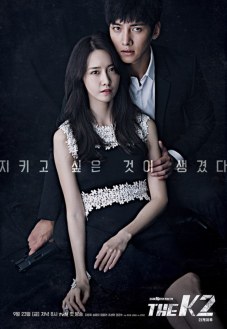
The K2The K2 lost me as a viewer the first time around. I watched the first episode with the sound off, as I sometimes do, and focused on the amazing visuals, which were as good as any feature film. It was the story and writing that gave me pause and I was not surprised to find that the same writer also wrote Yong-Pal, another drama that lost me half-way through.

This isn’t to say The K2 isn’t worth watching. It is an incredible action-packed drama, but like Yong-Pal, it would have been better served either by half-hour episodes or ten or even less hour-long episodes. Jang Hyeok Rin is an awesome writer, but these kinds of stories don’t exactly fit into the time frames usually allotted for Korean dramas. These stories are better suited to what in America we would call a “miniseries.” Jang essentially writes morality play fairy tales set in the modern world. Morality plays and fairy tales are are older, simpler stories that get at common truths. This means that the characters are archetypes – i.e., the princess locked in the tower, the lone warrior, the evil step-mother/witch – and plot devices, not the complicated character confections (say that five times fast) with a high degree of moral confusion that we’ve become so accustomed to today. This also means that the stories, being necessarily more simplistic, will not stretch as well without either adding a lot of superfluous material or slowing the plot down to an unsustainable degree. Cutting episodes or the time length of episodes would instantly solve this problem, but it would take a very confident, savvy production company to decide to do that.

What The K2 has going for it is a great story at its heart, awesome visuals (you could watch the whole thing without either sound or translation and not be lost much at all), solid writing, commendable acting, and music that will both irritate and haunt. The soundtrack choices were fairly brave, being operatic and even church music, not even in Korean, but in, I think, Latin and German. As a viewer you really only get the full impact if you watch it on a site like viki.com that takes the time to translate at least some of the lyrics. The songs are the “chorus” of Greek theatre, an essential part of the story and part and parcel of the morality play angle.

Episode one is exhaustingly full of action, and although the action is fairly steady through the first few episodes, there’s no way a production would be able to sustain that level through the entire thing. The biggest drawback to episode one, though, isn’t the action, but that they risk losing viewers by ending the same way they began, with Anna, our “princess captive,” running away from–whatever horrors a woman in white runs from. As a viewer, one wonders just how many times we are going to have to watch this girl run away, epic as it is. By the end of the hour, we also don’t really know what the plot is. We have a vague idea of who the characters are, but little else. This problem is fixed as the plot is more developed in the following episodes, but it’s the reason why I didn’t continue watching and also why I gave it a second chance, as it didn’t seem like all that production effort could possibly be put into a crummy story.

Crummy story The K2, is not, though I found – like with Yong-Pal, my interest waning in the last few episodes that had to stretch the story in order to finish it in the time allotted. For both dramas, it’s a shame because the first halves of each were awesome. Ok, enough harping on the time issue, let’s get to some meat and bones.

If we’re really honest, the characters in fairy tales, at least the prince and princess, typically don’t have a lot of personality. They are there to be rescued or to rescue or to serve some purpose of the plot. It is the villains that tend to be more–though not always–interesting. The K2 doesn’t vary from this and I think that’s a credit to it. They cast a stellar actress, Song Yoon A, to play the baddy step-mom, and it was her character that kept me watching throughout. Cho Seung Ha, who plays serial adulterer and politician Jang Se Joon, was no slouch either, and it was the pair of them that seemed the drivers of the plot.

The two main characters, Anna, the “princess in the tower” and, Kim Je-Ha, the “lone wolf” were more people that things happened to than made things happen. When they did make things happen, it wasn’t so much character-driven as plot-driven. That aside, because the characters were archetypes, and simple yet well-written, Ji Chang Wook and Yoona really showed off some talent in playing them. Playing a damaged, yet sweet girl and a mercenary with little-to-no past and making either interesting can be a challenge. Add on top of that, that I at least have found both actors to be rather stone-faced and wooden at times and I’m not sure if that’s merely my perception or if they just don’t have a good grasp of how to make an engaging face onscreen even if one’s character isn’t showing strong emotion at the time. That probably sounds more like an insult than intended, but I thought they did well will the simple characters and better than I have seen them do with more complex characters and plots. I wish all actors could be more like Seo In Guk (Shopping King Louie) who somehow manages to actually be a completely different character every time he’s onscreen, but I realize that ability is extremely rare and that most actors simply play whatever type of person their character is. All of the acting in The K2 is top notch, if necessarily simple, and suits the tenor and mechanics of the plot.

Speaking of the the plot, Choi Yoo Jin, the step-mother is the main character. What we are seeing onscreen is possibly what her life would have been like if she’d married a good man of action who loves her instead of a fearful and manipulative adulterer who doesn’t. Several times she mentions how innocent she once was, and how (at least in her head) she would have been a good person had only her husband loved her. Since we really don’t know what young girl Yoo Jin was like, we don’t have much to go by, but it becomes clear early on that the successes the couple has had politically are almost entirely due to Yoo Jin’s brains and tenacity, not her husband’s, and that she feels upon meeting the “wolf” that had she been with someone like him, those skills would have been put to far better use. Is this just wishful thinking on her part? As her character is quite skillful at manipulation, I’m not sure, neither, I think is Ji Chang Wook’s “wolf” who would certainly save her from herself were it possible. The moral in this play is pretty straightforward, loving someone means actually loving them and only pretending to love creates monsters out of people, anxiety, distrust, the list could go on and on. At the end of the series we really don’t know who either the wolf or Anna really are, and that’s alright, because who they are isn’t the point, the fact that they really love each other and other people is the point. They don’t pretend to love, they actually love, and they earn their  happy ending due to it. Such a simple thing, but humans fail at this simple thing every single day.

A couple of more things to add, “Cloud 9” was an intriguing idea, but completely mishandled as was the location and threat at the end, both of which hampered the story and the pacing in a negative way. It was likely one of those choices made in which the ere simply isn’t time to go back and correct it, and that’s a shame, but happens a lot in television. That all said, I really liked The K2, and would watch it again. The atmosphere, the action, and the music all stayed with me long after watching the last episode.

My 5 favorite Kdrama actors

I’ve been watching Korean dramas for a few years now and have found I have a few favorites. The trouble with watching shows or movies of a different culture and/or language is that acting standards and line delivery are different. For many viewers from Western countries who are used to watching Hollywood, UK, or European films, the acting of other countries can come across as very over-the-top and fake, and often the comedy falls flat or is head-scratching. I have no doubt this works both ways. It takes a lot of viewing time to really see how good actors are, due to cultural and/or language barriers and many people don’t have patience for that. Having spent an embarrassing amount of my own life watching Hollywood, UK, and other movies and shows, jumping to Kdramas was no big deal time wise. The positive view of this is that I have come to appreciate South Korean culture, food, and language, as well as having viewed some of the best shows of all time (Signal, for example).

Here is a list of five drama actors I’ve come to appreciate. Yes, they are easy on the eyes, but are also extremely talented and stand apart from many of their fellow actors.

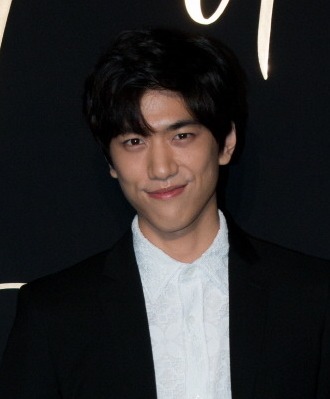
#1 Seo In Guk

SeoInGuk

We have music talent shows to thank for a lot of our amazing stars and singers today, and one of those is Seo In Guk, who won Superstar K in 2009. He has a classic rags-to-riches story and is multitalented on every level. Due to hard work and thoughtfulness, this guy could succeed in anything he puts his mind and effort into. Not only is he a great singer and performer, but is a brilliant actor who plays his character, not himself, and is able to turn this talent on and off at will. This is rare, as a lot of actors have to continually play the character even when not filming to keep up the, uh, charade. He’s also very open about how he creates each character, also unusual as many actors prefer keeping the acting trade shrouded in mystery. He was due for military duty this past year, but because of a health issue, could not enlist. As a recent fan of Seo In Guk, I look forward to seeing where his career will go from here. Best dramas of his that I’ve seen so far: Reply 1997, High School King of Savvy, Squad 38, Hello Monster (aka I Remember You), and Shopping King Louie.

#2 Jung Kyung Ho

Jung Kyung Ho

Jung Kyung Ho (also Jung Kyoung Ho) is one of those actors who should be showered with awards. He’s on point in every scene and chameleon-like in his ability to handle different dramas. Jung has very emotive eyes and uses them to full advantage. He, too, simply becomes his character and has a magnetic presence onscreen, and his career so far has been a pretty even mix between movies and dramas. Like Seo In Guk, Jung Kyung Ho is a bit under the radar and underestimated in his abilities–at least internationally. Jung is definitely equal to any of Hollywood’s A-list actors, and would probably put some of them to shame. His one flaw may be that he tends to work with writers and directors that flounder a bit, but can’t always be helped. Best dramas I’ve seen him in so far: Heartless City, Missing 9, Falling in Love with Soon Jung, and One More Happy Ending.

#3 Sung Joon

Sung Joon

A tall drink of water, Sung Joon is much younger than he appears. I was surprised to find he’s only 27. Maybe it’s his height or his deep voice, but he has no problem playing characters much older than himself and is often paired with older women. His choices of projects are riskier than most, and sometimes I think he gives the writers of some scripts a bit too much faith, but it’s refreshing to see someone so fearless. Sung Joon started out as a model, but has turned into a great actor, especially when it comes to romantic scenes. If he’s not putting his entire heart and soul into kissing his onscreen women, he’s very good a faking it. If I were a fellow male actor, I’d be a little hesitant to work with him as he has such an overwhelming screen presence, it’s almost distracting. Lee Min Ki had to work very hard in Shut Up Flower Boy Band to make his character come across as the actual leader of their band, so strong was Sung Joon’s presence. Best dramas I’ve seen him in so far: Ms. Perfect, Shut Up Flower Boy Band, Madame Antoine, and In Need of Romance 3).

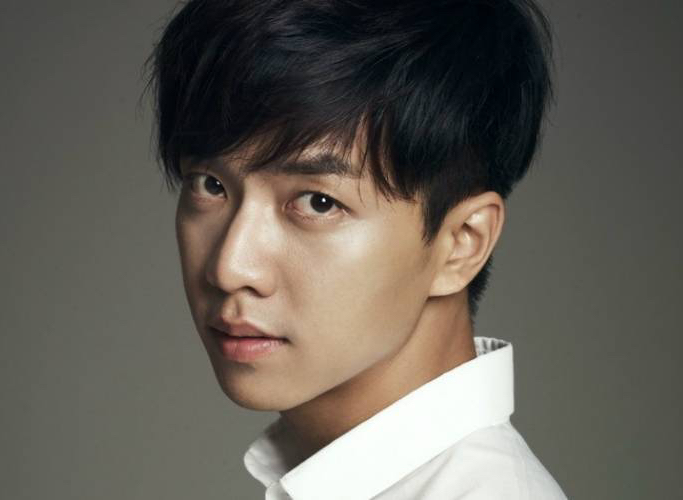
#4 Lee Seung Gi

Lee Seung Gi

Lee Seung Gi is one of those actors that slowly earns audience appreciation. He is no stranger to TV, having been on several dramas and variety shows and he also is successful in nearly everything he does. Lee Seung Gi comes across as not only likable onscreen, but offscreen as well, joking with interviewers and the audience. He’s comfortable in his own skin and it shows. He often plays characters that seem very dumb at first, but then prove themselves later on. Although he has a good voice, I think he is more talented at acting than singing. So far his career has mostly been playing vain young men forced to grow up, and I hope now that he’s done with his military service he will choose a wider variety of characters to play. It would be great to see him take on the role of the bad guy, for example. He, for one, picks his projects well. Best dramas I’ve seen him in so far: You are All Surrounded, Gu Family Book, King 2 Hearts, and My Girlfriend is a Nine-Tailed Fox.

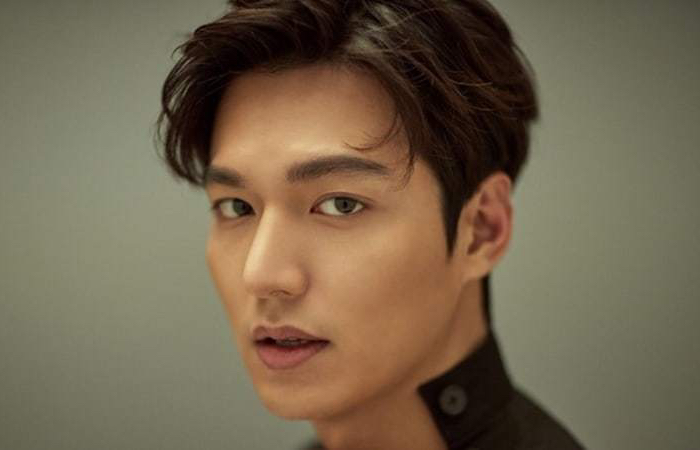
#5 Lee Min Ho

Lee Min Ho

Due to the commercial success of Boys Over Flowers and The Heirs, one would hard pressed to find an international Kdrama fan who hasn’t heard of Lee Min Ho and his Brad Pitt good looks. Although I enjoy his dramas, he has slipped from being my #1 to watch, as his performances are hit or miss for me. When he is good, he is so good, and when he’s not I wonder if his own fame is overshadowing him. Lee Min Ho shot to fame in 2009 by playing Gu Jun Pyo, a vain, spoiled rich boy,  in Boys over Flowers, and hasn’t looked back since. Not the first to play the character, Lee made Gu Jun Pyo his own and the Korean BOF wouldn’t be nearly as funny without him. Lee also is very gifted in doing action scenes, having a natural athleticism that makes the most bizarre choreography (attacking a cook with a spoon, for example) look natural. He is also a very talented model, and would be #1 on this list if it were for modeling. Sadly, Lee’s most recent dramas The Heirs and The Legend of the Blue Sea were definite misses for me. He was paired with other famous actresses with whom he had no onscreen chemistry, and it showed. He also did not have a firm grasp on who his characters were and acted rather blandly due to that. Since all parties in these two projects have been great and successful with other productions, I have to wonder if there wasn’t too much pressure for profit involved. Both projects were very financially successful and had all star casts, directors and writers, but lacked heart and truly good storytelling. After finishing his military service, I hope Lee will choose projects and characters that he can really play well instead of focusing on the financial success. It’s hard to be so famous that you can’t take a real risk, and the projects he’s performed best in were not foregone successes. Best dramas I’ve seen him in so far: Boys Over Flowers, City Hunter, Personal Taste, and Faith.


Missing 9 review

Spoilers ahead.

The premise of the Korean show Missing 9 sounds great.  It’s a bit of a LOST takeoff, a group of people survive a plane crash only to be stranded on a deserted island where-in Lord of the Flies antics ensue.  I bring up LOST as an immediate comparison because for fans of that show it is impossible to not to see similarities, not only in the plot premise, but also in how the story is told.  (The Missing 9 creators are clearly replicating at least the flashback-present time switchback).  Missing 9, however goes more the direction of Lord of the Flies (and perhaps some Swiss Family Robinson) than heading off in the LOST no man’s land of science fiction. Although it would have been fun to see the Korean version of LOST with island monsters, time jumps, and the whole lot, not going in that direction is actually a strength of Missing 9.  At least initially.

For the first few episodes the fairly simple plot of Missing 9, the brief history of the celebrities and employees of Legend Entertainment, their plane crash and subsequent stranding on a deserted island somewhere off the coast of China, works. And it even still works once the people are pitted against each other on the island.  Where is fails is that one character ends up being a murderer bent on killing anyone who gets in his way.  For episode after episode he is the sole bad guy and the sole conflict the rest of the survivors have to fight against on the island. The plot rapidly gets old at this point and I actually stopped watching it and simply read through plot summaries of the rest of the show. Talk about mediocre ending.  I’m all for characters ending up happy, but partying with a murderer, even if he is soon to go back to prison, is a bit too much and actually makes light of what he’s done wrong.

Other things I liked about Missing 9 were the flashback scenes where everyone is dressed in beige or brown. It was an intriguing concept and it’s a shame it didn’t seem to go anywhere other than serve as a marker for which scenes were in the past. The soundtrack was better than most, both thrilling and nostalgic. The acting was also outstanding, especially the leads, Jung Kyung Ho (Falling in Love with Soon Jung), who is a very solid actor that exhibits old school charm (think Jimmy Stewart or Cary Grant) and has complete mastery of both comedy and drama, and Baek Jin Hee (Pride and Prejudice (Kdrama)) who was a spot-on heroine and “average man” for the viewer to follow. Kim Sang Ho (City Hunter) is always a pleasure to watch and brings a subtle grounding to the production. His characters are always relatable and always seem to have good hearts. Choi Tae Hoon’s villain had a good progression of onscreen presence, but never really became a totally “love to hate” bad character that would have shot him to acting stardom. If they had cast Choi as the lead and Jung as the murderer, that would have given the show an amazing dynamic because Jung does have eyes that just pull one in. He would make a terrifying and thrilling villain and Kim’s character would be completely torn over love-hate as would the viewers. I also think that Choi would have faired better playing the lead as it would have necessarily forced him to have more expression on his face.

Missing 9 sounded like a must-watch, but ultimately failed to deliver. Better K-drama thrillers are Signal (2016) (probably the best TV thriller I’ve ever seen from any country) and Tunnel (2017).

The Show Must Go On

It’s funny that when one is working on a project, one sees similar themes and ideas everywhere. I am–probably too–proud of the fact that I’ve taken a scene I knew was bad and am rewriting it. Sometimes I think parts of my story are bad, but then in reading them later, think they are ok and keep them. It’s tough with writing because you can read your own stuff one day and think it stinks and the next barely recognize it and think, “who is this brilliant writer?  Can’t be me, can it?”  But some scenes are bad from the beginning, bad ideas, uninspired, and so on.  I’m excited because I genuinely found one I wanted to change and know the new one will serve the story better.

Speaking of rewrites, what person calls themselves a writer and thinks there will be no editing? No rewrites? No criticism? Now imagine that writer is writing for movies or TV and can’t stomach the possibility of their script being changed?  Bizarre.  I mean, who doesn’t know that the script changes constantly, especially when filming starts, and if it’s bad with movies, what about TV shows?

But I’m rambling. I’ve been watching this kdrama called The King of Dramas. It’s an awesome show with a huge flaw in that the writer lives in this fantasy of “no revisions, no changes” to her original script. Fortunately, she is learning (like I am) as the episode sprogress, but still. Her rigidity stuck out like a sore thumb at first and it was hard to suspend my disbelief.

The King of Dramas, or, in my mind, The Show Must Go On! with same-titled song from Moulin Rouge, is a 2012 kdrama about producing a Korean TV show. With epic music and everything from mafia financing to last-second deadlines, this show will have you wondering how any dramas are made at all. I mean, who would want all that stress and headache? And it become clear why showbiz people can be a bit neurotic. Anthony Kim (Kim Myung Min) is Macbethian in his strive for power, with ruthlessness and an alarming propensity for lying. Kim, the actor, has a magnetic presence about him and although everyone claims to dislike him you get the feeling they secretly want to be on his team.

The naive, stubborn writer is played by Jung Ryeo Won, and it’s refreshing to have a heroine for whom romance will turn out to be incidental. She’s also not overly crazy, mannish and loud, but womanly and thankfully doesn’t have any part-time jobs. I like the down-and-out-girl-with-10-jobs-and-a-relative-in-the-hospital, trope but it’s nice to have a break from it. Lee Go Eun is refreshing in her normalcy. Jung Ryeo Won also has a unique look that compliments her thoughtful character.

The comic relief in the show falls on the chosen lead of Lee Go Eun’s script, handsome and famous Kang Hyun Min. This guy fits every bad stereotype of an actor–vain, money and fame hungry, selfish–and he’s hilarious! Choi Si Won overcomes his distracting Ken-doll  looks by actually…acting, something that other K-pop stars seem to take eons to figure out.

Both male leads are jerks and the farthest thing from husband material. I’m about halfway through the series and am wondering if they are going to go with a love story eventually and if either will prove themselves worthy enough for the quite nice, but stubborn writer.  And being that she’s working with overbearing people, it’s also a good thing that she’s so stubborn, but I’m glad she learns to do some self-reflection when it comes to her writing. And the show is actually fine without a love story, so different still.

My favorite character, though, is the middle-aged cutie Jung In Gi. He plays recovering alcoholic director Koo Young Mok. Jung’s a bit more disheveled in this than I’m used to seeing (he’s in a ton of Korean shows and movies), but he adds much needed gravitas when the others are too over the top. He also is very believable as a kdrama director and steals a lot of his scenes simply by his presence. He’s a likable father figure to the younger characters–someone who has “been there, done that” but is still struggling himself.

I don’t know what else the real writers of The King of Dramas will throw at their characters in the remaining episodes, but I’m guessing there’s a good many inside jokes going on for those whose careers are built in show-biz. No matter the country or culture, entertaining people is rarely as easy as it seems. And somehow the shows do go on and on and on in miraculous precision.

–P. Beldona

Long-Nose-Hiccups-Pants-on-Fire: Kdrama Pinocchio’s media redemption fairytale.

What is a journalist?
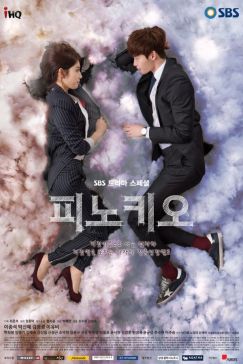
Pinocchio_(Korean_Drama)-p1

Pinocchio

Pinocchio, a Korean TV drama from 2014-15, seeks to answer this question. It follows the story of a boy whose family has been irrevocably wronged by reporters, and a girl who has an unusual syndrome called “Pinocchio” syndrome. The fictional syndrome doesn’t refer to a wooden puppet with a long nose, but a person who is unable to lie without hiccuping. Tailor-made for a show about reporters, being a “Pinocchio” means one also hiccups when withholding the truth and even when one merely has doubts. In the real world, a person plagued with Pinocchio syndrome would be hiccuping nonstop. In the show, Park Shin-Hye and the writers make it fairly believable.

Choi Dal-Po is the main character and played by Lee Jong-Suk. Lee adds such heart to his acting, making it easy to connect with his character, who balances between being the scared and angry little boy that he was, and the brave and thoughtful young man he has become. Park Shin-Hye plays his best friend Choi In-Ha. The first few episodes deal with a lot of back story and their time in high school and then the show launches into high gear when both decide to be reporters, In-Ha because her estranged mother is a famous reporter, and Dal-Po, because he wants to answer the question of what a journalist is.

Pinocchio is real and surreal at the same time. It’s a story attempting to get at real truths while highlighting its own fairytale aspects, from the slightly exaggerated characters to the episode titles, to the magical winter setting. As a person who has read countless books and watched an embarrassingly large number of movies and TV shows, I can tell you that in my view it is a near-perfect story. If there is a misstep it is only in the beginning episodes in which it first appears to be a high school knock off of Slumdog Millionaire. The cast is huge, due to the number of reporters and journalists from the fictional broadcasting stations, MSC and YGN, but a few of the smaller players manage to steal all of their scenes, especially Lee Yoo-Bi as feisty rookie Yoon Yoo-Rae, and Min Sung-Wook (No Tears for the Dead) as veteran “stick-it-to-the-man” reporter Jang Hyun-Gyu. Other standouts are Lee Joo-Seung, who rocks as a young world-worn police detective, Kim Hae-Sook (The Thieves) as business chaebol Park Ro-Sa, and especially Jin Kyung, whose deadpanned expression is vital to reporter Song Cha-Ok.

Pinocchio is not so much the story of all reporters, but that of reporter Song Cha-Ok. Song is a successful reporter who has sold her soul to get where she is. Throughout the show, the question changes from, “What is a journalist?” to “Can dishonest journalist Song Cha-Ok be redeemed?” The Pinocchio angle comes into play when Song’s estranged daughter, In-Ha, a Pinocchio, decides she wants to be a reporter. This is not possible, in Song’s opinion, because the very nature of the job requires her to lie from time to time, even if the lies are lily white (as in needing to be undercover for a story).

Choi Dal-Po, who has been very, very wronged by Song’s irresponsible past reporting and by another “Pinocchio,” has a more scathing view of not only journalists, but also Pinocchios unable to lie: In one early scene he excoriates both as not comprehending the enormous duty they have to the public. By default people will always assume that both are telling them the truth, and that is not a status to be flippant about. Throughout the series both Dal-Po and In-Ha learn just how complicated it can be to tell the truth with no agenda.

Although the show delves only shallowly into the full political ramifications of what the News media’s lies do to society, it is a relevant story in our time of constant media spin, obfuscation, and outright falsehood. These days more and more people are waking up to the fact that the media as a whole has its own agendas apart from just giving us the truth or facts. They exaggerate and make false claims in order to get more viewers or readers, they outright campaign for certain candidates while at the same time proclaiming that they are not biased, they insert themselves into the story where it is not pertinent, and so on and so forth.

My Take on the Media

The second time I watch Pinocchio, this time in order to review it, it struck me how timely the stories is in this age of news media, mass media, social media and new media.  Truth and lies are simultaneously rampant.

Sometimes I wish I could go back to being a kid when I thought the reporters I saw on TV every night were giving me facts and truth. I wish I could go back to a time when I had no idea I was being lied to, but I can’t. Once you see the media’s lies and bias, you can’t un-see them. I now know that a lot of the American news media not-so-secretly (anymore) detests the regular, hardworking people of this country. I now know that many, if not most, reporters are in it for the fame or the money or to further an agenda, but not in it for sharing the truth. The news sources I read and listen to now, openly share their biases and their agendas. I like that honesty and I think its better than media pretending a false neutrality they do not possess.

This U.S. Presidential Election cycle has been interesting largely due to Donald Trump. Had he not run, it would have been same old-same old, and the Republicans would have folded to the media’s lies as usual. He’s done a great service highlighting (for those who have eyes to see) just how untruthful and agenda driven most of our news is. In addition, he brilliantly decided to run as a Republican, effectively showcasing those who claim to care about conservative ideals and the country, but really are only concerned with their own power and sphere of influence. He’s also laid a death blow to political correctness, the media’s biggest weapon in their agenda against anyone who, well, disagrees with them.

Over the years I’ve found some news sources or interesting perspectives that cover a different view of the world than the MSM, or mainstream media. More importantly, these sources point out the inherent, usually Leftist bias in most of the MSM. The sources I go to are biased, but openly so, and I respect them for that. They don’t pretend objectivity, like CNN, or Fox News, or any of the other major cable networks. The truth is that all news sources and all reporters and journalists have bias. A good consumer of the news should gauge to what degree bias affects what stories the news source covers and how the story is related or “spun.” Each person has to decide for themselves whether a news source is trustworthy—and often this takes time to tell—and whether the spin is helping to accurately understand the stories shared, or whether it is promoting a narrative (Hillary must be elected! for example) only.

Today, because of political correctness, the greatest danger in any reporting is what people have coined as “virtue signaling,” that is claiming to care about something only for the sake of those in earshot. It’s a quick ego boost that we are all guilty of from time to time, but lately, is running rampant, especially in the news media. We can see it everywhere from the push to continue bad, expensive programs to “save the poor!” or “save the planet!” despite factual evidence that the programs are not realistic and often harm those they intend to help. Pushing on despite the reality is virtue signaling, not actual virtue. This is a big reason the current presidential campaign has been so torn and bitter. People care more about a “nice” tone than the facts a candidate is presenting. Vice-versa, if a candidate is well-mannered, for many that covers over any multitude of sins and I can’t help but think of all those people who knew serial killers and say, “Oh, but he was such a nice young man.” What does it take to wake up from this?  How do we get back to substance?

Here’s my story:

In 2006 I was living and teaching English in China and went to friend’s house in Hong Kong for a few days. They had cable, which I hadn’t watched in a few years. During breakfast Headline News (at least I think it was that) was on with a guy named Glenn Beck. I always assumed (because of past experience) that any MSM outlet was liberal or Leftist in bias (thought I still didn’t know how much it affected their reporting), so I was surprised to find him saying and talking bout things that I was interested in and agreed with. Beck became a hit on talk radio and eventually landed a show on Fox News. His popularity largely stemmed from discussions and facts on history, things that put into perspective the upheavals in tradition that still are being overthrown in America and around the world. The great political struggle of the world was presented not so much as Right vs. Left, but Liberty vs. Tyranny.

For the first time, I really contemplated that the Nazis were national socialists, what that meant, and, why for so many years they had been painted as right wingers. And then I couldn’t stop seeing it, I, and many others. We couldn’t stop seeing the obvious Leftist bias in nearly all of the mainstream media’s reporting. This is something we intrinsically knew, but had never really faced head-on. I give Beck much credit for sharing a lot of these things and also promoting the American ideal, the American dream, and so on. For the first time, I understood why everyone in college was obsessed with Che Guevara, why by default, most college student were perceived Socialism as good, why everyone had a desire to show how “multicultural” they were, and why everyone seemed so concerned with the sins of America, their own country. I finally understood that all of the media was lying every single day, and that their lies slanted sharply to the Left because that’s where the power is.

The kicker was, it wouldn’t have been such an big failing if the media had simply been willing to self-evaluate and be honest about their views and how it affected their reporting. I also saw a bigger issue behind that: culture. American pop culture is now almost always for big government and always, again, slanted to the Left.

If the news media has a problem with virtue signaling, don’t get me started on pop singers, Hollywood stars, artists, and the like. (So many Christians in the early 00’s near-worshipped U2’s Bono due to cultural virtue signaling. I was floored to find out that he’s only give 1% – one percent!! – to charity.  This, for me, is Leftism in a nutshell, it sounds so moral, so virtuous, but in the end, it’s just a cash grab not much different than selling indulgences for a ticket to heaven.

Back to Beck. I don’t listen to Beck now, and it’s same for a lot of former listeners. It wasn’t just that he betrayed his message, he fell prey to virtue signaling of the worst kind. And I’m left having to consider that he never really cared at all. People who never liked him to begin with will probably snicker and say, “see, told ya,” but they likely never listened to him anyway, only swallowed the articles and stories biased against him. I don’t say this to be mean or bitter, I say it because it’s the truth. Few people (largely on the Left, some on the Right) who disliked Beck and his message a few years ago actually took the time to listen to him and to understand why people thought his show was appealing. Many who did like him found his show informative and entertaining. I can’t go back in time, to see, knowing what I know now, if I would have that same opinion. I have to say his constant crying first started to turn me off. It’s not that men should never cry, it’s just rare that anyone, male or female, would regularly cry on a cable news TV show. I had hoped the tears were evidence of his sincerity. That hope proved false.

So how did Beck fall? I, along with many of his former listeners, would say it was back in 2014, the summer we had the big crisis of children arriving at our Southern border from Central America. They came by the thousands and it was at this same time that I began to see friends and acquaintances post that they cared so much about those kids. They cared more for those kids than their own families and countrymen, more than their neighbors’ welfare and safety, more than the rule of law, and more than our national sovereignty. It was a great time of PC rearing its ugly head. If any of us had forgotten that PC dictated our daily lives, bleeding-heart virtue signaling brought us back to remembrance with a jolt. It was surreal to see people I thought I knew fail to critically consider our open border situation. I think they just wanted to sound like nice, caring people, the trouble is, it was just a veneer, but they couldn’t seem to see it, and were untroubled by their flippant disregard for the very real and serious safety concerns of their fellows citizens.  And anyone who called them out on it was not playing “nice.” I began to recall that the original meaning of “nice” was “foolish,” and since then have become increasingly suspicious of calls for “niceness” or criticisms that people who are telling truths people don’t want to hear are not “nice” enough in manner or tone.

At first Beck stuck to his previous line. America’s sovereignty and the safety of its citizens is more important than letting anyone and everyone in across the border.  He indicated to have disregard for our borders was not kindness, but reckless both regarding our safety and the safety of those trying to get in illegally. And then something switched and he was all of a sudden concerned that he was encouraging all of his viewers to hate these kids, or something. Maybe he read too many troll internet comments? Who knows. At any rate, it became his mission to show that conservatives were not heartless (giving in to Leftist claims that we were heartless), that we cared about these kids, and that caring meant letting them stay at the border instead of sending them home.

This was such an about-face it left people baffled. Just a few weeks, perhaps even a few days earlier (I don’t really remember) he’d been proclaiming that we needed to have a realistic view of the situation. That simply letting the kids in would only mean more would come, etc., and so on. That we shouldn’t let our emotions overcome the facts in the situation. Then he jumpstarted a plan to bring soccer balls and teddy bears to the kids being held at the detention centers along the border. This was to show the Left that, see, conservatives care. Although the detention centers were a bit overwhelmed, none of the kids or people held there were being treated inhumanely, yet suddenly Beck seemed to think they were. Even more troubling was that he started to turn on his listeners, saying that those who disagreed with what he was doing didn’t care about the children. He started using Leftist arguments against his own followers and even crowed about those Leftist celebrities and journalists who gave him a shoutout for appearing so nice and caring (I stress “appearing”).

Beck had stepped up into the self-labeled cool club and, I think, never looked back. Even more alarming, was the fact that Ted Cruz joined him on his gift-giving trip. This was a big judgement fail on the part of Cruz, and it was the first time I questioned how smart of a politician he really was.  It also made Beck’s early professions early in the 2015 primaries that he hadn’t yet chosen a candidate to back, ring a bit hollow. I doubt few were surprised that he ended up becoming a spokesperson for Cruz. That Cruz allowed him to become so despite his increasingly erratic behavior, was another glaring error in judgement. After that incident, I didn’t listen to Beck quite as much, though I did still follow him on Facebook and also read his news site The Blaze from time to time, because they often had stories no one else did.

Enter Donald J. Trump. Still mostly a fan of Cruz, I rolled my eyes when I heard Trump was running. But, what I knew of Trump up to that point, was what the MSM had told me. He wasn’t something the more right-sided news sources I’d started listening to had covered much, save for his strange quest to weed out Obama’s long-form birth certificate. Even today, I’m not really sure what was going on there. Was Trump already beginning to run for president at that point? Did he truly have insider information the rest of us did not? It ended with no revelation from Trump, but in Obama releasing a document some say is forged. Who knows? It was strange, and that was my opinion of Trump. He was strange.

And then I listened to his speech on the border and immigration, and I was fascinated that he seemed to get it. That he seemed to get that something was really wrong with the U.S. not securing their southern border. And he also offended Mexicans and virtue signalers, most of whom did not take the time to examine what he actually said or why he said it. Suddenly Trump wasn’t “nice” and that was the same (for many) as being Adolf Hitler. Trump also, interestingly, refused to go on Glenn Beck’s show, and thus began months and months and months of Beck tearing down Trump every chance he got. For some reason, Trump made him lose his mind. Beck lost any and all objectivity when it came to Trump, as did many, many others.  And it lost them readers, viewers, and followers in droves.

Their anger of those against Trump seemed not fact-based so much as it was virtue signaling. People who had, say, a basic understanding of business, seemed to lose that understanding when Trump’s bankruptcies were mentioned. It was as if no one in business had ever failed, and one failure was a terminal failure of a person for the rest of their life. Okay, not “a person,” Trump. Beck began to bleed, and bleed, and bleed viewers, and in response he doubled and tripled down on how nasty Trump was.

At this time Beck and others, formerly pretty decent to their fellow man, turned with an onslaught of hate, spite, and anger directed not at Trump, but at his supporters. This was because Trump supporters were not being good little children and doing as they were told, to support Cruz or Rubio or anyone on the ticket but Trump. That Trump was fulfilling all of their hopes and dreams at bringing more people to the Right, that for the first time someone running actually seemed to care about the country and its citizens, vs. the rest of the world, didn’t seem to matter. And suddenly, for a lot people, figurative scales fell from their eyes.

The conservatives nearly spitting mad didn’t really care about their country, and they had no respect for someone choosing a different candidate, instead painting them as “angry” and “crazy,” not necessarily in that order. These Never Trumpers preferred virtue signaling and pretending that everything would continue as normal when our country was hurting and wounded on multiple fronts. That people didn’t agree on Trump being a candidate wasn’t really a problem (that happens all the time in politics), what was unusual is the outright anger against those who supported him. Gone was the previous “nice” ideal that even though people supported different candidates for the Republican ticket, they were generally on the same side as far as concern for the country. For some baffling reason it became important to many not only that Trump say the right things, but that he say it a certain way. A “nice” spin was wanted where brutal truth is what we needed.

And Beck could not be trusted.

These days he’s spending his time still targeting Trump and encouraging people to “vote their conscience” (code for not-Trump) in a race where if Clinton wins, it really could be the end of liberty in this country. We’ve seen fact after fact after fact of her dishonesty, her treason, and her disregard for anything but her own power and wealth. But we mustn’t vote for the man who could stop her, oh no, we must vote for “nice” people, people who will continue to sell out this country’s wealth and sovereignty for political correctness and money for themselves. I now doubt Beck’s sincerity. I doubt his trustworthiness, and I really doubt his claims to moral superiority (being “nicer” than Trump) because in the next moment he plasters Cheetos on his face trying to turn his skin as orange as Trump’s. Because that’s what “nice” people do, I guess.

The relaying of this is not to bash Beck, but to show how extreme bias prevented him from looking at Trump critically, but fairly. I tell it also as a way of explaining how trust in a media source is lost. It happens in a variety of ways and is different for everyone, but that’s one way it happened for me. The rest of the media lost me largely during the Bush years when I realized they just didn’t care about the truth. They cared about putting Democrats in power. No quarter was shown to Bush, while people on the Democrat side were given endless benefits of the doubt. All while the media pretended it was objective.

Bush himself didn’t impress me in the fact that he seemed to think if he never addressed their attacks, they would just go away. He did this even when it gave the Left more and more fuel for the next presidential race. McCain and Romney ran, neither of them putting up much of a fight, though, making sure to appear “nice.”

This, I think, is the big reason Trump ran as a Republican. A lot of people knew that something was wrong with the party, we just didn’t know what. It took Trump to show us what we couldn’t see: Many Republican politicians will not fight even with the country’s welfare at stake. They are too happy to go along to get along, too happy to think that the gravy train will never end for them, too happy to continue to believe their fellow Republicans are suckers, too happy to believe that nothing is worth rocking the boat for, too happy to believe that nothing is worth ticking off the media for, and too happy to believe that “nice” lies are more important than the “offensive” truth. Trump is a fighter and he knows that America is something worth fighting for and that is why he is winning the support of millions of his fellow citizens.

If you’ve read this far, my hat’s off to you, and if you’ve read this far and are not a Trump supporter, double thumbs up for at least reading a different perspective. I can’t ultimately tell you who to trust, either in the media or in politics. I can, however, tell you with certainty that both the media and politicians lie to you all the time, and they do it on purpose. Pinocchio plumbs some of the depths of deception, but not all. It considers that news reporting can be redeemed, but the reality is, it can only be redeemed if reporters and journalists are dedicated to telling the truth, and first and foremost, the truth of their own biases and agendas. It can only be redeemed if journalists begin to consider that the truth is more important than the political correctness of the day. It can only be redeemed if journalists consider the real power allotted to them. By default, people believe journalists and reporters are presenting them with facts and truth. The internet is rapidly shattering this default, as insta-news from fellow citizens now showcases the constant spin and obfuscation the media puts on everything. People are getting new narratives, and starting to question the old ones, like why, CNN, for example, should have any claim on their trust at all.

To end, here is a list of some of the sources I follow. They are nearly all Right Wing and/or Libertarian, but they give different perspectives on things than the MSM, and can be a good place to start in comparing sources. I trust them for the time being, but it’s always possible they will do something to break that trust. Some I used to trust, like Beck, lost me because they couldn’t report fairly on Trump. Their anger against him clouded their judgement. If they are critical, but fair, they are still on my list. The general media is, by default, on the side of the Left. I don’t know if this is because Leftists are currently in power or if it has always been so. I think the best shift for news media would be for both sides to be represented more equally. This shift is happening, not by force of government, but by the blessings (and curses) of the internet, by Youtube channels, and blogs. Because New Media threatens government power, be on the lookout for calls to suppress many of these people and the views they hold.

One final rule of thumb in deciding who to trust: Follow the money. Monetary gain is the first order of business in the news business.

In no particular order:

drudgereport.com

breitbart.com – One of their heads has now joined Trump’s campaign, so I will be checking to see that their bias for Trump doesn’t take over in holding him account if he does become president.

Breitbart writers I like:
Milo Yiannopolous
Raheem Kassam
James Delingpole
Allum Bokhari
Brandon Darby
Lee Stranahan
Ildefonso Ortiz

Rush Limbaugh – Great at highlighting MSM bias, has been more or less fair to Trump, even though he doesn’t appear to be a huge supporter. Realizes it’s more important to defeat Clinton.

Michelle Malkin – Twitchy

Thomas Sowell – Okay, he lost his mind a bit over Trump, too, but is still good on other matters.

Charlotte Iserbyt – Eye-opening research into government-run education — see YouTube

Dennis Prager – Prager University – thought-provoking videos.

Stefan Molyneux – “Not an Argument!” – Educating on how to debate – big on the facts.

Sargon of Akkad – This Week in Stupid

Paul Joseph Watson – Infowars

Alex Jones – Infowars

Vox Day – Alt-right – also, fantasy writer

Rebel Media – Canadians! – free speech!
Lauren Southern
Ezra Levant
Gavin McInnes

Gad Saad

Adam Carolla

Dave Rubin – The Rubin Report

Tommy Sotomayor

American Thinker – offers a variety of articles from different writers. Pro-Tump or Anti-Trump depending on the day

The Conservative Treehouse – This site is unabashedly for Trump, thus they have very enlightening articles on media bias against him and for Clinton.