Notecard #5

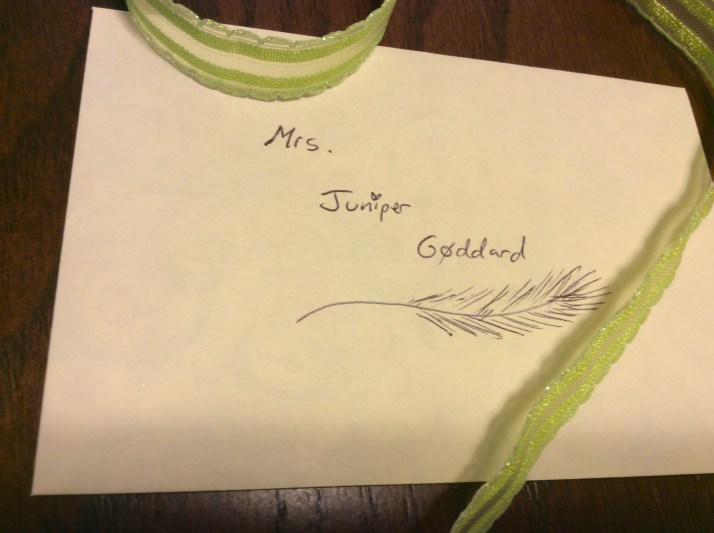
Notecard #5 is finally done. I feel like Minnesota’s been dumped into the tropics with all of this heat and humidity, but I should complain. Still better than winter. Trolls for Dust 2 is finally ready for proofreading and I shall get out my red pen and mark away all of those awful typos and misspellings!  –P. Beldona

Mrs. Juniper GoddardLoveyHenrietta

June random thoughts

Isn’t it kind of bizarre that a very minor crash is enough to “total” a car? Maybe it’s just because I drive a really old car, but last year I was hit in a roundabout, so we were both going less than 20mph. Think how much we pay for cars, even used ones, and so many accidents and problems often cost a great percentage of what the car is worth to fix. People often complain how a health crisis can throw a family into poverty due to the high costs, well, so can a car crisis. For some, cars are considered a luxury, but in America in most places you really need them to get around. On the flip side, it’s can be a good thing that a minor accident can do a lot of damage, because it probably incentivizes people to drive safer as a whole. If we had indestructible bumper cars, it could mean more would recklessly drive, as a minor hit wouldn’t hurt them or the car.

Notecard story: Planning on getting another card out this weekend sometime. So far it has been a fun and challenging writing exercise and I’m thinking there’s potential homemade Christmas presents in this idea.

Priest slapping baby at baptism video. Not sure how viral this video is, or if you’ve seen it, but it is an amazing example of how parents and especially fathers are the main protectors of their kids. As the mom struggles even against a very old man, to get her baby away from him, it is the father’s physical strength that ultimately succeeds in the getting the kid away. As we recently had Father’s Day, it’s a great example showing how the fact that fathers are both willing and able to protect the ones they love is the primary reason they are needed. Really don’t know what was up with the priest, senility, or as some cry, demon possession of some kind, but it’s certainly scary to watch, especially because in a church and at a baptism that kind of violence is the last thing expected.

Trolls for Dust, Season Two: Revisions and proofreading are underway, and I hope to be able to share the awesome cover soon. I am really excited about this story and I am getting to reveal the longer arc of the series. In rereading Season One, it’s been fun to see that I really like some parts, some maybe could use work, but that as a book as a whole it is a good jumping off point for where Seasons 2, 3, and 4 are going. At first I thought the series would end up being a trilogy, but there is so much going on and so much material that I really want and need to do four books. Hopefully, each book won’t take four years to write, but I think as I get better at writing and storytelling and the whole process, things will come faster and faster over time.

Kid crisis/border crisis: Many Trump supports say that the biggest impact of his presidency is going to be to harshly deal with trafficking, especially child trafficking and abuse. And there’s been thousands and thousands of pedophile and trafficking rings busted all over the world since he’s taken office. The current outcry with kids being held at the US border is a part of this. Many of these children are not with their parents, but with traffickers and abusers. So, it’s just going to be interesting to see how this all plays out.

Christian apologetics: Attended a conference for that this week and just found it so crazy that like in other fields, politics, medicine, law, etc., religion is the same. People are taught lies and not shown the facts that are available. There’s so much out there indicating the Bible is true, but what is taught in many places is this lie that there is no evidence at all that the Bible is true, and people grow up believing it. Believing in the Bible and Jesus as one’s Savior from sin is a work of the Holy Spirit and of faith, but if that is indeed the truth (and I believe it is), then it makes sense that there would be some amount of actual evidence indicating that it is the truth. It’s actually similar to the whole vaccine topic, because people often hold a different, higher standard for evidence for those two things above and beyond what in regarding other topics and fields they would accept as sufficient evidence. It’s fascinating and it really hit home to me that what evidence is accepted by the individual ultimately says more about the individual than the subject under consideration. We have a harder time with the facts and insist on more evidence when something does not confirm what we already believe, but readily accept almost any evidence that supports our current beliefs. This way of thinking is our nature and very hard to overcome to truly look at and judge things objectively.

–P. Beldona
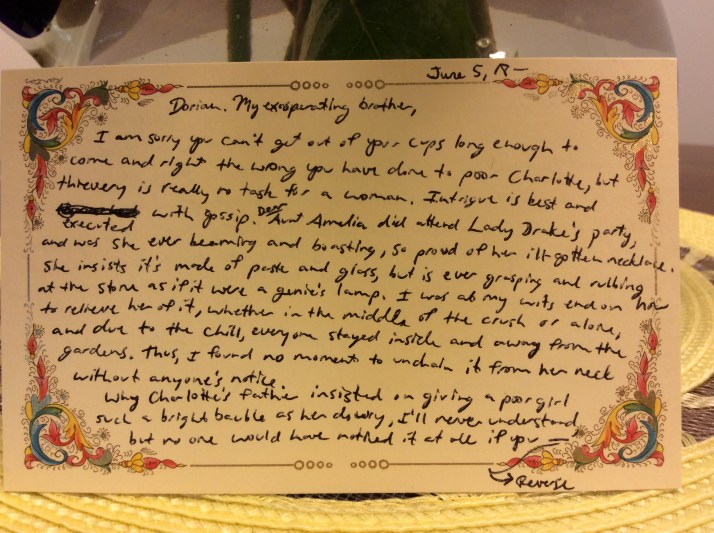
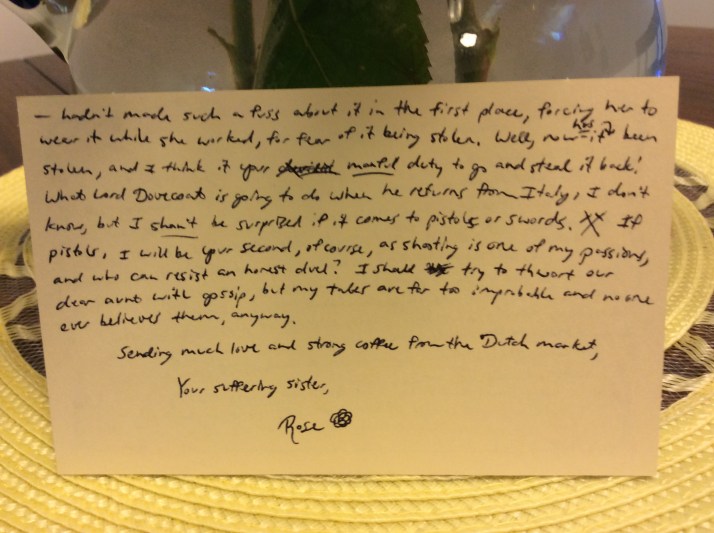
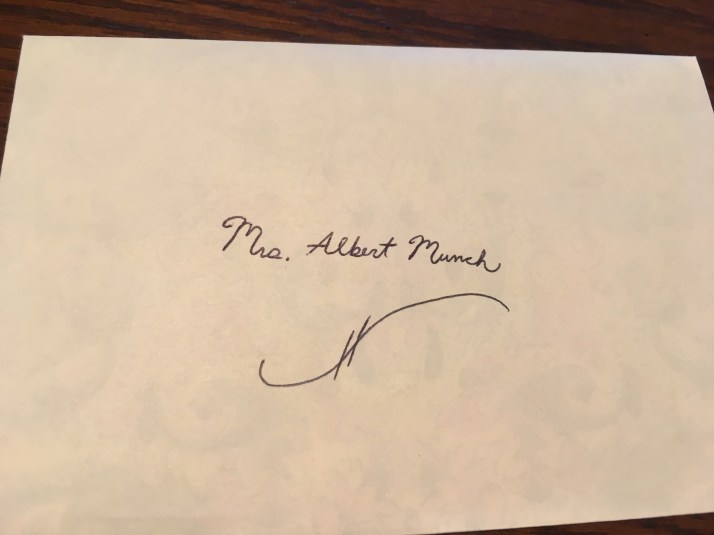
The Stolen Necklace, Notecard #4

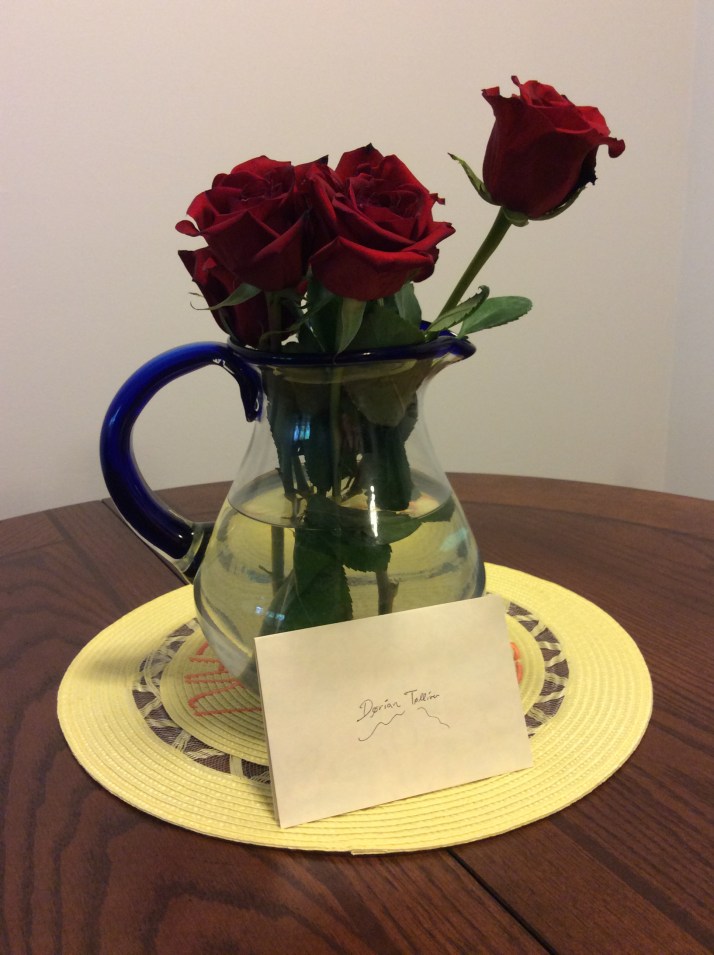
This week’s notecard is from Dorian Tolliver. He’s more competent than I expected, but uses stamps and symbols for no reason, which is why perhaps his sister and Charlotte have trouble taking him seriously. Big question: Does he have a thing for Charlotte, or is he just playing the gentleman?

Miss RoseRosie PoseyIMG_0073pocketwatch

The Stolen Necklace, Notecard #3

So far I haven’t chosen to make any replies to the first couple of notecards, but I want to do that in the future, and the next card, I think, will be a response from Charlotte’s friend, Juniper. We also have yet to hear from Dorian Tolliver or Lord Dovecoat and could do with more from Aunt Amelia. The last note, I want to be short and either a surprise or something poetic and sweet. Seven more cards to go, though, so we’ll see. I like Rose a lot, but she and her brother seem like they would always be getting into trouble. The hard part is going to be making it a complete story. Stories are extremely easy to start, but ending them well, and especially short stories… uff da. Well, it’s good practice.

IMG_0248IMG_0249IMG_0251

The Stolen Necklace, Notecard #2

I am enjoying writing a story this way, and may do it again. Sadly, I really am not capable of either writing in or coming up with separate characters’ handwriting, so mine will have to suffice. Happy Reading.

IMG_0244IMG_0245IMG_0246

The Stolen Necklace: Card #1

So, I am proceeding with my attempt at telling a story in ten notecards.  The era is vaguely Regency, though my no means authentic and my cursive and penmanship are both hideous. This first card is from a Lady Tolliver to her sister, a Mrs. Albert Munch.

IMG_0043IMG_0044IMG_0045

Storytelling with Visual Aids

NotecardsMaybe it was just that the notecards are so fancy compared to my Minnesota life, maybe it was the thought that there must be some wonderful story ready to be unveiled in the slim, 10-card pack. Maybe I just really, really wanted by pretty stationary. Whatever the reason, ages ago, I bought this pack of notecards and envelopes from Barnes and Noble thinking that I would use them for a story…somehow.

Feeling creative, I’ve unearthed them from by box of (ahem) other unused cards and stationary. What I’d like to do is tell an intriguing story written as letters or notes on the cards. This is more problematic than you might think. A) I am a lefty with atrocious penmanship, so I will have to write painstakingly slow just to make the words legible. B) How do I go about different characters writing to each other? See problem A. How can I make my penmanship that of a lord or prince or captain or spy, much less a simple belle of the ball? C) What will the story be? Star-crossed lovers? Napoleonic spies as in The Scarlet Pimpernel? Humorous commentary on society, marriage and like, as in Jane Austen? Or will the story be about people writing from a far advanced future where physically writing on notecards to each other is in vogue again? So, so many possibilities.

Next week I plan to have the first card ready to present, so stay tuned. Maybe I’ll even attempt writing in cursive after too many years to say. At any rate, it will be a pleasant side trip from regular story writing. Back to my revisions, I go!


A String in the Harp: Welsh Tourism

Sometimes novels are more than just stories. Sometimes they double as travelogues, where the author was so completely immersed in the place they were living that the descriptions in the story act almost as an advertisement for that country or city. The very long and epic Shantaram by Gregory David Roberts, set in India, is a bit like that, as is my current read, A String in the Harp, which is set in Wales.

Wales is a bit of a mystery to many Americans. Is it its own country? Is it part of England? What can you even do there? And so on. Thus has been my own view of Wales added with a vague notion that Merlin lived there or King Arthur, or someone from that legend.

A String in the Harp (at least halfway through) doesn’t have anything to do with Arthurian legend. It is a story about a broken family mourning the loss of their wife and mother. The younger kids and dad have fled to Wales where Dad can be immersed in his university work. The oldest, Jen, flies over on her high school Christmas break to spend a few weeks with them. Wales is alternately cold, windy, rainy, mucky harsh, and in glimpses for her, beautiful.

Written the the 1970s when author Nancy Bond was attending school there, the plot is very slow, but it’s almost like a day by day travelogue of what Jen and her siblings are experiencing being in this wild and lonely country.  In this country tour inside a story, readers learn a bit of the culture, history, language, and meet a few of the locals. Jen’s brother Peter finds a key on the beach and soon realizes that this key open a window into ancient Wales. Things really start taking off when his sisters realize that something very odd is going on. This adventure may be what they all need to become content with each other again. I’m excited to see where the story goes.

A String in the Harp is a great book to read with a hot drink on a rainy night.


Arc of a Scythe: Playing God

Thunderhead coverWhat happens when humans are in charge of dealing out death? The Arc of a Scythe series by Neal Shusterman takes on this question. In a world where humanity has conquered death and is ruled by a collective consciousness called the Thunderhead (think of our modern internet “Cloud” on steroids), utopia still has not been reached. It has been deemed necessary that people still die, keeping to the natural order of things. And so a Scythedom was formed, a collection of humans chosen to be the grim reapers of mankind. The second installment of the series, Thunderhead, digs deeper into questions surrounding Scythes, namely, the biggie: Are they playing God?

As a nearly all-seeing, all-knowing artificial intelligence, the Thunderhead, is far more godlike, but is not allowed to deal out death or bring about life. There is a separation between Thunderhead and Scythedom in this futuristic America, much like separation fo church and state in what the series refers to as the “Age of Mortality.” Despite that separation, the Thunderhead finds a way around its own rules to alter the course of human history.

Thunderhead is one of those books you know is going to be great and it’s going to end on a cliffhanger and so you don’t want to finish it until the next book in the series is out. I was on a deadline to finish reading Thunderhead before returning it to the library, and I did return it a day late, but left the last third to read when book three is out. Thankfully, Shusterman will likely have the next book out in short order, not like, ahem, me.

The Arc of a Scythe series isn’t so much a plot-driven story as it is a philosophical debate. What is mortality, really? What would life be like if we never died? What would bring us to a state in which we allocated our fellow humans to periodically execute certain numbers of mankind? Is our technology merely an advanced way of building our own god? The rules and organization of Shusterman’s world are built and defined well. It has some similarities to The Hunger Games series, but, thankfully, leaves out most of the angst and hints at a more satisfying ending.

Arc of a Scythe seems at first a simpler tale than other teen series, but it has layers and layers of ideas, themes and concepts all building on each other and as a reader, you just know there’s going to be some big reveal (or maybe just hope there will be) like in The Giver, that just turns everything on its head. I really like the highlighting of autonomous or charter regions in Thunderhead, as it reminds me of my time in China and their similar setup. The idea of a sort of “planned community” type of freedom intrigues me. So many good stories are based off of this idea, The Truman Show, The 13th Floor, The Giver, and so on, and it’s a relatable concept for today as we have so much “freedom” and simultaneously so many, many laws to follow.

I can’t wait to read book three of this series and also to finish Thunderhead, and I really hope the series will be more than a trilogy, but Shusterman’s writing and world are great, so I think I’ll be happy with it either way. And I have to also add, his book covers are outstanding.

The Best Dish in the World

Sometimes you try something for the first time, whether it’s a new experience, learning a new skill, or eating new foods, and you think: This is awesome, how did I ever exist without this thing in my life? This can happen when meeting people, too, but in this instance I am referring to food.

Being a Korean Drama fan, I’ve been into kimchi for awhile.  Kimchi is a spicy fermented cabbage and radish dish that is a staple of Korea. It’s sort of like sauerkraut, but more flavorful and very spicy.

Anyway, the other day I realized that I’d never tried kimchi fried rice, which isn’t actually that hard to make. I had almost reached the bottom of a kimchi jar that was soon to expire and decided to go ahead and try to make it to use the rest of the kimchi up.

What can I say about kimchi fried rice?  It is like mac and cheese or pancakes. Kimchi fried rice is a dish you make when you want to be reminded of home. It’s a dish you’d share with family and close friends. It’s a communal dish around which people would talk, tell stories, shoot the breeze, and just be together. This dish makes the room a place where all secrets can be shared, all fears laid bare, and all wishes known, after which everyone is duly punished with good-ribbed joking. With kimchi fried rice, one can laugh until their stomach hurts, cry until their aren’t any tears left, and eat until you get sick–but that’s not recommended because leftovers can always be saved for breakfast.

Do I exaggerate? Can a cooked fermented dish really be so healing?  Kimchi friend rice is going to be a staple in my life. I’m determined and don’t know how I lived without it before. Keep in mind, I didn’t even follow the recipe properly: I didn’t add the red pepper paste (I can only handle so much spice), I added shredded carrots, I sadly had no bacon, and I’m pretty sure the fried egg on top was overcooked.  Oh, and I mixed in plain yogurt at the end like I do with most spicy food. Nonetheless, eating it felt like coming home and those nights when you and your family or friend pull out the board games and the beer and talk and eat and drink until dawn.

Here is a link to the recipe I used. It’s a great video and the cook is easy on the eyes, which is something all cooks should aspire to be.  I aspire to being an easy-on-the-eyes cook myself, though, I usually don’t have an audience while cooking. The key is finding the right apron, I think,  and mine’s rather plain, so I’ll have to work on that.