As has become my viewing habit, I tend to bounce around between shows and stories rather like a pinball. One plot line captures my attention, and then a song or actor in the story leads me to another movie or drama that I start right away, and then something in that work will inspire me to look into a similar story or a different writer, director or actor, and so on.
This happens with books, too, and I find it hard to just stick with one story, drama, or movie straight through and am usually reading or watching up to twenty stories at the same time. Hopefully, this means I simply have a busy mind. 🙂 In any care, here are a few quick reviews of recent dramas or movies that I’ve watched.
- Till the End of the World.
This is a Chinese movie about a millionaire and a scientist that survive a plane crash in Antarctica and have to survive the elements. The CGI leaves a bit to be desired, and the movie’s not super dedicated to realism, but it’s a fun and a sweet love story at that. Mark Chao as the rich man Wu Fu Chun really wins the audience over as he braves the elements over and over, coming to love his environment at the same time. He also has uncannily resemblance to Korean heartthrob Choi Si Won (recently in Revolutionary Love) in parts. The female scientist, played by Yang Zi Shan, doesn’t have a lot to do, but her knowledge is instrumental in instructing Wu’s continual expeditions out into the cold and ice.
2. Our Town.
Our Town is a Korean movie from a few years ago. This story is extremely disturbing, with graphic levels of violence that had me covering my eyes half the time. So I probably missed a lot of the visual cues in the story due to that. Our Town is essentially a study into the criminal murder’s mind, specifically those murders that do so in connection to a childhood trauma. It has a slow feel like many noir films, and the environment is dirty and gritty and leaves you wanting to scrub away the filth after. The story has no positive light in it, except to say that trauma begets trauma, and is forthright about just how disturbed the minds of serial killers actually are.
I like murder mysteries and especially detective stories where they have to hunt a serial killer because I love the unfolding of the mystery. I like to watch the detectives put everything together. While that is fine and good, most murder mysteries often make murder into something mundane–the physical aspect and the horror of the killings are often glossed over to focus on the mystery. Our Town really plays up just how repulsive these killers actually are, and how sick of mind, and how tortured their inner soul. It is a mirror for the viewer: These people are truly ill and depraved, so why do we like watching these kinds of stories in the first place? Is it the mystery aspect? Is it so we can tell ourselves we are better than them? I don’t know, but I wouldn’t recommend this film unless you are calm of mind and have a very strong stomach.
That being said, the direction and acting are all outstanding, and I am disappointed to find that this appears to be director Jung Gil Young’s only work. If you know actor Ryu Deok Hwan only from shows like Faith (The Great Doctor), you will be dumbfounded by how scary he is in this. While the other lead character, played by Oh Man Seok (Squad 38) and Lee Sun Hyun (Pasta), are clearly haunted by their collective past, Ryu’s character copes by thriving from it.
3. Dating Agency: Cyrano.
This is from a few years ago as well and if you love romantic comedies, this is it. Episode one is great in showing how matchmaker Gong Min Young (a delightful Choi Soo Young, so dour and subdued in Squad 38) is initiated into treating her profession as James Bond-style missions. It is based on a similarly titled Korean movie, which I haven’t seen. It’s fun to see how all of the various love stories play out and frustrating how reluctant the male lead (Lee Jong Hyuk from Chuno [talk about epic story]) in showing his feelings or any passion whatsoever. We get a taste of what their romance could have been right at the very end, and it boggles the mind that the writer did not think to play it up more in the entire series. Maybe the James Bond plots were too much of the focus? The first half of the series is very enjoyable and reminiscent of romantic comedies past, but the second half veers off into a jumble of parts that may work separately, but don’t work together. The songs, specifically by Baby Cab Driver, are addicting. Altogether, the series is fun, but not a satisfying yarn.
4. Lawless Lawyer.
2018 seems to be the Kdrama year for procedurals and legal/detective plots. I am about halfway into Lawless Lawyer, about a young lawyer taking unorthodox measures to bring officials to justice for their crimes past. I haven’t seen Lee Joon Gi (Fly, Daddy, Fly) in many dramas, but he is outstanding as rebel lawyer Bong Sang Pil, and sells the action scenes really well. Bong Sang Pil is also unexpectedly funny in parts, bringing a bit of levity to the otherwise downer of a story. Seo Ye Ji (Hwarang) as his accomplice is great as well, with her low voice and no-nonsense personality.
What to watch it for, though, are the villains: Corrupt Judge Cha Moon Suk (played by Lee Hye Young of Boys Over Flowers fame), and her lackey An O Joo (peerless Choi Min Soo (Sandglass). That both these actors are good at playing the bad guys is an understatement. Choi, in particular, is one of those actors who always becomes a different character for his roles. The downside, and why I’m only halfway through, is that the writing is stuck in the power play between the judge and her lackey and seems to be on temporary repeat. Even the best actors cannot overcome this, and I’m seeing both Cha and Choi becoming bored with their characters. I will continue watching in the hope that the loop stops, but find everything else about the series refreshing and very watchable.
5. High School King of Savvy.
This was a second watch for me, and I found the second time even more enjoyable than the first, as I could really watch how masterful Seo In Guk (Shopping King Louis) and Lee Ha Na (Voice) are in creating their characters. They sold the age gap in a way few other actors can or will. “Noona” romances, or those with older women and younger men are fairly common in Korean dramas, but Savvy walks right up to the line, making their man, Lee Min Suk, an eighteen-year-old high school student (he would be seventeen in Western ages), falling in love with someone ten years his senior. Student Lee Min Suk finds himself in a rock and a hard place having to take on a double life pretending to be his corporate hawk of a brother.
Similar plots have certainly been done both in Hollywood and Korean dramaland, but Savvy takes it to another level as the Noona romance ends up being somewhat of a surprise, so awkward is Lee Ha Na’s Jung Soo Young compared to her streetwise younger sister, that at first we can’t imagine anything beyond a sweet friendship between her and Lee Min Suk.
If you’re stuck on the age gap, Savvy will be a hard watch and unbelievable; if not, you’ll see a masterful writer, director, and actors all slowly building the cases of Min Suk’s and Soo Young’s characters and how they are right for each other, because they aren’t right for anyone else. Min Suk is clearly bored by the high school girl chasing him, and bored by being a high schooler in general, except for his passion for hockey. Soo Young, in her innocence, doesn’t realize that though we all feel for him, Yoo Jin Woo’s (Lee Soo Hyuk) trauma, cynicism, and loneliness, would simply become her trauma, cynicism, and loneliness. Soo Young only begins to shine under the steady love and affection of Min Suk, and it is only her experiencing that real love, that she can shake off her embarrassment at being manipulated by Jin Woo.
High School King of Savvy also has a great soundtrack, minor characters, like Min Suk’s dad and grandpa, that will melt your heart, some of the best kissing scenes ever, and some of the funniest commentary on office life in South Korea. What to watch it for, though, is the acting of the leads, especially Seo In Guk. Seo is currently my favorite Korean actors, so I’m a bit biased, but, like Choi Min Soo, he has the ability to become another person onscreen, a feat few, more experienced actors, can accomplish. He sells the coming-of-age Min Suk in a way no one else could have, making him half in childhood, half in adult. For contrast, watch Big with Gong Yoo. As much as I love Gong Yoo in other works, Big was a misstep for him, as his teenager thrown into an adult life often acts as if he’s in elementary school instead of high school.
It’s also interesting to see Min Suk in contrast to Soo Young’s sister, Yoo Ah. Yoo Ah is just a little younger, but there’s a few scenes inserted into the story indicating that an “Oppa” (older man) romance wouldn’t work as well or be seen in the same light. There is a different standard when it comes to men and women in this area. Men are often seen as being far more sexually mature in their latter teenage years, despite the women often physically developing faster. What a person is ready for, I think really depends on the person (and of course the laws of the country), but it’s an interesting male-female contrast that the story notes, and a contrast that wouldn’t be as well accepted in other cultures where men and women (rightly or wrongly) are shown, or at least said to be equal, in every way, shape, or form. Having been a been a teenage girl, the contrast and male-female difference make sense to me, but I’m sure there are many who would disagree. In any case, Min Suk is clearly more mature than his male friends his age as well, so the difference with him in this story is largely relevant to his personal character, and not a statement that all boys in their late teens are ready for all of what adulthood entails. Savvy took on the controversy and committed to it, which is to the credit of both the characters and story, even it turns some viewers away.
Okay, back to proofreading Trolls for Dust, Season Two, and working on the next notecard for my notecard story. Happy reading, everyone! –Pixie B.
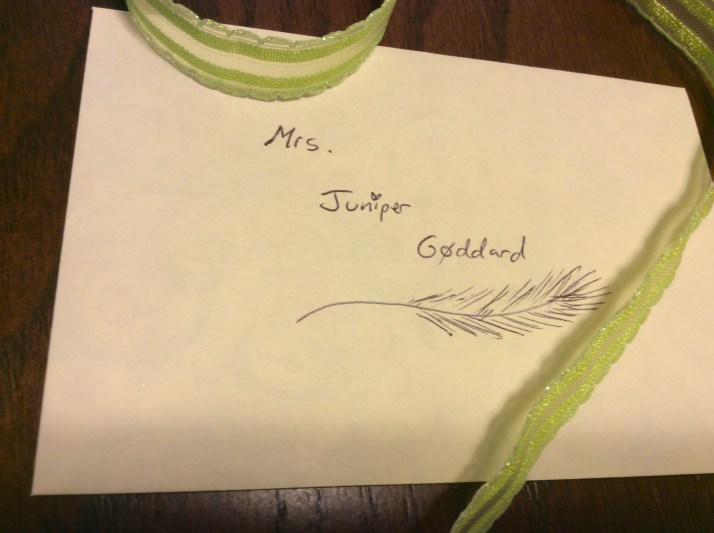


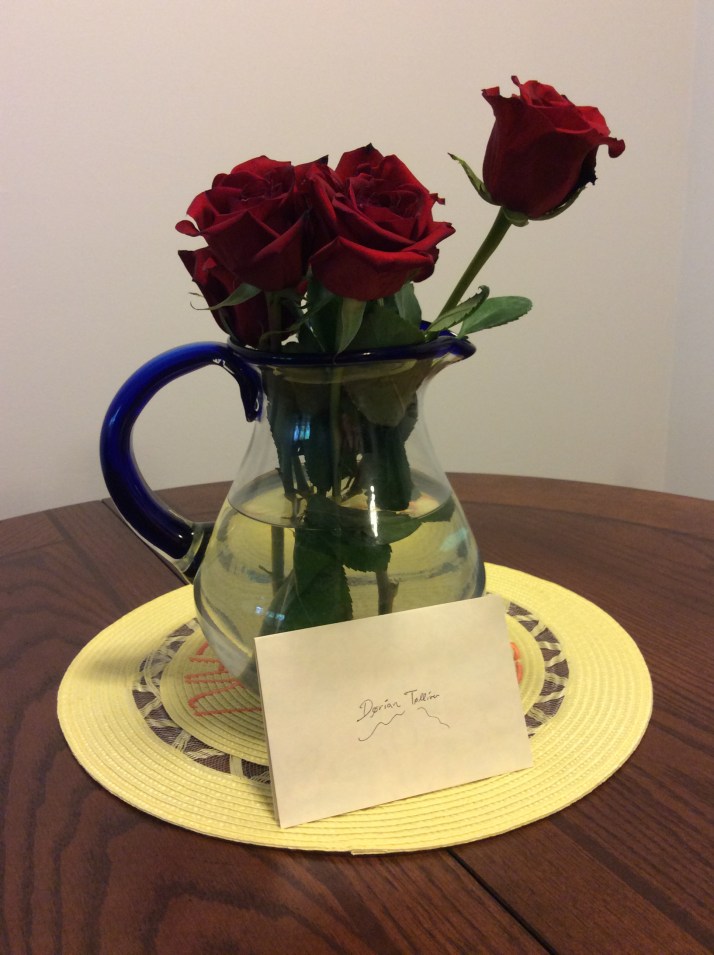
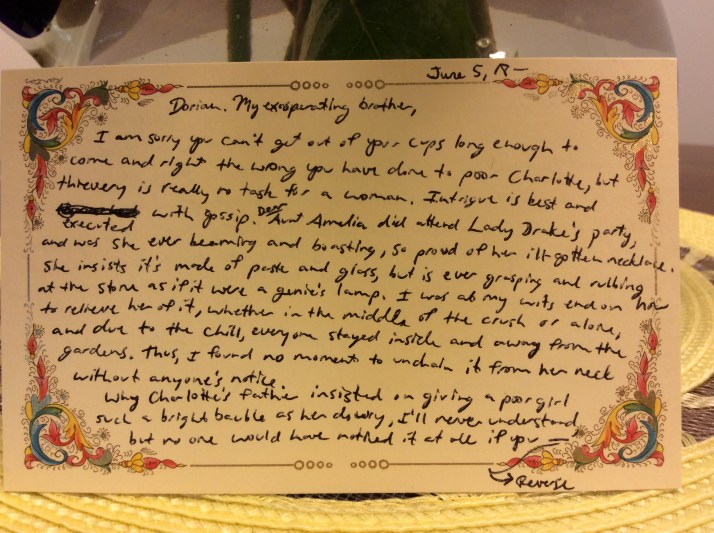
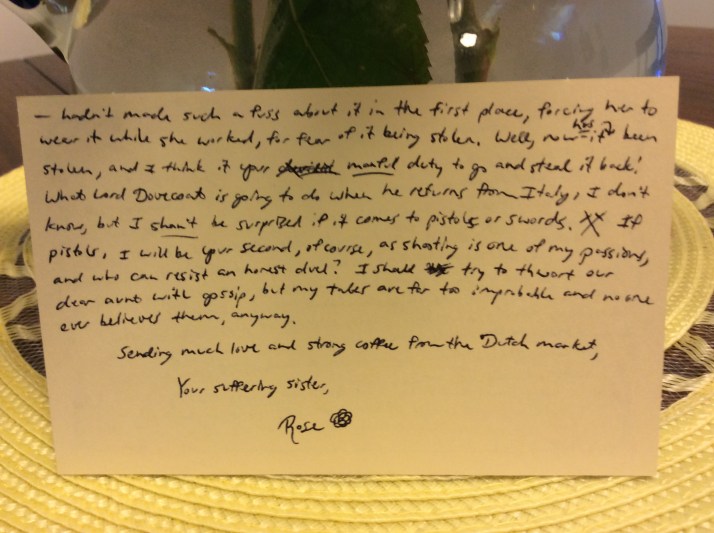
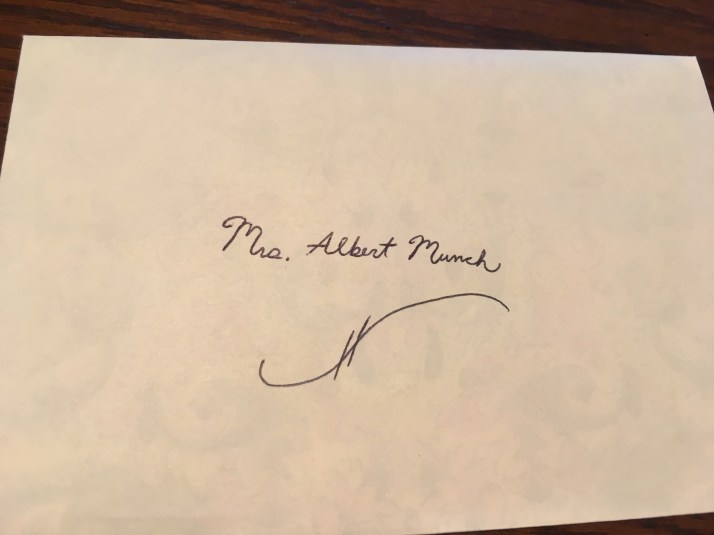


 Maybe it was just that the notecards are so fancy compared to my Minnesota life, maybe it was the thought that there must be some wonderful story ready to be unveiled in the slim, 10-card pack. Maybe I just really, really wanted by pretty stationary. Whatever the reason, ages ago, I bought this pack of notecards and envelopes from Barnes and Noble thinking that I would use them for a story…somehow.
 What happens when humans are in charge of dealing out death? The Arc of a Scythe series by Neal Shusterman takes on this question. In a world where humanity has conquered death and is ruled by a collective consciousness called the Thunderhead (think of our modern internet “Cloud” on steroids), utopia still has not been reached. It has been deemed necessary that people still die, keeping to the natural order of things. And so a Scythedom was formed, a collection of humans chosen to be the grim reapers of mankind. The second installment of the series, Thunderhead, digs deeper into questions surrounding Scythes, namely, the biggie: Are they playing God?
