Archives

The Show Must Go On

It’s funny that when one is working on a project, one sees similar themes and ideas everywhere. I am–probably too–proud of the fact that I’ve taken a scene I knew was bad and am rewriting it. Sometimes I think parts of my story are bad, but then in reading them later, think they are ok and keep them. It’s tough with writing because you can read your own stuff one day and think it stinks and the next barely recognize it and think, “who is this brilliant writer?  Can’t be me, can it?”  But some scenes are bad from the beginning, bad ideas, uninspired, and so on.  I’m excited because I genuinely found one I wanted to change and know the new one will serve the story better.

Speaking of rewrites, what person calls themselves a writer and thinks there will be no editing? No rewrites? No criticism? Now imagine that writer is writing for movies or TV and can’t stomach the possibility of their script being changed?  Bizarre.  I mean, who doesn’t know that the script changes constantly, especially when filming starts, and if it’s bad with movies, what about TV shows?

But I’m rambling. I’ve been watching this kdrama called The King of Dramas. It’s an awesome show with a huge flaw in that the writer lives in this fantasy of “no revisions, no changes” to her original script. Fortunately, she is learning (like I am) as the episode sprogress, but still. Her rigidity stuck out like a sore thumb at first and it was hard to suspend my disbelief.

The King of Dramas, or, in my mind, The Show Must Go On! with same-titled song from Moulin Rouge, is a 2012 kdrama about producing a Korean TV show. With epic music and everything from mafia financing to last-second deadlines, this show will have you wondering how any dramas are made at all. I mean, who would want all that stress and headache? And it become clear why showbiz people can be a bit neurotic. Anthony Kim (Kim Myung Min) is Macbethian in his strive for power, with ruthlessness and an alarming propensity for lying. Kim, the actor, has a magnetic presence about him and although everyone claims to dislike him you get the feeling they secretly want to be on his team.

The naive, stubborn writer is played by Jung Ryeo Won, and it’s refreshing to have a heroine for whom romance will turn out to be incidental. She’s also not overly crazy, mannish and loud, but womanly and thankfully doesn’t have any part-time jobs. I like the down-and-out-girl-with-10-jobs-and-a-relative-in-the-hospital, trope but it’s nice to have a break from it. Lee Go Eun is refreshing in her normalcy. Jung Ryeo Won also has a unique look that compliments her thoughtful character.

The comic relief in the show falls on the chosen lead of Lee Go Eun’s script, handsome and famous Kang Hyun Min. This guy fits every bad stereotype of an actor–vain, money and fame hungry, selfish–and he’s hilarious! Choi Si Won overcomes his distracting Ken-doll  looks by actually…acting, something that other K-pop stars seem to take eons to figure out.

Both male leads are jerks and the farthest thing from husband material. I’m about halfway through the series and am wondering if they are going to go with a love story eventually and if either will prove themselves worthy enough for the quite nice, but stubborn writer.  And being that she’s working with overbearing people, it’s also a good thing that she’s so stubborn, but I’m glad she learns to do some self-reflection when it comes to her writing. And the show is actually fine without a love story, so different still.

My favorite character, though, is the middle-aged cutie Jung In Gi. He plays recovering alcoholic director Koo Young Mok. Jung’s a bit more disheveled in this than I’m used to seeing (he’s in a ton of Korean shows and movies), but he adds much needed gravitas when the others are too over the top. He also is very believable as a kdrama director and steals a lot of his scenes simply by his presence. He’s a likable father figure to the younger characters–someone who has “been there, done that” but is still struggling himself.

I don’t know what else the real writers of The King of Dramas will throw at their characters in the remaining episodes, but I’m guessing there’s a good many inside jokes going on for those whose careers are built in show-biz. No matter the country or culture, entertaining people is rarely as easy as it seems. And somehow the shows do go on and on and on in miraculous precision.

–P. Beldona

See Also Murder: book review

As much as I love YA sci-fi and fantasy, adventure, and Regency-era romances, my all-time favorite genre is mystery. Nothing tops a good mystery, and unfortunately they are very rare. My favorite mystery series right now is the Flavia De Luce series by Alan Bradley. I’m reading his latest, Thrice the Brinded Cat Hath Mew’d at a snail’s pace in the hopes I can make it last until the next one is published. I also peruse my local library shelves periodically in the hopes that I will connect with another series. I may have found it.

See Also Murder by Larry D. Sweazy (love the name!) is subtitled “A Marjorie Trumaine Mystery,” so I hope, hope, hope that means there will be more of them. The sleuth is an indexer caught my eye. Once upon a time I worked as a proofreader (oh, how my grammar and spelling have plummeted since then!) and we also had an indexing department in the building. I was always a little jealous because the indexers had their own offices with doors, and aside from having to proofread their spelling and check occasional page references, I didn’t learn much about their job. According to the author of this mystery (a longtime indexer), not just everyone can be one, at least a good one.  Indexing takes a certain kind of mind that can notice key phrases and points in a work and correctly categorize them for future readers. It also might help to be a lister, or one who writes lists. That’s not me. I keep short lists and often either forget I wrote them down in a dusty day planner or typed them into my notes app. Weeks or months later when I open said planner or app in an effort to prove to myself I actually use them, I’m amazed to find these lists and somewhat embarrassed I wrote them down at all.

(Ah, organizing for the sake of organizing. There’s this great line in the movie The Jacket with Adrien Brody: “I’ve been approached by the Federal Trade Organization. … They have asked me to head up the Organization for the Organized!”)

So, one needs a knack for indexing. And Marjorie Trumaine has that knack. She quickly and easily categories and organizes people, ideas, clues and so on. See Also Murder is set in the North Dakota plains in the 1960s and the story is fully infused with the atmosphere and culture of that era. Readers who’ve grown up in middle states, or “flyover country” as it’s often called, will connect with the story in a way the “coasters” probably won’t.

As a mystery, See Also Murder isn’t so much a whodunit (avid mystery buffs will be able to spot the culprit fairly quickly) as it is a character study. Marjorie Trumaine lives a lonely isolated life and it becomes obvious that any threat to her or her husband could quickly become terrifying, especially if they find they can’t trust the few people they know.

I also want to give a shoutout to Scandinavian history and mythology. It’s not something I know a lot about and what I do know mostly comes from the Marvel Thor movies. Sweazy inspired me enough that my latest book purchase was Norse Mythology by Neil Gaiman. I come from half Norwegian, half German stock and once in a while I find it worthwhile to dig into my roots.

See Also Murder is a great, atmospheric read that will stick with readers long after the story has been closed and put away. Isolation is rampant even, and maybe especially, in our modern technology-filled times. Easily seen as both vice and virtue, isolation is a perfect setting for a ghastly murder.  Isolation is the “single effect” (as E.A. Poe would say) that defines the book.

P. Beldona

Complicated Stories

The trouble with writing complicated stories is that they quickly run away with you. The details start to overshadow the narrative and can easily confuse the reader (and the writer!). One begins to see only the trees and not the forest.  Still trickier is making sure all of those details make sense and crucially deciding which details to leave out. Me, I tend to minimize rather than leave out, a storytelling flaw I hope to overcome one day, and I really only decide to do that after exhaustively rereading the manuscript until me head spins. Also, some details need only to be revealed certain places, so sometimes I have to go back and remove prior references to them.

In fantasy in particular critics are always on about “world building,” but for readers who just want a good story it is a turn off to read too-detailed descriptions of how this fantasy world operates. I’ve found generally in using magic in a story it’s best not to explain too thoroughly how the magic works. Magic isn’t logical, so it’s going to be difficult to explain it logically and then one starts leading the reader down a path of fitting that magic into the real world, which can’t be done, or at least can’t be explained. Going as far as saying magic words or employing certain hand movements, etc., as in Harry Potter is about as far as one can really go in explaining it. In TfD I mostly explain the magic by a creature using dust and then concentration and/or willing something into being. It is a bit vague, but I find it works for the story and is much tied to the Christian idea of creation, so that picture will hopefully be in the readers’ minds as an example. For myself, I don’t mind the magic working being left a bit vague, though I do need to work at highlighting the limits of Etherland magic. Will I leave that for this book or the next one? A good question to think about on the weekend.

Right now I’m organizing a lot of players, both “real world” and “show world,” for the disappearing act finale. Have a few traitors to manage also. That’s gotten a bit ridiculous, so I might just go with that – quintuple agents and beyond!  Sometimes the piratical Jack Sparrow fan in me gets the best of me, the writer.

I think it was Stephen King who said something about writers not inventing stories, but unwrapping stories already there. That is how I feel about Trolls for Dust. It was this whole, gigantic, complicated story just waiting for me to start unwrapping it. Some of the paper is sticking, but little by little I’m stripping it away to the goodness underneath.

–P. Beldona

Sensitivity Readers

This baffles me. Why hire someone to read your work and ensure you don’t offend anyone? Actually, not “anyone,” but those who live and breathe by whatever current form of political correctness is in place. As a writer, there is no guarantee, no matter what you write, that you will never offend someone. That truth alone should make the practice of hiring a “sensitivity reader” a poor investment, but pour on top of that the increasingly shrill culture of offense today and the question becomes: Why write in the first place? How in our overly sensitive PC culture can one hope to be any sort of artist without offending that culture at some point? And the rules of what is “offensive” are changing all the time.

It used to be a badge of honor for writers and artists to offend the prevalent narrative or world view. Why the heck would any writer want their stories or essays to be so lukewarm that they offend no one? How far down the rabbit hole have we gone even thinking that’s it’s possible to never offend. What about the readers who want exciting stories that challenge how they view the world? What about the offense they take at a boring story with feminists rants they’ve heard a hundred times already? No, no, let’s give them more drivel toeing the PC line. Keep to the status quo, everybody’s doing it. Marxist collectivism, when it’s not murderous is actually really boring. Everyone must be the same all the time with no differences, whether in dress or viewpoint. Used to be that artists were the ones holding this stuff back. Now, they share in the oppression of anything remotely interesting.

Fellow writers, if it’s authenticity you’re worried about, hire a good researcher, not some “sensitivity” tool.  If your book sparks a reaction, great, that means that people are reading it, that they care about it, and that they will tell more people about it who will spend their money to read it and will also be talking about it.  Twilight had a lot of mockers and offended many, but they were all talking about it and you couldn’t walk anywhere for months without hearing about sparkly vampires. Guess who now has enough money to continue writing and getting better at her craft? Uh, huh, that’s right.

Should our goal be to offend? I suppose that depends on what kind of writer you want to be. Satirists thrive on offense. If you’re just a storyteller like me, though, the goal is to tell an exciting and engaging story and often that involves challenging readers’ sensitivities. So what?  They are reading, and that is the point.


A Good Ending

Tonight, I contemplate what a good ending for a book looks like.  It’s Trolls for Dust, so it must end on a cliffhanger, and as there will be a Season 3, it’s a midway point in the series but still needs a decent ending.  I ask myself, do endings really have to make sense?  They can just be exciting, right?  Ha, ha, if only.  Things are going to be a bit crazy at Vale Studios while Sandra implements her master plan.  If only she were actually as diabolical as she thinks she is.  Oh, what she will learn in Season 3.

Like Season 1, this ending will attempt to mix two worlds together, that of the onscreen show and the fiction real world.  In Season 1, I emphasized this by turning verbs in the real world parts to present tense to match onscreen.  Although I can certainly implement that again, I’m hoping to come up with something more clever but that doesn’t take readers too much out of the story.  Talking about being taken out of the story, this series started with an idea of having actors compete to stay on a teenage fantasy TV show, but as the creator and writer I’m finding that the least interesting aspect now.  The competition is showcased less in Season 2, but is more disruptive to readers (the fictional viewers don’t care, they’re just enjoying the ride).  My goal is work on making the disruptions as funny as possible to smooth things over.  Hopefully, that will do the trick.

Also, being that I’ve become such a huge Korean drama or Kdrama addict, I’m fantasizing about Trolls for Dust becoming a Kdrama, and I have to focus on finishing the story instead of making up possible cast lists in my head.  American TV, this is how far you’ve fallen.  What was once inspired by The Vampire Diaries (Season 1-3, so good!), now is being considered to be best adapted by Korea!  Okay, hopefully that’s more a reflection of my changing tastes than the actual value of American TV, but I think either way America can step up the competition.

Okay, back to Tippa Andrews, my favorite character, that Taiwanese Born American Pixie, or TDAP!  Hmm, sounds like an vaccination.  Also, she wasn’t actually…oh, better not say it–spoiler!  Anyway, girl of the purple hair, I promise I won’t leave you stuck with the Gremlin-driving guy in Chicago.  He’s so weird!

–P. Beldona

Forgiveness

At church today I was struck by how profound Christian forgiveness is.  It is full and complete, a fresh start where one shouldn’t even be possible.  Why God, who hates sin, would choose to offer such a gift to sinful mankind is a wonderful mystery we’ll never be able to understand.  Yet as completely forgiven as the repentant sinner is, God’s grace is never a license to continue sinning.  Such is the struggle of the Christian life, to have that old self of sin trying to throw one back in the gutter while the new self strives to lift one up to unimagined heights.  Struggle must be important to God.  He offers no easy answers.  He could have taken away all of the bad and made us holy robots, unable to waver.  He could have destroyed the world completely long ago and forever rid himself of sinful beings, but he didn’t.

Repentance, forgiveness, struggle.  This is a story God likes and although he is the hero in it, he didn’t set his Son an easy task.  It was a task that required sacrifice and death.  Why does God find our struggle so worth leaving in existence?  The concept of love barely scratches the surface in my mind.  I really can’t wrap my head around it.  I can’t wrap my head around how many fresh starts God has given me and how many times I’ve caved to the wrong side of the struggle and how many times I’ve had to come back to him in repentance, each time being offered that blessed, complete forgiveness.

It sounds like something that would be a boring, repetitive cycle, but it’s been the opposite.  If my ordinary life has any of the epic about it, that is entirely due to God’s grace and forgiveness.  It is the knife edge between life and death, being saved or damned.  Every day I have the power, the choice to reject him and what he wants for my life.  Just that thought leaves me breathless, leaves me wanting to run back to his gracious forgiveness and love.

Getting Back to Writing

2016 ended up being a crazy year for me.  I became addicted to following the 2016 Presidential campaign and watched in awe as Trump took down one political foe after another.  Never had it really hit home to me just how opposed our government, both parties, and especially the mainstream media had become to the interests of the American citizens who actually live in this country.  I, like so many, were “red-pilled” as they call it, and became supports for Donald J. Trump’s candidacy and all he stood for, which boils down to: America first.  A country acting in the best interests of its citizens shouldn’t be a novel concept, but in this day and age, so many have yet to wake up to the lie that is Globalism.  That “false song,” as Trump calls it has done much damage over the years, and like the Tower of Babel before it, was always doomed to fail.

So I followed politics obsessively and Trolls for Dust, Season 2 ended up on the back burner and still needs finishing.  I also got sick a few times, moved, and was in a sort of shell shock from all the red-pilling and also the downright ill will from family and friends alike due to my support of Trump.  That mean-spiritedness, I don’t think I will ever forget.  The only way to explain it is that even good people are terrified of actual, real change, and maybe precisely because it will be in their benefit.  Now that Trump is President we’ll get to see what actual change looks like and if the U.S. Government putting Americans’ interests first is the right thing to do.

I’m not proud that I let my writing mojo fall to the wayside, but I’d like to begin again, finish this story and start new ones.  The good thing is, as so much time has gone by, I have gotten some feedback on the story as it stands and I know what needs fixing.  I know where to go, but it’s how I get there that’s the problem.  This month I am reassessing TfD2, this blog, and also trollsfordust.com.  I want to get back to writing and posting regularly and this is my month to make a plan and then put that plan into action.

On more of a note for long-term writing:  For once in my life I have an entire room set aside for writing.  I have a desk that lets me sit or stand as I choose, a cushy, but not too comfortable bar chair to sit on, and an area free from distraction.  Speaking of changes good for one being terrifying, this is!  As a writer I have all I could ask for a distraction-free writing space.  That means this is where the rubber hits the road and there can be no more excuses.  Either I make this work, or I have to acknowledge to myself that maybe I don’t really want to write.  It’s scary, this big desk and this quiet room, but it’s exciting, too.  With effort, great stories are just ahead, just waiting to be sprung on the world.  I cannot, I must not, let such a wonderful opportunity go to waste.


–P. Beldona

A Corner Called Home

In my neighborhood there’s a certain corner that always feels like home. Little more than a bend in the road, this corner becomes a special place in the evenings, though I doubt the home owners realize it. The corner can’t properly be called a cul-de-sac, and if the road were a river, it’s as if that river took a lazy pause to pool a little before continuing on its way.

During the day, this corner is quite ordinary, consisting of three houses all with front porches and front yards landscaped and dotted with plants. The house in the center looks slightly churchy with brick and decorated windows evoking the thought of stained glass. In the evening, the corner becomes magical, a refuge of light in a sea of darkness.

Often on my evening walks, I’ve wondering at the feeble streetlights in this part of town and amazed at the three houses that never seem to worry about their electricity bills. I round the bend and am welcomed by light piercing the darkness. Each of the three houses has their outside and inside lights on, illuminating their porches and the well cared for yards. It’s as if suddenly the neighborhood has life in it brash and bold and wafting out into the world instead of being kept behind closed doors. The churchy windows of the middle house give the corner a hallowed atmosphere, but it’s hallowed because its home.

The essential part of “home” for me is that one is welcome. One is welcome to come over, to laugh, to share food, to watch movies, to argue, to debate, to hug, to sing, to dance, to share joys together. In the natural world light is the ultimate sign of welcome, a magnet in the dark. I hope and pray that everyone may have a corner of the world of the world that they can call home.

Long-Nose-Hiccups-Pants-on-Fire: Kdrama Pinocchio’s media redemption fairytale.

What is a journalist?
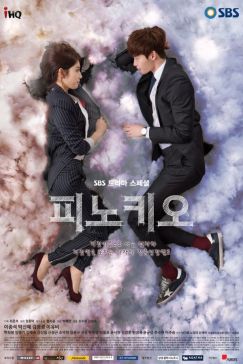
Pinocchio_(Korean_Drama)-p1

Pinocchio

Pinocchio, a Korean TV drama from 2014-15, seeks to answer this question. It follows the story of a boy whose family has been irrevocably wronged by reporters, and a girl who has an unusual syndrome called “Pinocchio” syndrome. The fictional syndrome doesn’t refer to a wooden puppet with a long nose, but a person who is unable to lie without hiccuping. Tailor-made for a show about reporters, being a “Pinocchio” means one also hiccups when withholding the truth and even when one merely has doubts. In the real world, a person plagued with Pinocchio syndrome would be hiccuping nonstop. In the show, Park Shin-Hye and the writers make it fairly believable.

Choi Dal-Po is the main character and played by Lee Jong-Suk. Lee adds such heart to his acting, making it easy to connect with his character, who balances between being the scared and angry little boy that he was, and the brave and thoughtful young man he has become. Park Shin-Hye plays his best friend Choi In-Ha. The first few episodes deal with a lot of back story and their time in high school and then the show launches into high gear when both decide to be reporters, In-Ha because her estranged mother is a famous reporter, and Dal-Po, because he wants to answer the question of what a journalist is.

Pinocchio is real and surreal at the same time. It’s a story attempting to get at real truths while highlighting its own fairytale aspects, from the slightly exaggerated characters to the episode titles, to the magical winter setting. As a person who has read countless books and watched an embarrassingly large number of movies and TV shows, I can tell you that in my view it is a near-perfect story. If there is a misstep it is only in the beginning episodes in which it first appears to be a high school knock off of Slumdog Millionaire. The cast is huge, due to the number of reporters and journalists from the fictional broadcasting stations, MSC and YGN, but a few of the smaller players manage to steal all of their scenes, especially Lee Yoo-Bi as feisty rookie Yoon Yoo-Rae, and Min Sung-Wook (No Tears for the Dead) as veteran “stick-it-to-the-man” reporter Jang Hyun-Gyu. Other standouts are Lee Joo-Seung, who rocks as a young world-worn police detective, Kim Hae-Sook (The Thieves) as business chaebol Park Ro-Sa, and especially Jin Kyung, whose deadpanned expression is vital to reporter Song Cha-Ok.

Pinocchio is not so much the story of all reporters, but that of reporter Song Cha-Ok. Song is a successful reporter who has sold her soul to get where she is. Throughout the show, the question changes from, “What is a journalist?” to “Can dishonest journalist Song Cha-Ok be redeemed?” The Pinocchio angle comes into play when Song’s estranged daughter, In-Ha, a Pinocchio, decides she wants to be a reporter. This is not possible, in Song’s opinion, because the very nature of the job requires her to lie from time to time, even if the lies are lily white (as in needing to be undercover for a story).

Choi Dal-Po, who has been very, very wronged by Song’s irresponsible past reporting and by another “Pinocchio,” has a more scathing view of not only journalists, but also Pinocchios unable to lie: In one early scene he excoriates both as not comprehending the enormous duty they have to the public. By default people will always assume that both are telling them the truth, and that is not a status to be flippant about. Throughout the series both Dal-Po and In-Ha learn just how complicated it can be to tell the truth with no agenda.

Although the show delves only shallowly into the full political ramifications of what the News media’s lies do to society, it is a relevant story in our time of constant media spin, obfuscation, and outright falsehood. These days more and more people are waking up to the fact that the media as a whole has its own agendas apart from just giving us the truth or facts. They exaggerate and make false claims in order to get more viewers or readers, they outright campaign for certain candidates while at the same time proclaiming that they are not biased, they insert themselves into the story where it is not pertinent, and so on and so forth.

My Take on the Media

The second time I watch Pinocchio, this time in order to review it, it struck me how timely the stories is in this age of news media, mass media, social media and new media.  Truth and lies are simultaneously rampant.

Sometimes I wish I could go back to being a kid when I thought the reporters I saw on TV every night were giving me facts and truth. I wish I could go back to a time when I had no idea I was being lied to, but I can’t. Once you see the media’s lies and bias, you can’t un-see them. I now know that a lot of the American news media not-so-secretly (anymore) detests the regular, hardworking people of this country. I now know that many, if not most, reporters are in it for the fame or the money or to further an agenda, but not in it for sharing the truth. The news sources I read and listen to now, openly share their biases and their agendas. I like that honesty and I think its better than media pretending a false neutrality they do not possess.

This U.S. Presidential Election cycle has been interesting largely due to Donald Trump. Had he not run, it would have been same old-same old, and the Republicans would have folded to the media’s lies as usual. He’s done a great service highlighting (for those who have eyes to see) just how untruthful and agenda driven most of our news is. In addition, he brilliantly decided to run as a Republican, effectively showcasing those who claim to care about conservative ideals and the country, but really are only concerned with their own power and sphere of influence. He’s also laid a death blow to political correctness, the media’s biggest weapon in their agenda against anyone who, well, disagrees with them.

Over the years I’ve found some news sources or interesting perspectives that cover a different view of the world than the MSM, or mainstream media. More importantly, these sources point out the inherent, usually Leftist bias in most of the MSM. The sources I go to are biased, but openly so, and I respect them for that. They don’t pretend objectivity, like CNN, or Fox News, or any of the other major cable networks. The truth is that all news sources and all reporters and journalists have bias. A good consumer of the news should gauge to what degree bias affects what stories the news source covers and how the story is related or “spun.” Each person has to decide for themselves whether a news source is trustworthy—and often this takes time to tell—and whether the spin is helping to accurately understand the stories shared, or whether it is promoting a narrative (Hillary must be elected! for example) only.

Today, because of political correctness, the greatest danger in any reporting is what people have coined as “virtue signaling,” that is claiming to care about something only for the sake of those in earshot. It’s a quick ego boost that we are all guilty of from time to time, but lately, is running rampant, especially in the news media. We can see it everywhere from the push to continue bad, expensive programs to “save the poor!” or “save the planet!” despite factual evidence that the programs are not realistic and often harm those they intend to help. Pushing on despite the reality is virtue signaling, not actual virtue. This is a big reason the current presidential campaign has been so torn and bitter. People care more about a “nice” tone than the facts a candidate is presenting. Vice-versa, if a candidate is well-mannered, for many that covers over any multitude of sins and I can’t help but think of all those people who knew serial killers and say, “Oh, but he was such a nice young man.” What does it take to wake up from this?  How do we get back to substance?

Here’s my story:

In 2006 I was living and teaching English in China and went to friend’s house in Hong Kong for a few days. They had cable, which I hadn’t watched in a few years. During breakfast Headline News (at least I think it was that) was on with a guy named Glenn Beck. I always assumed (because of past experience) that any MSM outlet was liberal or Leftist in bias (thought I still didn’t know how much it affected their reporting), so I was surprised to find him saying and talking bout things that I was interested in and agreed with. Beck became a hit on talk radio and eventually landed a show on Fox News. His popularity largely stemmed from discussions and facts on history, things that put into perspective the upheavals in tradition that still are being overthrown in America and around the world. The great political struggle of the world was presented not so much as Right vs. Left, but Liberty vs. Tyranny.

For the first time, I really contemplated that the Nazis were national socialists, what that meant, and, why for so many years they had been painted as right wingers. And then I couldn’t stop seeing it, I, and many others. We couldn’t stop seeing the obvious Leftist bias in nearly all of the mainstream media’s reporting. This is something we intrinsically knew, but had never really faced head-on. I give Beck much credit for sharing a lot of these things and also promoting the American ideal, the American dream, and so on. For the first time, I understood why everyone in college was obsessed with Che Guevara, why by default, most college student were perceived Socialism as good, why everyone had a desire to show how “multicultural” they were, and why everyone seemed so concerned with the sins of America, their own country. I finally understood that all of the media was lying every single day, and that their lies slanted sharply to the Left because that’s where the power is.

The kicker was, it wouldn’t have been such an big failing if the media had simply been willing to self-evaluate and be honest about their views and how it affected their reporting. I also saw a bigger issue behind that: culture. American pop culture is now almost always for big government and always, again, slanted to the Left.

If the news media has a problem with virtue signaling, don’t get me started on pop singers, Hollywood stars, artists, and the like. (So many Christians in the early 00’s near-worshipped U2’s Bono due to cultural virtue signaling. I was floored to find out that he’s only give 1% – one percent!! – to charity.  This, for me, is Leftism in a nutshell, it sounds so moral, so virtuous, but in the end, it’s just a cash grab not much different than selling indulgences for a ticket to heaven.

Back to Beck. I don’t listen to Beck now, and it’s same for a lot of former listeners. It wasn’t just that he betrayed his message, he fell prey to virtue signaling of the worst kind. And I’m left having to consider that he never really cared at all. People who never liked him to begin with will probably snicker and say, “see, told ya,” but they likely never listened to him anyway, only swallowed the articles and stories biased against him. I don’t say this to be mean or bitter, I say it because it’s the truth. Few people (largely on the Left, some on the Right) who disliked Beck and his message a few years ago actually took the time to listen to him and to understand why people thought his show was appealing. Many who did like him found his show informative and entertaining. I can’t go back in time, to see, knowing what I know now, if I would have that same opinion. I have to say his constant crying first started to turn me off. It’s not that men should never cry, it’s just rare that anyone, male or female, would regularly cry on a cable news TV show. I had hoped the tears were evidence of his sincerity. That hope proved false.

So how did Beck fall? I, along with many of his former listeners, would say it was back in 2014, the summer we had the big crisis of children arriving at our Southern border from Central America. They came by the thousands and it was at this same time that I began to see friends and acquaintances post that they cared so much about those kids. They cared more for those kids than their own families and countrymen, more than their neighbors’ welfare and safety, more than the rule of law, and more than our national sovereignty. It was a great time of PC rearing its ugly head. If any of us had forgotten that PC dictated our daily lives, bleeding-heart virtue signaling brought us back to remembrance with a jolt. It was surreal to see people I thought I knew fail to critically consider our open border situation. I think they just wanted to sound like nice, caring people, the trouble is, it was just a veneer, but they couldn’t seem to see it, and were untroubled by their flippant disregard for the very real and serious safety concerns of their fellows citizens.  And anyone who called them out on it was not playing “nice.” I began to recall that the original meaning of “nice” was “foolish,” and since then have become increasingly suspicious of calls for “niceness” or criticisms that people who are telling truths people don’t want to hear are not “nice” enough in manner or tone.

At first Beck stuck to his previous line. America’s sovereignty and the safety of its citizens is more important than letting anyone and everyone in across the border.  He indicated to have disregard for our borders was not kindness, but reckless both regarding our safety and the safety of those trying to get in illegally. And then something switched and he was all of a sudden concerned that he was encouraging all of his viewers to hate these kids, or something. Maybe he read too many troll internet comments? Who knows. At any rate, it became his mission to show that conservatives were not heartless (giving in to Leftist claims that we were heartless), that we cared about these kids, and that caring meant letting them stay at the border instead of sending them home.

This was such an about-face it left people baffled. Just a few weeks, perhaps even a few days earlier (I don’t really remember) he’d been proclaiming that we needed to have a realistic view of the situation. That simply letting the kids in would only mean more would come, etc., and so on. That we shouldn’t let our emotions overcome the facts in the situation. Then he jumpstarted a plan to bring soccer balls and teddy bears to the kids being held at the detention centers along the border. This was to show the Left that, see, conservatives care. Although the detention centers were a bit overwhelmed, none of the kids or people held there were being treated inhumanely, yet suddenly Beck seemed to think they were. Even more troubling was that he started to turn on his listeners, saying that those who disagreed with what he was doing didn’t care about the children. He started using Leftist arguments against his own followers and even crowed about those Leftist celebrities and journalists who gave him a shoutout for appearing so nice and caring (I stress “appearing”).

Beck had stepped up into the self-labeled cool club and, I think, never looked back. Even more alarming, was the fact that Ted Cruz joined him on his gift-giving trip. This was a big judgement fail on the part of Cruz, and it was the first time I questioned how smart of a politician he really was.  It also made Beck’s early professions early in the 2015 primaries that he hadn’t yet chosen a candidate to back, ring a bit hollow. I doubt few were surprised that he ended up becoming a spokesperson for Cruz. That Cruz allowed him to become so despite his increasingly erratic behavior, was another glaring error in judgement. After that incident, I didn’t listen to Beck quite as much, though I did still follow him on Facebook and also read his news site The Blaze from time to time, because they often had stories no one else did.

Enter Donald J. Trump. Still mostly a fan of Cruz, I rolled my eyes when I heard Trump was running. But, what I knew of Trump up to that point, was what the MSM had told me. He wasn’t something the more right-sided news sources I’d started listening to had covered much, save for his strange quest to weed out Obama’s long-form birth certificate. Even today, I’m not really sure what was going on there. Was Trump already beginning to run for president at that point? Did he truly have insider information the rest of us did not? It ended with no revelation from Trump, but in Obama releasing a document some say is forged. Who knows? It was strange, and that was my opinion of Trump. He was strange.

And then I listened to his speech on the border and immigration, and I was fascinated that he seemed to get it. That he seemed to get that something was really wrong with the U.S. not securing their southern border. And he also offended Mexicans and virtue signalers, most of whom did not take the time to examine what he actually said or why he said it. Suddenly Trump wasn’t “nice” and that was the same (for many) as being Adolf Hitler. Trump also, interestingly, refused to go on Glenn Beck’s show, and thus began months and months and months of Beck tearing down Trump every chance he got. For some reason, Trump made him lose his mind. Beck lost any and all objectivity when it came to Trump, as did many, many others.  And it lost them readers, viewers, and followers in droves.

Their anger of those against Trump seemed not fact-based so much as it was virtue signaling. People who had, say, a basic understanding of business, seemed to lose that understanding when Trump’s bankruptcies were mentioned. It was as if no one in business had ever failed, and one failure was a terminal failure of a person for the rest of their life. Okay, not “a person,” Trump. Beck began to bleed, and bleed, and bleed viewers, and in response he doubled and tripled down on how nasty Trump was.

At this time Beck and others, formerly pretty decent to their fellow man, turned with an onslaught of hate, spite, and anger directed not at Trump, but at his supporters. This was because Trump supporters were not being good little children and doing as they were told, to support Cruz or Rubio or anyone on the ticket but Trump. That Trump was fulfilling all of their hopes and dreams at bringing more people to the Right, that for the first time someone running actually seemed to care about the country and its citizens, vs. the rest of the world, didn’t seem to matter. And suddenly, for a lot people, figurative scales fell from their eyes.

The conservatives nearly spitting mad didn’t really care about their country, and they had no respect for someone choosing a different candidate, instead painting them as “angry” and “crazy,” not necessarily in that order. These Never Trumpers preferred virtue signaling and pretending that everything would continue as normal when our country was hurting and wounded on multiple fronts. That people didn’t agree on Trump being a candidate wasn’t really a problem (that happens all the time in politics), what was unusual is the outright anger against those who supported him. Gone was the previous “nice” ideal that even though people supported different candidates for the Republican ticket, they were generally on the same side as far as concern for the country. For some baffling reason it became important to many not only that Trump say the right things, but that he say it a certain way. A “nice” spin was wanted where brutal truth is what we needed.

And Beck could not be trusted.

These days he’s spending his time still targeting Trump and encouraging people to “vote their conscience” (code for not-Trump) in a race where if Clinton wins, it really could be the end of liberty in this country. We’ve seen fact after fact after fact of her dishonesty, her treason, and her disregard for anything but her own power and wealth. But we mustn’t vote for the man who could stop her, oh no, we must vote for “nice” people, people who will continue to sell out this country’s wealth and sovereignty for political correctness and money for themselves. I now doubt Beck’s sincerity. I doubt his trustworthiness, and I really doubt his claims to moral superiority (being “nicer” than Trump) because in the next moment he plasters Cheetos on his face trying to turn his skin as orange as Trump’s. Because that’s what “nice” people do, I guess.

The relaying of this is not to bash Beck, but to show how extreme bias prevented him from looking at Trump critically, but fairly. I tell it also as a way of explaining how trust in a media source is lost. It happens in a variety of ways and is different for everyone, but that’s one way it happened for me. The rest of the media lost me largely during the Bush years when I realized they just didn’t care about the truth. They cared about putting Democrats in power. No quarter was shown to Bush, while people on the Democrat side were given endless benefits of the doubt. All while the media pretended it was objective.

Bush himself didn’t impress me in the fact that he seemed to think if he never addressed their attacks, they would just go away. He did this even when it gave the Left more and more fuel for the next presidential race. McCain and Romney ran, neither of them putting up much of a fight, though, making sure to appear “nice.”

This, I think, is the big reason Trump ran as a Republican. A lot of people knew that something was wrong with the party, we just didn’t know what. It took Trump to show us what we couldn’t see: Many Republican politicians will not fight even with the country’s welfare at stake. They are too happy to go along to get along, too happy to think that the gravy train will never end for them, too happy to continue to believe their fellow Republicans are suckers, too happy to believe that nothing is worth rocking the boat for, too happy to believe that nothing is worth ticking off the media for, and too happy to believe that “nice” lies are more important than the “offensive” truth. Trump is a fighter and he knows that America is something worth fighting for and that is why he is winning the support of millions of his fellow citizens.

If you’ve read this far, my hat’s off to you, and if you’ve read this far and are not a Trump supporter, double thumbs up for at least reading a different perspective. I can’t ultimately tell you who to trust, either in the media or in politics. I can, however, tell you with certainty that both the media and politicians lie to you all the time, and they do it on purpose. Pinocchio plumbs some of the depths of deception, but not all. It considers that news reporting can be redeemed, but the reality is, it can only be redeemed if reporters and journalists are dedicated to telling the truth, and first and foremost, the truth of their own biases and agendas. It can only be redeemed if journalists begin to consider that the truth is more important than the political correctness of the day. It can only be redeemed if journalists consider the real power allotted to them. By default, people believe journalists and reporters are presenting them with facts and truth. The internet is rapidly shattering this default, as insta-news from fellow citizens now showcases the constant spin and obfuscation the media puts on everything. People are getting new narratives, and starting to question the old ones, like why, CNN, for example, should have any claim on their trust at all.

To end, here is a list of some of the sources I follow. They are nearly all Right Wing and/or Libertarian, but they give different perspectives on things than the MSM, and can be a good place to start in comparing sources. I trust them for the time being, but it’s always possible they will do something to break that trust. Some I used to trust, like Beck, lost me because they couldn’t report fairly on Trump. Their anger against him clouded their judgement. If they are critical, but fair, they are still on my list. The general media is, by default, on the side of the Left. I don’t know if this is because Leftists are currently in power or if it has always been so. I think the best shift for news media would be for both sides to be represented more equally. This shift is happening, not by force of government, but by the blessings (and curses) of the internet, by Youtube channels, and blogs. Because New Media threatens government power, be on the lookout for calls to suppress many of these people and the views they hold.

One final rule of thumb in deciding who to trust: Follow the money. Monetary gain is the first order of business in the news business.

In no particular order:

drudgereport.com

breitbart.com – One of their heads has now joined Trump’s campaign, so I will be checking to see that their bias for Trump doesn’t take over in holding him account if he does become president.

Breitbart writers I like:
Milo Yiannopolous
Raheem Kassam
James Delingpole
Allum Bokhari
Brandon Darby
Lee Stranahan
Ildefonso Ortiz

Rush Limbaugh – Great at highlighting MSM bias, has been more or less fair to Trump, even though he doesn’t appear to be a huge supporter. Realizes it’s more important to defeat Clinton.

Michelle Malkin – Twitchy

Thomas Sowell – Okay, he lost his mind a bit over Trump, too, but is still good on other matters.

Charlotte Iserbyt – Eye-opening research into government-run education — see YouTube

Dennis Prager – Prager University – thought-provoking videos.

Stefan Molyneux – “Not an Argument!” – Educating on how to debate – big on the facts.

Sargon of Akkad – This Week in Stupid

Paul Joseph Watson – Infowars

Alex Jones – Infowars

Vox Day – Alt-right – also, fantasy writer

Rebel Media – Canadians! – free speech!
Lauren Southern
Ezra Levant
Gavin McInnes

Gad Saad

Adam Carolla

Dave Rubin – The Rubin Report

Tommy Sotomayor

American Thinker – offers a variety of articles from different writers. Pro-Tump or Anti-Trump depending on the day

The Conservative Treehouse – This site is unabashedly for Trump, thus they have very enlightening articles on media bias against him and for Clinton.

Political Correctness and the Ministry of Magic

Since that awful day on September 11th, 2001, I have watched in perplexity as politically correct Progressivism has tied itself into knots to deny that we are in a war against Islam. Some will want to chastise me for saying that, but it’s true. Islam is the enemy, not radical Islam, but Islam itself, for no one can be a radical Islamist without first being a follower of Islam. Islam is a religion, an ideology, a governmental system, and a way of life that is completely incompatible with the West and our freedoms. In Islam there is no freedom of religion, no freedom of speech, no freedom for women, and no freedom for those of other faiths and lifestyles.

Never have I seen such a passion as I have in the past couple of weeks by fellow Americans to assure me that Islam is a “religion of peace.” If only they had a tenth of that passion for defending their own country and their own religion (some of these defenders are Christians), what a different world that might be. Instead, fellow Americans, including those in our government are much like the Ministry of Magic in the Harry Potter series in their increasingly ridiculous attempts to deny that Voldemort has return—I mean that radical Islamists are causing terror around the world. Forget Islam in general, even calling the radicals terrorists is a bridge too far for some, and I have to wonder, is that reason fear? Are Islamists “they who must not be named?”

If you’ve read Harry Potter, you know that as the hero and his friends try to thwart the evil magician’s plans that they are continually hampered at every turn by the very politically correct Ministry of Magic, the UK magical world’s government. The Ministry refuses at times to even acknowledge there’s a threat. They chastise Harry for every un-PC action and are not even willing to give him a chance to explain himself. They put him on trial for breaking a law without wanting to listen to the reason he broke it. Harry illegally uses magic to ward off soul-sucking creatures that are attacking him and and his non-magical cousin (a cousin he thoroughly detests, yet chooses to save, btw). Instead of investigating why these dangerous Dementors who are supposed to be guarding a magical high-security prison are instead attacking teens, the Ministry chooses to try and strip Harry of using magic, maliciously attempting to leave him defenseless.

Farther into the series, Ministry official Dolores Umbridge (love that name) refuses to even let the Hogwarts students continue learning Defense Against the Darks Arts. No need for self-defense, government’s got it, right? Gun control, anyone? Watch or read Order of the Phoenix and tell me that Umbridge’s whole schtick isn’t a mirror image of the current “safe spaces” movement where one doesn’t want to hear anything unpleasant, un-PC, or anything resembling the truth. Tell me it doesn’t illustrate a perfect picture of an inept government unable to protect its citizens, while at the same time dismissing their very real fears and experiences, and even worse, denying them the right to defend themselves.

The prankster Weasley twins, Fred and George, represent the best of Libertarianism as they tease Umbridge at every turn, bringing laughter and joy to students as she tries to suck it out of them with rule after politically correct rule. Adding even more insult, Fred and George drop out of school to start a thriving, creative business that in no way needs the Ministry’s help to succeed. They are the very picture of Entrepreneurship and Capitalism.

The most disturbing part in comparing PC puritans with the Ministry of Magic is that in the end it was discovered that the Ministry itself was infiltrated by Voldemort’s supporters. Just why is it so neccessary for our government to deny Islam as the root cause for most of the terrorism going on in the world? What’s really at stake here? Bad enough if it’s merely fear worrying them (As an aside, defending Islam won’t save one if Islamists do take over. One’s house, like the Voldy-loyal Malfoy family, will be the first to be occupied. One’s safety will be constantly in question as one must cave to increasingly more uncomfortable demands, the final demand which may even be one’s life or the lives of those one holds dear), what if the motivation is more because they share commonalities with the Islamists or are even supporters of jihad themselves? At this stage in the game, is seems a reasonable question to ask.  Anyone remember good old Andrew McCarthy? He called out numerous people in the U.S. government for being Communists and Communist sympathizers (another ideology incompatible with our freedoms). They don’t bother to tell one in school today, but turns out Andrew McCarthy was right.

We can debate all day long over what to do about terrorism, both foreign and domestic, but we cannot even have that discussion if we don’t acknowledge what it is we’re up against. Islam is at the center of terrorism today. The first step in defeating the extremists is in acknowledging this fact. So interested are we in puffing ourselves up in “tolerance” (we’re just so awesome and special and PC) that we are putting ourselves and our countries in very real danger. How many more people must be slaughtered before we wake up? Let me also add, this denial has been an issue for the U.S. before, namely in not recognizing the great threat that Hitler and his Nazis presented to the free world. J.K. Rowling’s depiction of the Ministry of Magic echoes the very real history that we are dooming ourselves to repeat. Our current government is threatening those who would speak any ill against Islam. Is this a direction that will keep a free society free? Is this a direction that will help in the fight against terrorism?

Let’s take note from Harry and Co. and press on despite the idiocy of political correctness. Let us take on the threat calmly and firmly, forgiving those like Malfoy, who will eventually realize they are fighting for the wrong side and will wish to come back to the right one. Let us accept them back with open arms. Let us join together with those who love freedom. More than that, let us speak up for love, goodness, and faith. Let us speak up for America and for the West and the good they have done for the world. Let us speak up for freedom of speech and for freedom of religion, both of which are so important to the sharing of the Christian gospel that Christ died for our sins so we could live (ok, shameless plug, but it’s honestly the best news in the world).

Let us speak up for self-defense and against the lies that we are mere children who should have no say in our own security. Let us speak up for the fact that although most Muslims may be peaceful, their religion is not. Let us speak up for the fact that a Republic and a Democracy are better than Sharia. Let us speak up for the fact that both men and women are worthy sexes, that both play key roles in society, roles which should be cherished, not reduced to a burka. Let us speak up for the truth and let us not allow lies to flourish. Let us be free in the truth, even when the truth is painful or difficult to hear. Politically correct lies are cancerous tumors that can only be exorcised with the sword of truth. Let us ridicule PC-dom with so much truth and joy that like Umbridge against the Weasley twins it is left exhausted and maybe even a little impressed by our living  so brazenly without it.

(This post has been updated to fix some typos.)