Haven, Season 5, Episodes 10-12

10. Mortality. 11. Reflections. 12. Chemistry.

Spoilers.

Haven, Season 5 is chugging along.  So many developments.

Audrey: S5, she still isn’t quite the same, yet her relationship with Nathan is sweet and the big reveal about how she and Mara are exactly connected is looming on the horizon (along with Mara’ origins).  Audrey is now sick and dying.  Her cells are slowly breaking down.  Is this happening because of the Trouble Duke used to separate her (or create a separate being of Audrey), or something to do with Mara and how she and Mara are related?

Mara: Manipulative, she is, and sadly her manipulation of Duke is working.  For reasons yet to be revealed, Mara is turning him to the dark side, black, bleeding eyes and all.  Duke’s power of taking away Troubles is the antonym to Mara’s ability to create them.  This begs the question: Are Duke and his family merely Troubled, or is there more to the story?  If Mara created (and I think she may have said that in a past episode) the Crocker family Trouble, why this particular one?

Duke: Who knew he was quite such a lonely soul? So lonely that he ends up sleeping with Mara (presumably because she looks like Audrey) and detesting himself for it.  He’s in a place where he can’t trust Nathan and Dwight, and is likely still mourning the loss of Jennifer.  Is his wishing that Mara were Audrey an indication that he still holds a candle for Audrey?  Audrey still cares about him, too, and instinctively knows he’s hurting, and even encourages Nathan to get him to open up.

Nathan: There’s not a whole lot going on with Nathan, but I like that he’s he’s calmer and actually quite charming now that he has Audrey back.  His belief in both their love and her realness is still rock solid and will likely be what saves her in the end.

Dwight and Charlotte: He has a sweet, little love story that might possibly be ruined now that Dr. Charlotte Cross has revealed herself to be Audrey/Mara’s mother — say what?  Yup, her mom.  Her scrapbook following the progress of Mara/Audrey over the years raises other questions: Has Charlotte also been banished from the Thinny world? Does she, too, get recreated every x number of years? Has she been searching for Mara or only come to Haven to complete a specific mission?  What’s with the genetic markers for the Troubled? Do they actually exist, or has Charlotte been hoaxing everyone?  And, for Dwight, does Charlotte actually like him, or is she just manipulating him like what Mara is doing to Duke?

Vince, Dave, and Gloria:  Vince is really the only one doing the investigating lately, as most everyone else is busy with amorous pursuits.  He and Gloria both may be the saviors in all of this, as they don’t trust anyone, especially those new to town.  Plus, they are older and have seen a lot more of the Troubles.  I’m interested to see how they react to the news about Dr. Cross.  Dave has been MIA the last couple eps, and I miss him.

All in all, the show is picking up, working on its world- and myth-building á la Lost (not a bad thing at all, in my book), and giving the characters more emotional meat to work with.  I liked the last Trouble where people were turned into how they saw themselves.  Very revealing.  How can a jaded creature like Mara create Troubles with so much depth?  This understanding of how humanity works indicates an interest in them beyond being “less than insects” as she insists.  Maybe her mother will be able to shed more light on who Mara actually is.  The Troubles are based on emotions, and usually one has the most powerful emotions about family.  Plus this Thinny family has cool matching rings.  Rings of power, perhaps?  We will see.  Season 5 is, I think, the first half and set up to hopefully an awesome Season 6.  Still, I’m excited for the S5 finale.

Thanksgiving Thoughts

Happy almost Thanksgiving!  The day on which we hopefully realize how much we do actually have in our lives and to whom we owe them.  For me, it’s God, always and forever, and I’m amazed he gets me out of the messes I make — and I make a lot.

Syfy’s Haven: So, so good!  Give it a try on Netflix if you haven’t checked it out yet.  I will be back next week with more thoughts on Season 5.

Book recommend: Station Eleven by Emily St. John Mandel is a wonderful read full of thoughtful moments and a new angle on the pandemic-ending-civilization storyline.  I’m enjoying it so much, I don’t want to finish it because then it would be over.

The Five Fingers: Ok, I said I was going to review this K-drama, but getting to episode five ending up being torture — too much soap opera and not enough interesting and/or funny drama.  Plus, I couldn’t take anymore kid crying.  It started to make my ears ring.  I love that it’s about piano prodigy brothers, and maybe I’ll give it a shot again sometime, but this just wasn’t for me.

CW’s Reign: Wow. Love it. Addicting guilty pleasure starring Adelaide Kane and the awesome Megan Follows (Anne of Green Gables).  It loosely (and I stress loosely) follows the story of Mary Queen of Scots.  The costumes are Renaissance Fair cool and the music is contemporary.  The content is rather adult, especially for younger viewers, but it’s a compelling story of a girl learning how to rule as a queen, with all of the responsibilities and heartbreaking choices it entails.

Until next week,

Pixie

Jane Austen fan fiction: Death Comes to Pemberley and Longbourn

Death Comes to PemberleyLately, I’ve been on a Jane Austen fan fiction kick.  Austenland was an entertaining movie and great book, so I decided to check out the BBC version of P.D. James’s Death Comes to Pemberly.

Death Comes to Pemberley has good and bad about it.  The good:  Matthew Goode is the perfect Wickham and I wish we could go back in time a few years and have him play Wickham in the Keira Knightley version.  I also enjoyed Lydia and Mr. and Mrs. Bennett.  All four of these characters seemed more or less as if they’d walked off of the pages of P&P.  Also good, the mystery itself proved layered and intriguing, and the characters, like Sir Hardcastle (Trevor Eve, who looks eerily like Ben Franklin in this role), lawyer Henry Galveston (James Norton of Happy Valley), and Louisa Bidwell (Nichola Burley) were great additions to the P&P world.  Mr. Darcy, played by Matthew Rhys seemed more or less himself, except perhaps a bit too severe in manner considering he’s been married to the love of his life for a few years now.

The bad: Elizabeth Darcy.  Anna Maxwell Martin (Becoming Jane, North & South, The Bletchley Circle) is a stellar actress, and perfect for most period films and shows.  As Elizabeth Darcy née Bennett, however, she is outright miscast, not only in looks, but also in manner.  Everyone pictures characters differently in their heads, but I never once thought of any of the Bennetts as being especially skinny.  They like good food, parties, balls, and sit for hours on end reading, sewing, etc.  A plump or healthy looking Elizabeth with rosy cheeks, and a face that draws the attention from everyone else in the room would make more sense.  Mr. Bennett married his silly wife because she had great looks, and everything in P&P insinuates that all of the girls, especially Jane, Elizabeth, and Lydia (and perhaps excepting Mary) inherited those same good looks.  Martin is good looking in her own right, but is by no means an Elizabeth Bennet/Darcy.  One cannot imagine her catching Darcy’s eye at all.

Besides that, her Elizabeth looks tired all the time and as if she has lost her enjoyment in life, has almost no wit to speak of, and no sense of style when it comes to dress.  This was such a glaring casting (and costuming) error, I have to wonder what the casting director and producers were thinking.  A better choice, though maybe not as well known, would have been Daniela Denbe-Ashe of the wonderful North & South (book by Elizabeth Gaskell), as suggested by an imdb.com user (I love reading the message boards on that site).  She has the right looks and also the right manner of someone who is unused to hardship, going by her great performance as Margaret Hale in North & South, which holds many similarities to Pride and Prejudice.

Being fan fiction, the Death Comes to Pemberley as a whole is not “Austen.”  Not that murder should ever be taken lightly, but it is possible to tell a light-hearted murder mystery, which would have suited this flattery to the classical author much better.  The whole love of Austen’s books has not much to do with how realistically she described the dirtiness or suffering of the times in which she lived, but her comic wit and spot on characters who are situated specifically in an upper class sort of life that doesn’t dive down into the mud.  Austen specifically chose to write this way, and refers to harsher realities only obliquely.  Making the stories “real” and in general depressing, is the key mistake that most Austen fan fiction writers make.  Jane Austen’s stories, although holding many truths, are light-hearted, generally follow and poke fun at Regency life, and are marked first and foremost by her amazing wit, and beyond that, her brevity.  The characters are never in any real danger, except of being lost to “good” society.  The miniseries was an improvement upon the actual Death Comes to Pemberly book by P.D. James, whose long-windedness and misunderstanding of Austen’s appeal made it impossible for me to get through even a chapter.

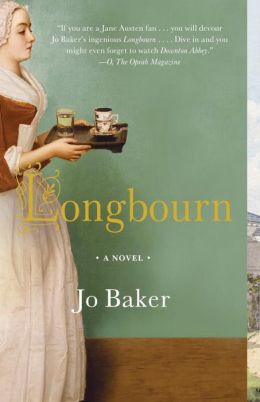
LongbournLongbourn by Jo Baker.  Much of the same criticisms I have for P.D. James hold true for this work as well.  The novel started out promising, P&P told from the viewpoint of the servants, but all too quickly the long descriptions begin to wear, as do the unnecessary knife digs at the family whom the servants serve.  In our modern eyes, servanthood appears to be a great evil, and this is continually the thrust of Baker’s tale. Her assumption is that the servants are unhappy with their work and station in life.  Cataloguing the woes and difficulties of being a Regency era servant could be an interesting tale, it’s just something that doesn’t jive with the original P&P story, and has more the effect of a long diatribe trying to make modern readers feel guilty for past so-called sins of their ancestors.

Longbourn revels in dirt, mud, chamber pots, and pages of description that bog the story down and you only remember it’s the story of P&P when Baker remembers to mention the girls’ soiled menstrual cloths.  Where is the delight that Jane Austen took in the world despite the troubles in it?  Where is her wit, her brevity, her wonderfully drawn characters who are happily and comically flawed?  It is as if Baker were plagued with Dorothea Brooke-itis from Middlemarch (by George Eliot), wherein she considers suffering of the lower classes to be the only virtue and the only thing worth remedying, and that enjoying life (like the Bennetts generally do) is somehow a sin, as is poking fun at ridiculous characters, like Mr. Collins, when they are behaving both ridiculously and rudely.

In this sense, Longbourn is no compliment to Austen, but a backhanded slap.  So what if Austen didn’t regale us on the suffering (debatable) servant class or other classes?  It doesn’t follow that she had no sympathy for their various plights, or that her own class was free of worry or trouble in the world.  Everyone suffers in this world, no matter their station.  The character of a person, their outlook on life, their faith, their hope, what they love, all contribute to their happiness in the world.  Some people are never happy no matter their station, and some are ecstatic in whatever sphere they find themselves. We don’t have to, like Dorothea Brooke, feel guilty about enjoying where we are in life, even if we are middle or upper class.  We don’t have to, like Hermione Granger of Harry Potter, interfere on behalf of lower classes that may actually not want our help, classes that may actually enjoy their station in life and resent our good intentions.  This is the “people’s history” of Pride and Prejudice, in which we are scolded for enjoying any frivolous pursuits, especially novels of humor, wit, and a love story where the main characters end up happy and (shock) do not consider daily their dear, saintly suffering servants.

I gave up on this book about halfway through.  Had it been a book apart from P&P, I think I still wouldn’t have finished it, mostly due to the too-long descriptions.  There is a saying that “brevity is the soul of wit,” and this is so true when considering Austen’s works.  Emma is the longest novel, but they all are rather short compared with modern doorstop tomes.  Describing things in detail for pages on end isn’t necessarily good writing, and most certainly not good storytelling.  I, too, am plagued with purple prose from time to time and it is a difficult vice to shake.  One thing I will say for Baker: what a great idea for a fan fic, and refreshing compared to other works that feature the main P&P characters, but botch them abominably.  Her attitude towards the Bennetts in this book is a bit mean spirited, but she managed to portray them more or less accurately.

On another note, I am super excited for the BBC presentation of Pride & Prejudice and Zombies!  It’s fan fiction as well, but the book kept up a spirit of lightheartedness and fun throughout, despite the rotting flesh descriptions and wounds that made me too ill to my stomach to continue beyond Elizabeth’s ninja attack on Mr. Darcy.  Visually, my stomach isn’t quite so queasy and I think this flattery to Austen might be the most complimentary yet.

Haven, Season 5, Episode 9, Morbidity

(As usual, spoilers)

Dwight! Ok, ok, I did miss you!  This was a great episode for Dwight, a little flirtation with the CDC lady, and also one of the best lines, ever: Got a new crossbow! The line was said to recurring character Chris Brody (Jason Priestly), who has the one of the most comedic Troubles: everyone who looks at him thinks he’s awesome.  Both his reactions to this charm and the reactions of people charmed by him are hilarious.  Brody’s world-weary abruptness has comedic timing and the shameless flirtation of both men and women smitten by him reveal cute, willing to please desires. Fortunately, Brody is not evil enough to take advantage of everyone around him, or he would be Haven’s and the world’s biggest threat.

Nathan and Audrey: Silly socks and adorableness abound.  I like them together, but like them most when they are solving Troubles together.  And they deal with two really weird Troubles: One involving a dancing bear costume with a dead man inside, a bear costume that multiplies, the second, a Trouble affecting the Troubled, giving them a sickness and bubbly lips, and activating their Trouble powers.

Gloria and her sharp wit and dry humor are also back in this episode.  Laura Mennell (Alphas – a great show that unfortunately got cancelled) does well as CDC doctor Charlotte Cross, and I look forward to her continued presence and interactions with Dwight on the show.

Duke and Mara: Steamy flirting in a scene reminiscent of Audrey’s first meeting with Duke. Mara’s manipulation of Duke’s loyalty to his friends seems to be working, but he’s a poker player, so he might just be pretending to get her to trust him.  Mara needs to get off the boat soon, because her prisoner status is starting to get a bit tedious.  Her idea of Audrey’s identity is interesting, that she is nothing more than a husk.  Mara seems to consider herself Audrey’s maker, as well.

Overall Arc: The Troubled have genetic markers? !!! X-Men ahoy! Joking aside, the markers will likely be the way they figure out how the Troubles were made and/or the origins of the Thinny world.  Maybe the markers all contain Mara’s DNA.

The cliffhanger ending shows the alignment of Duke and Mara, and the sad realization that Duke is still not quite one of the Scooby gang.  He is on the outside now, not because of his wrong-side-of-the-law past, but because he’s a Pandora’s Box of Troubles waiting to spill over into the streets of Haven.  Plus, Sasquatch taser’s him! Dwight claims he’s for doing what’s best for the town, while Duke and Nathan are focused on themselves.  Time will tell if that’s true or not.  Dwight’s attraction to Charlotte might cloudy his thinking, and what if she isn’t who she says she is? Maybe she has an ulterior motive to be in Haven?

Haven, Season 5, Episode 8: Exposure

(Spoilers)

“Exposure” was more or less a typical Haven episode.  The fixing of the “ghost” trouble wasn’t super surprising, as it was obvious that the photographer was responsible.  Her not-actually-dead-fiancee-now-turned-murderer was a bit creepy, and a testament to the real reason people fear change.  Traumatic changes often either bring out the very best or the very worst in a person, and for many of us, well, we’d rather not know how what kind of a person we’d become (or actually are).

Vince and Dave Teagues were the best part of the episode.  It was great to see them try to talk their way out of a tricky situation, and even funnier to think of them performing similar shenanigans throughout the years to prevent the greater world from hearing about the Troubles of Haven.  I’m guessing Dave’s leg infection will feature prominently in the near future.

Mara/Audrey: Is it awful that I now find Audrey boring?  Time will tell if Audrey is actually, well, Audrey, and not just a shadow of her, but short-term Mara is far more intriguing simply because of all she knows.  Speaking of things she knows: Woohoo! A partial explanation for how she and Audrey became separated! Again, it’s not terribly specific, but Mara knows that Duke chose to separate the two entities instead of having Audrey take over Mara’s body.  What’s Duke’s motivation here?  Likely, it has something to do with wanting to rid himself and his family of the Troubles.  Hopefully, it’s not amorous, though he may try to manipulate Mara in that capacity (or vice versa).  He also is still dealing with the fact of Jennifer’s death, and this may be affecting his judgement.  In addition, we learned through Mara that Duke’s mother may be important to the overall Trouble arc and more backstory about Duke.

As things stand, Duke and the Teague brothers may be the ones to power through and figure out what everything means.  Nathan and Audrey, while helping, are so focused on each other that it risks making the characters irrelevant to the larger arc.  I’m sure, though, that the writers will get them back on track if not in Episode 9, then 10.  Audrey in particular won’t rest until she finds out who or what she actually is, and who or what Mara is.

Dwight was not present this episode, and I’m sorry to say I didn’t even miss him.  As much as I like his character, his relevancy (like the Guard’s) is floundering.  Gloria was not in this episode either, but her character is even more minor than Dwight’s, so it doesn’t bother me as much if I don’t miss her.  Who I do miss (sorry to harp on this) is Audrey being Audrey again, and I do so hope that the next few episodes will fix that, as I don’t want her identity to simply now be as a couple with Nathan.  As much as I like a good love story, Haven is not first and foremost a love story.  It’s a science fiction mystery, and Audrey’s journey to understand her identity is the biggest part of that.

How Is a Raven Like a Writing Desk?: A book review of Gabriel Finley and the Raven’s Riddle

Gabriel FinleyAwhile ago I wrote three posts entitled “The Next Harry Potter” with suggestions of possible book series  that could fit the bill, so to squawk – I mean speak.  For volunteering at the Minneapolis Book Festival this past October, I received a number of free books, many signed by the author.  One of those was Gabriel Finley & the Raven’s Riddle, the first book in (I hope) a series, that like Harry Potter has the titular figure trying to make his way in a new and strange magical world.

Gabriel Finley is an orphaned boy much like other boys in children’s stories.  He lives with an eccentric aunt and doesn’t really know what happened to his parents.  That all changes when one day he discovers he can talk to ravens, and that he and ravens share a common love of riddles.  The book takes readers to a magical world involving ravens, riddles, puns, and a powerful, elusive necklace called a torc.  It may be a bit gruesome in parts for younger readers, but on the whole is a fun story in which kids learn to work together to solve the case and to understand one another.  It’s also a great Halloween tale with several riddles for readers to solve throughout the book.  It reminds me a little of Harry Potter, The Mysterious Benedict SocietyThe Lord of the Rings, and Narnia.  It also has a few odes to Alice in Wonderland.  My favorite element in the tale was a raven-clawed writing desk that likes to dance and disguise itself in people clothes.

The story is unique in its affection for word puzzles as well as birds.  I do hope there will be a sequel of some kind, as there are many hints that birds aren’t the only magical creatures around in this world.  It’s authored by George Hagen and you can find more information about the story at gabrielfinley.com.

How Is a Raven Like a Writing Desk?  I’ll let you be the judge of that after you’ve read the book.  🙂


Halloween Excerpt: All Hallow’s Mayhem

Happy Halloween and Reformation!

pixiebeldona's avatarTrolls for Dust

openclipart.org openclipart.org

Happy Halloween, TfD readers: One of my favorite episodes from Trolls for Dust, Season One, is Episode Five, All Hallow’s Mayhem.  Enjoy the free read. –Pixie 🙂

On sale at Amazon.com On sale at Amazon.com

EPISODE FIVE:   ALL HALLOW’S MAYHEM

Something was in the works at Vale TV Studios, particularly something with Trolls for Dust. Tippa wasn’t sure what it was, but she was determined to find out. She waved hello to Michael Abner, who sat outside eating a heaping bowl of oatmeal topped with raisins and almonds.

“Keeping up that fine physique, Ab?” Tippa called.

“It’s all for you, babe!” he shouted back. His expression then returned to the contemplative look that Michael had sported ever since coming back from the hospital.

Tippa avoided being seen by Sandra Vale and her new best friend, Jin Yang, both of whom were berating Harvey Candish for showing up late and being drunk. From…

View original post 6,510 more words

Haven, S5, The Old Switcheroo Pt. 2 and Nowhere Man

(Spoilers)

The Old Switcheroo Pt. 2

She’s back! Amusing episode ending with a great scene of Audrey being exorcised from Mara (or vice versa).  So, I was wrong in that they weren’t two people, they are, proving Nathan’s faith in true love.  Kudos also to Duke (in Nathan’s body) for thinking up the idea of using a Trouble to force Audrey out of Mara.

Great acting in this episode, and I think now that the Scooby Gang is trying to figure out both weekly troubles and unpuzzle the greater arc over the trouble origins, Haven feels like, well, Haven, again.  The best parts of this ep were Mara now obviously pretending to be Audrey to manipulate Duke and Nathan in their switched bodies, and the end scene with the three of them.  Pretty compelling.  Also, the South Carolina Thinny thing is a freaky vacuum vortex!

Nowhere Man

Like Sherlock, LOST, and a few other shows, the writers don’t feel obligated to explain certain plot points, like how Audrey is now a separate person.  And that’s ok for now, but if the reason stays as being an unknown trouble it may hurt the impact of the show as a whole, for the show has always been about who or what exactly Audrey (and now Mara) is as well as why the Troubles exist.  Leaving an explanation for later, however,  keeps the momentum of the storyline going strong.

Nathan, dear Nathan, finally gets some lovely time with his one true and Duke has an interesting verbal sparring match with Mara.  Will there be a Duke/Mara relationship?  Could prove amusing, but perhaps too much fan service if the show goes that route.  And now Audrey is a separate person, yet no longer immune to the Troubles.  I think, though, that she will still be good at helping the Troubled despite that.

Trouble of the week: Awesome.  A Trouble that flips people to a ghost-like existence while leaving a burnt shadow figure on the floor.  And Nathan’s the one who gets ghosted!

The Guard: They seemed shoehorned in in far too many scenes.  In the earlier seasons, the Guard seemed relevant, but now I just don’t see the point of them other than to promote more Hollywood stereotypes that “hicks” often with Southern accents (never mind we’re supposed to be in Maine, here) are easily-led goons who stick with their traditions or marching orders no matter what.  Duke’s addressing Guard members in a mocking Southern accent both mocks these members and pokes fun at the show itself for portraying these people as hillbilly types.  The writers are possibly acknowledging that for now Haven needs a villain, and the Guard works in that capacity.  Mara’s evildoing ability is currently put on hold as she is prisoner on Duke’s boat.

Speaking of Duke, he seems more like S1-S3 Duke, though I can’t put my finger on why.  Maybe its his drinking of hard liquor and threats of violence towards Mara.  Plus, a gun just looks so right in his hands.

Nathan gets his own screen time and scenes that are not so Audrey-focused in what seem like forever.  In them, he shines!  He, too, is born to figure out Troubles.

Audrey:  Yes, she’s back, but she’s nowhere near her old self.  She appears weak compared with Mara, but then it’s supposed to be that way.  She’ll find her way.

Trouble of the week, dos:  It is not the Trouble of the week, but  of the fortnight (for you Austen lovers.)  I’m thinking this Trouble is photography-based, and figuring that, it’s pretty obvious who’s behind it.  Dun, dun, dun!

Book Review: Escape from Camp 14

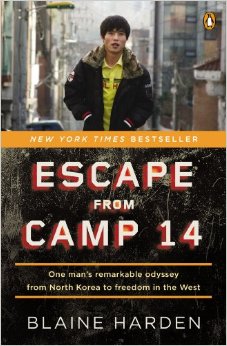
Escape from Camp 14Escape from Camp 14 is one of those true stories that makes one question oneself.  Shin Dong-Hyuk, the titled escapee, is from the beginning presented as an unreliable narrator.  The author, Blaine Harden, is a journalist attempting to set the record straight on what actually happened in Shin’s life, as Shin has changed his story from the first time Harden wrote about him.

If we’re used to reading fiction, we as readers don’t often fully considered unreliable narrators.  If we’re citizens of affluent countries reading about hardships in other countries our expectations tend to be a desire for some kind of cathartic experience.  This is reflected in many of the reviews of the book both on Amazon and Goodreads where readers express their frustration that they did not have an emotional connection with the main character.  This is said to be Harden and also Shin’s fault, but I pose the possibility that this has nothing to do with them, but our expectations as readers.  Why do we desire a cathartic experience from Shin’s story?  Does he owe us this for some reason?  Will we have our experience and then go on and take down the North Korean government?  Will we throw money at the problem and hope it goes away?  These questions are not to blame readers, but to probe our expectations.  Yes, Shin is an unreliable narrator.  He’s human and just as sinful as both us and his oppressors.  Sometimes we forget that like any human being, victims sometimes lie, are sometimes selfish, and often don’t fit into whatever box in our mind that we’ve created for them.

Shin is a victim because he was raised in the camps, but he’s also not a victim, he’s a survivor.  He feels guilt for what he did in the camps, but all of his betrayals, right or not, helped him to survive.  He’s still trying to survive in a world where he’s expected to behave like someone who grew up in freedom.  He’s expected to be honest, but was never raised to be honest.  Yes, his lying is irritating, but does it really lessen his story?  It’s obvious he went through trauma of some kind, and I think it’s kind of morbid on our part to want the victim to recount their awful experiences in gory detail just so we can have an emotional connection.  These people are plagued by guilt and continual nightmares and we want catharsis for ourselves, just because we want to be entertained.  I ask again, does an emotional response mean we are actually going to do something about the problem, or will we think on it a day or two and move on with our lives?  This isn’t, again, to criticize, this is to be realistic.  Stories of this kind are important to be told, but for most it’s one book in a long line of books that we read in our lifetime.  So our expectations should perhaps be more reasonable.  The truth isn’t easy to come by.  It wasn’t during WWII with the Nazi camps, and it isn’t now.  Shin’s story is his story and if we learn something from it (even if the details aren’t exactly perfect), that’s not a bad thing, and in the end, he doesn’t owe us a thing.  We can criticize his way of thinking and his actions, but that’s not going to change his actions or his way of thinking.  He’s a flawed human being, just like we are.  And just like us, he knows his faults and is trying to remedy them.

Speaking of criticism, I found the paragraphs discussing the callousness of South Korea’s response to the atrocities of the North as the pot calling the kettle black.  South Korea and the United States are both driven by work, success, and the like.  We like working, want to succeed, and have done so many times over, often to the peril of personal relationships and human kindness.  This, however, does not make Capitalism, competition, making money, or the drive to succeed bad in and of themselves.  To try to succeed in life is honorable, to make something of ourselves is also honorable.  To step on others to get there, not so much, but this is something we have in common with Shin.  It’s not always an easy choice.  Our advantages often come on the backs of other’s disadvantages.  If our ally got to the barbed wire first, suffered and died because of it, is it right for us to climb over his dead body to escape?  If we survive, we feel guilty; if we succeed we also feel guilty.  We are so lost to the truth, that we can’t even be sure if our guilt is justified.  We feel guilty about feeling guilty.  Is forgiveness even possible?

As a Christian, I believe it is through our Savior Jesus, who died that we might live, who took all that pain, guilt, and pseudo guilt on himself, so we could wear robes of holiness in the eyes of God, and be saved.  It’s easy to criticize people, societies, and countries for doing nothing about atrocities, but what honestly could we do that’s ever enough?  Could tons of money solve the problem of North Korea?  Could an invasion or a takeover?  We could maybe end the camps, but can we stop the thinking that leads to the camps?  WWII ended Hitler, but it didn’t end the thinking and ideas that made his takeover possible in the first place.

These questions also pale in comparison to a more immediate problem: Claiming to care these days is considered to be moral high ground.  The southern border problems of the U.S. are case in point.  So many people claimed to care about the thousands of children coming across our border this year, but their caring (including mine) stopped at actually addressing not only the problem, but also the concerns of citizens in allowing so many to cross our border at one time and stay indefinitely.  The people with concerns got criticized harshly while those who “cared” got to act holier than thou by proclaiming how much they cared on social media.  And now that crisis has been overtaken by the latest fear of Ebola in which the same puppetry plays out.  This claiming to care, this need for catharsis from others’ sufferings, are just that old selfish human nature coming to raise his ugly head.  If we claim to care, we can feel good about ourselves, even if we will not or cannot do anything about the problem.  Same with an emotional response.  If we have the right emotional response to an atrocity, well, we must be good people even if our very next act is to go about our daily lives as if that catharsis never happened.  We snottily tell others what they should pay for, all without ever planning to give a penny of our own income.  The petty tyranny of “good intentions” is alive and well today as it always has been.

Petty tyrannies are only part of the real threat to freedom: actual Tyranny.  Put the blame where it belongs, on the North Korean officials who perpetuate this awful system of oppression and fear.  Is “the system” really an excuse for the evil men do?  Did all of the people have go along with the Nazis and their concentration camps?  They could have rebelled (some did) at the cost to their own lives.  It’s never an easy choice to do the right thing, and sometimes we aren’t even sure what the right thing is, but putting the blame on those who live in freedom is faulty at best.  The free people are criticized severely no matter which choice they make, to help or not.  Our cry of compassion should not be for others to give what they have, but for us to give what we have, for us to be the change we want to see in the world.  Even Shin, who was not taught honesty, knows this.  It’s why he struggles with nightmares and guilt, and is frustrated by those well-intentioned people who think they know exactly what he should do with his life.  It is so very easy to spend other’s time and money, to tell others what they should care about, who they should help, and to dismiss their fears.  How much harder it is for we as individuals to put our own time, money, and effort on the line!  To put our own skin in the game and struggle with the problems that can come with (fore example) a mass migration no matter the reason.  Skin in the game is why, despite its flaws Capitalism and competition are superior to both Socialism and Communism.

Even today, too many young people are still taught that Socialism and Communism are good things.  They are taught that the evilness of human nature only comes out in Capitalism, consumerism and competition.  They are taught to look at those who own businesses and make money as evil.  The young are taught this in free societies thriving on competition and Capitalism, in places where they themselves have little to no threat of the tyranny and death toll that both Socialism and Communism bring.  They are taught that those who invest should reap the same reward as the employee who is flipping hamburgers, despite the fact that the investors may have put days or years of more time into their work efforts, and also a lot more money.  Are burger flippers really in the same situation as Shin in Camp 14?  Do they honestly have no other choice but to be burger flippers?  If they “escape” the burger flipping by working harder, taking the risk to move up in management, or paying for more education, should they be chastised?  Are they climbing over their colleagues’ dead bodies to get through the electric, barbed fence?  Greed is a sin, yes, but envy is too, and “Workers of the World Unite!” is the cry of both the greedy and the envious without at least the virtue of hard work to temper it.  It is a cry that falls prey, time and again, to the tyrants of this world – and there are many.  Self-sufficiency (as apart from government) is the best way of keeping tyrants at bay.  Human nature is selfish, and those that promise a new system where everyone is “equal” or forced into equal outcomes in life, is only a cover for those tyrants who wish to have more of the proverbial pie than most.

Socialism and Communism are most often idealized by the young, because they are childish notions with little understanding of how the world and selfish human nature work.  Capitalism and Republics, for all of their faults, are for adults, those who wish to make their own paths in life and who are willing to risk failure in order to succeed.  It’s hard to force people into freedom and self-sufficiency, because they are alien ways of thought in much of modern life.  We are inundated daily with the idea that governments hold the key to all happiness for society.  But how can this be when governments are run by flawed people who are at heart selfish, and who only want to stay elected, and keep their jobs, so they don’t have to invest in another career?  Time and again, we are shown just how greedy so many officials and politicians can be with money that they did not earn and that is in no way their own, and yet we still believe the Communism/Socialism/Nazism/Totalitarian fairy tale.  True, having too much can corrupt, but so can having too little.  Envy is a different beast than greed, hiding in the deep recesses of our hearts, it gnaws away at us, a green monster to which an honest and open greed pales in comparison.  Shin is actually pretty honest in what he wants: a full belly.  He wants to eat, and eat well, and he is doing what he can to ensure that happens.  And he is also at least striving to tell his story and in some small way help those who are still prisoners of the country we call North Korea.  May God be with him in his continued struggles and help to find peace of mind and the forgiveness that all of us need so desperately.  And may God help us to put our expectations where they belong, on ourselves first and foremost, to be His hands, and His good in this world.

Haven, S5, Eps 4 & 5

(Spoilers ahoy!)

Ep. 4: Much Ado About Mara

Not a lot happened in this episode but a few parts were very good, especially Duke’s nonsense curse.  Delicious taco!!  Eric Balfour was so great at delivering the ridiculous lines, that half of the time, I belatedly realized he hadn’t said anything understandable.  I’m sure his costars were ready to burst with laughter by the time “cut” was called.  Also, Mara is really a great character.  She’s a mean girl, yet somehow likable…perhaps some inner Audrey peeking through?

We also get a hint of what kind of creature Mara actually is, someone so far above humans they are like insects to her.  I give Dwight/Sasquatch props for trying to get some information out of her.  Nathan is no use in this area, as he is only focused on getting Audrey back. Duke is just trying to deal with everything.

The last scene where Nathan, Duke, and Dwight try to bring Audrey out of Mara by treating her like Audrey is outstanding.  Emily Rose really shines and the humor is spot on.

Ep. 5: The Old Switcheroo

Body switching! This is a good “trouble,” especially for actors who like to have fun imitating their costars.  I thought that John Dunsworth (Dave) did an awesome job being his brother Vince.  The standout, however, was Lucas Bryant (Nathan) mimicking Duke’s mannerisms to a T.

As far as the long arc plot, we get more hints about Dave Teagues’ dubious origins that are connected both to the world Mara is from and/or the New England Roanoke legend.  North Carolina looks uncannily like Nova Scotia 😉 and we get another “Thinny” or door between worlds as a cliffhanger.

Nathan is still on his quest to draw Audrey out of Mara, or change Mara into Audrey or whatever.  He recruits Duke’s help and Duke discovers (dun, dun, dun!) Mara is pretending to be Audrey!  This presents the possibility that every time Audrey has appeared in S5, it has simply been Mara pretending to string the Havenites along, so we come back to the question: Does Audrey still exist?  I say, and I think Duke would agree, that Mara is Mara, and Audrey is Mara, and there has never been two separate entities.  There is only one woman.  She may have multiple personalities, but she’s still one woman. a woman who may have both the desire to give people “troubles” and to help cure them.  No real answers, yet, however, and I still miss Jennifer.  Duke needs another Jennifer.  And as much as I love the Nathan/Audrey love story, this “saving Audrey” thing is dragging the storyline a bit.  Nathan could use another love interest or just another focus for a couple of episodes.  Maybe a woman with long black hair?  That seems to be his type.  Or maybe he could just deal with this obsession off-screen for a bit?  Let Duke, Dwight, and Gloria handle a really whizbangwow Trouble until the writers are ready for the big Mara/Audrey reveal and we can get on with the big arc already!  Ok, it’s not that big of a deal, it’s just annoying when plot points are prolonged or withheld because the story needs to be x number of episodes long, or x number of pages (I know, I do it myself in my own writing from time to time, roll my eyes, sigh heavily, and keep going with the story).  Filler episode, filler scenes, filler characters, these are the Troubles that plague storywriters.

Season 5 is good, yet I’m wanting more rewatchable moments and episodes.  Too much fill means too much going through the motions and who wants to rewatch that?  Seasons 1-4 all have a very rewatchable quality to them.  Again, S5 isn’t bad, it’s just having difficulty finding its footing, probably because of Mara/Audrey.  Audrey and her desire to help people is the glue that holds the series together.  So, as much as I love watching Mara, Haven needs Audrey back, and soon.